
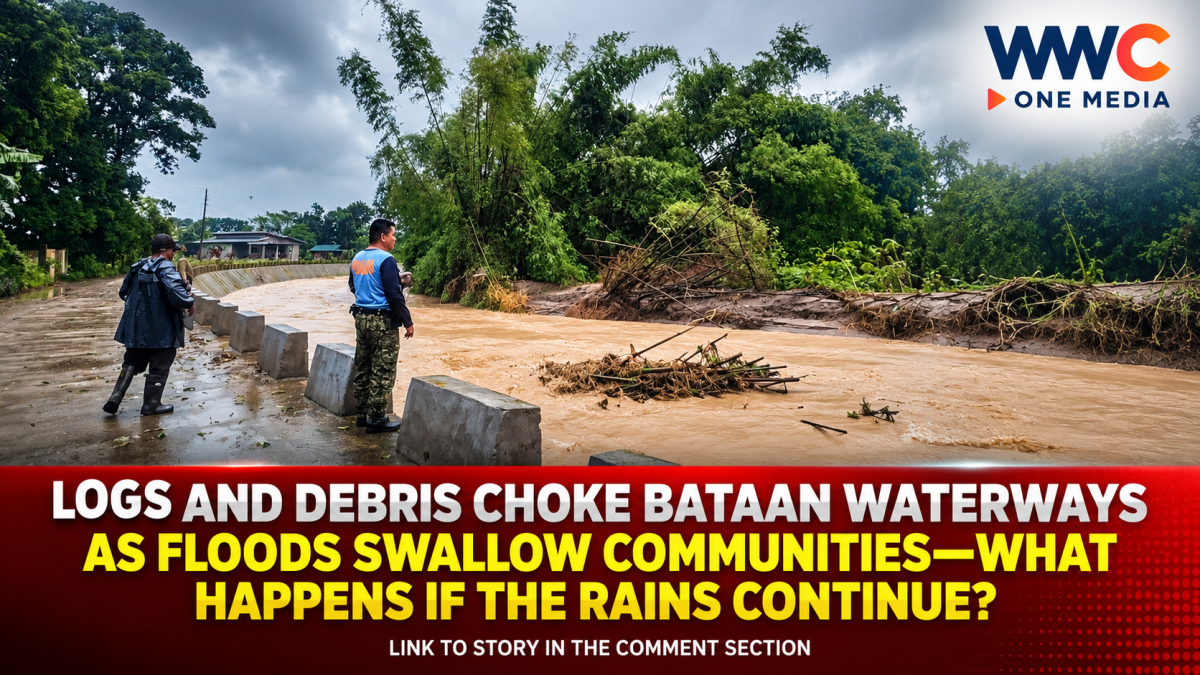
DINALUPIHAN, Bataan — Floodwaters in parts of Bataan have left behind a dangerous mix of logs and debris that is clogging waterways, adding another layer of risk to communities already battered by heavy rains and swollen rivers.
The situation comes as Dinalupihan remains among the areas hardest hit by flooding associated with the southwest monsoon, or Habagat, with authorities warning residents near rivers and mountainous areas to remain vigilant.
Recent flooding in Barangay Pita was particularly destructive. Raging water from the Pita River swept away nine houses, according to the Philippine Daily Inquirer. Hundreds of residents living near the river were also asked to evacuate to shelters operated by the municipal disaster risk reduction and management office.
Reports from Pilipino Star Ngayon said families living along the river were caught off guard when a powerful surge of water rushed downstream, carrying logs with it. The report said a large volume of water flowed down from the mountains of Zambales toward the affected area.
Logs add to the danger
The accumulation of logs and other debris is particularly concerning during periods of intense rainfall because blocked waterways can restrict the movement of floodwater and worsen localized flooding.
The danger is not limited to property damage. Floating logs and debris can become powerful projectiles in fast-moving water, threaten bridges and other infrastructure, and make rescue operations more difficult.
The latest situation also highlights a long-running flood-management challenge in parts of Bataan: maintaining rivers, drainage systems and other waterways before and during periods of extreme rainfall.
In a previous Bataan flooding incident, residents in Dinalupihan told GMA News that clogged drainage contributed to prolonged flooding. Local officials cited plans involving the widening and dredging of waterways as part of efforts to address recurring flooding.
Bataan has already suffered extensive damage
The latest flooding is unfolding against the backdrop of widespread damage across the province.
The Bataan provincial government reported that the province had been placed under a state of calamity following heavy damage to property, agriculture and infrastructure. A provincial assessment cited P56.53 million in damage affecting 2,490 farmers and fisherfolk and 1,752 hectares of agricultural land, while livestock losses were placed at P4.29 million.
The same assessment recorded 225 damaged houses, including 14 that were totally destroyed.
The Philippine Daily Inquirer previously reported that flooding had severely affected low-lying communities in Dinalupihan, as well as portions of Mariveles and Hermosa.
Rescue teams remain on alert
Flooding has already required emergency response operations in Dinalupihan.
GMA News reported that disaster-response and police teams were deployed during an earlier flooding episode after water levels rose dramatically in several communities. In Barangay San Pablo, floodwaters reportedly reached six to seven feet after a river overflowed. Responders helped residents reach safer areas, while some roads became impassable because of floodwater.
Authorities and emergency personnel continue to monitor flood-prone communities, waterways and transportation routes as weather conditions evolve.
The Authority of the Freeport Area of Bataan has likewise said it is conducting inspections of roads, drainage systems, rivers, creeks and other waterways, while carrying out clearing operations and removing obstructions when necessary.
The bigger concern: another surge of rain
For residents living near rivers and waterways, the immediate concern is what happens if another period of intense rain pushes additional water and debris downstream.
Bataan authorities and other agencies have been discussing longer-term flood mitigation measures, including clearing and desilting waterways, improving drainage systems and identifying priority areas for intervention under the government’s Oplan Kontra Baha program.
With communities still recovering from extensive flooding, the buildup of logs and debris serves as a stark reminder that the danger does not necessarily end when floodwaters begin to recede.
For residents in vulnerable areas, authorities continue to urge caution, particularly around swollen rivers, rapidly moving water and areas prone to landslides or sudden flooding.
WWC ONE MEDIA J.M.S




Leave a Reply