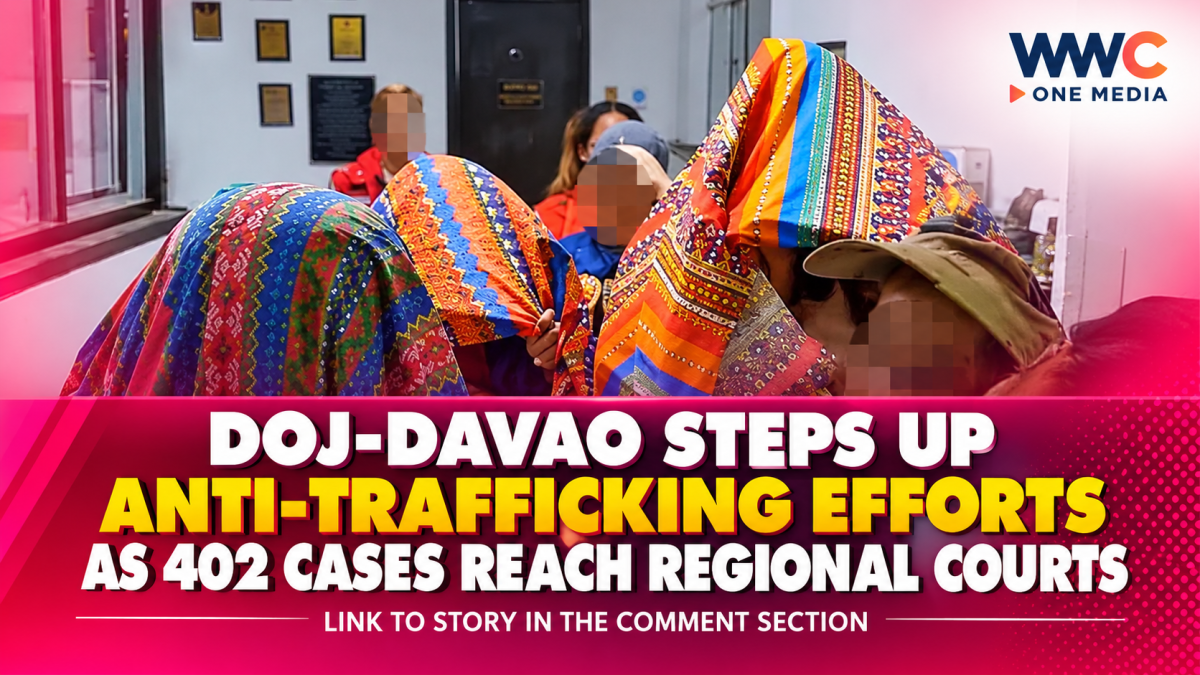
The Department of Justice Regional Prosecution Office 11 is strengthening its efforts against human trafficking in Davao Region, with authorities reporting hundreds of cases filed in court and continued work to build new cases.
DOJ-RPO 11 Deputy Regional Prosecutor Karl Andre Salcedo said the Regional Anti-Child Abuse, Exploitation and Trafficking Task Force 11 has assisted 231 complainants and filed 402 cases in regional courts since 2003. Davao City and Mati City recorded the highest number of trafficking in persons cases in the region.
Salcedo explained that the number of cases can be higher than the number of complainants because a single victim may be involved in several charges or related offenses arising from the same circumstances.
As of July, prosecutors were handling 203 active human trafficking and trafficking-related cases in courts across Davao Region. Of these, 145 were pending trafficking in persons cases, while three had resulted in convictions. Another 58 involved related offenses, including online sexual abuse and exploitation of children, cyber trafficking and violations of Republic Act 7610.
Prosecutors are also working with law enforcement agencies on 11 case build-ups, gathering evidence before formal charges can be filed in court.
Since 2019, DOJ-RPO 11 has disposed of 419 trafficking and trafficking-related complaints, including 274 trafficking in persons cases.
Salcedo emphasized that victims and complainants do not have to pay for the legal services provided by government prosecutors. The DOJ represents victims in trafficking cases and assists them through the legal process.
The region’s anti-trafficking efforts were also highlighted during the 2026 National Inter-Agency Council Against Trafficking Summit held in Davao City from September 7 to 11.
Hosted by RACETTF XI, the five-day summit brought together more than 300 anti-trafficking practitioners, prosecutors, law enforcement officers, social workers, representatives from 24 regional task forces and technology companies, including Meta and TikTok.
Participants discussed emerging forms of exploitation, including online sexual abuse and exploitation of children, as well as traditional human trafficking. They also explored ways to improve investigations, coordination among agencies and protection for victims.
The latest figures show that Davao’s anti-trafficking response involves not only prosecution after cases are filed, but also evidence gathering, victim assistance and coordination among government agencies and technology platforms.
Authorities continue to encourage the public to rely on verified information when reporting or discussing sensitive trafficking cases, particularly as online platforms increasingly become part of both the recruitment and investigation landscape.