SEOUL — South Korean Prime Minister Han Seong-sook has called for stronger national preparedness against increasingly complex security threats, warning that the country must be ready not only for conventional crises but also for emerging risks such as drone and cyberattacks.
Han made the remarks Friday, September 18, while reviewing the results of South Korea’s 2026 Ulchi civil-defense exercise, saying the country’s security environment has become more uncertain and that preparation during peacetime is critical to protecting the public and keeping essential government functions running during a crisis.
PM: Security Environment Is More Complex Than Ever
During the post-exercise review meeting at the government complex in Seoul, Han said armed conflicts in different parts of the world and the emergence of new forms of threats have made comprehensive preparedness increasingly important.
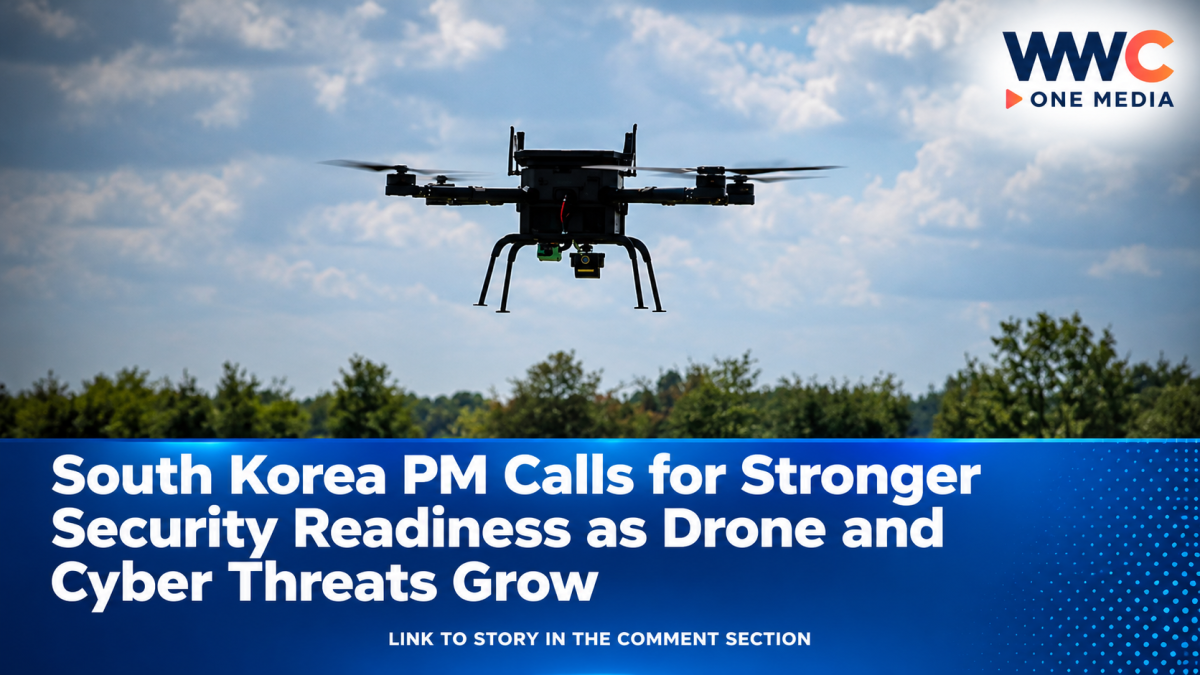
She specifically pointed to drones and cyberattacks as examples of threats that can affect infrastructure and daily life without necessarily resembling traditional military conflict.
Han said government agencies need to be capable of maintaining essential state functions and protecting people’s lives and safety when a crisis occurs.
She stressed that this requires more than plans on paper: agencies need repeated training and practical preparation before an emergency happens.
580,000 Officials Took Part in the Ulchi Exercise
The comments followed South Korea’s nationwide Ulchi civil-defense exercise, held from August 18 to 21.
About 580,000 officials from approximately 4,000 central and local government agencies, public institutions and other organizations participated in the exercise, which was designed to evaluate the country’s ability to respond to war and other national emergencies.
The exercise was also designed to test whether individual officials understood their responsibilities and could respond quickly when emergency situations developed.
Han called on agencies to examine the exercise critically, strengthen areas that worked well and identify shortcomings that need to be addressed before a real crisis occurs.
South Korea Is Preparing for New Types of Threats
The emphasis on drones and cyberattacks reflects a broader change in how governments assess national security.
In August, Han had already called for the Ulchi exercise to incorporate scenarios involving artificial intelligence, drones, cyberattacks and compound disasters, saying modern conflicts can affect people’s daily lives as well as military operations.
The government has therefore sought to make civil-defense exercises more realistic by considering threats that could disrupt critical infrastructure, communications and public services.
That approach means national preparedness increasingly involves civilian agencies and public institutions alongside traditional defense organizations.
The Warning Comes Amid Wider Regional Security Concerns
Han’s comments also come at a time of heightened security discussions on the Korean Peninsula and beyond.
On September 17, North Korean leader Kim Jong Un’s sister, Kim Yo-jong, warned of a stronger response to what Pyongyang described as U.S.-led military activity. Reuters reported that she specifically criticized the Pacific Vanguard 2026 naval exercise and reaffirmed North Korea’s position that its nuclear status is irreversible.
Those remarks are part of the wider regional security environment, although Han’s September 18 statement focused on South Korea’s preparedness for a broad range of contingencies, rather than announcing a specific response to North Korea.
Terrorism Preparedness Is Also Being Strengthened
South Korea has separately been reviewing its counterterrorism response.
At a September 16 National Counter-Terrorism Committee meeting, Han said terrorist threats were becoming more complex and sophisticated and called for improvements to rapid-response systems.
The developments show that Seoul’s preparedness efforts cover multiple categories of potential emergencies, including conventional security crises, terrorism, cyber threats and attacks involving unmanned systems.
What This Means for Ordinary Citizens
The government’s emphasis on readiness is not limited to military planning.
A major objective of civil-defense exercises is ensuring that essential public services can continue and that government agencies know how to respond when normal operations are disrupted.
That includes preparing institutions to protect the public, maintain essential functions and coordinate responses across national and local authorities.
Han’s message was therefore centered on preparedness rather than predicting a specific attack.
Seoul Faces a Changing Security Landscape
South Korea remains heavily focused on security issues because of its proximity to North Korea, but officials are increasingly looking beyond traditional military threats.
Cyberattacks, drone incidents, infrastructure disruptions and compound emergencies can create challenges that cross the boundaries between military, government and civilian systems.
The government’s latest review underscores the importance Seoul places on preparing for those scenarios before they occur.
For Han, the central message was clear: effective crisis response begins long before the crisis itself.
Repeated exercises, realistic scenarios and coordination among thousands of institutions are being treated as essential tools for ensuring South Korea can continue functioning if faced with a serious emergency.