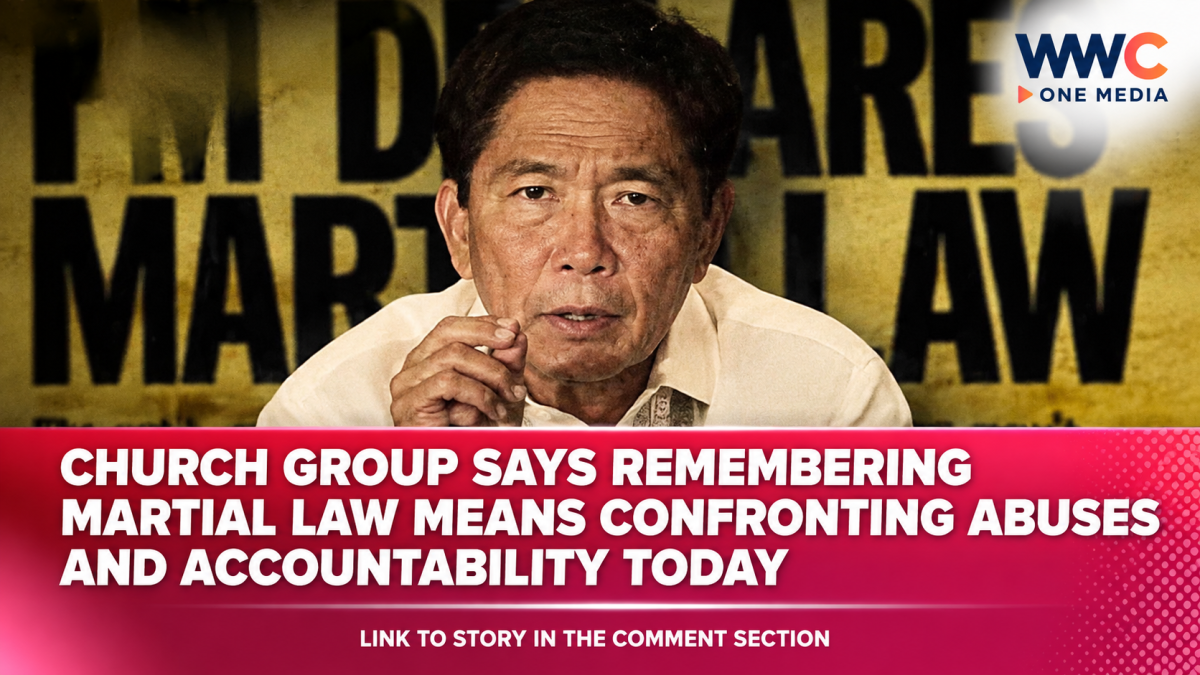
The Conference of Major Superiors in the Philippines is urging Filipinos to look beyond commemorating the declaration of Martial Law and confront issues involving accountability, corruption and the protection of human rights in the present.
In a statement marking the 54th anniversary of Martial Law, the Catholic organization representing religious congregations said remembering the period under former President Ferdinand Marcos Sr. should include honoring people who were imprisoned, tortured, forcibly disappeared, killed, displaced or otherwise subjected to human-rights violations.
The group said the suffering of victims should not be erased or revised and argued that genuine reconciliation requires truth, justice, reparation and safeguards against the repetition of abuses.
The CMSP also connected its call for remembrance to current political and governance issues. It cited the ongoing impeachment proceedings involving Vice President Sara Duterte, including allegations concerning unexplained wealth and the alleged misuse of public funds. These remain allegations being addressed through the impeachment process.
The organization also pointed to investigations and allegations involving flood-control projects, arguing that public infrastructure intended to protect communities must not be diverted for private benefit.
“Corruption, whether past or present,” the CMSP said, should be confronted with the same determination regardless of who is involved. The organization specifically called for accountability for any public official found responsible for wrongdoing.
The statement was issued as the country marked the September 21 anniversary of Proclamation No. 1081, which placed the Philippines under Martial Law in 1972. Marcos formally announced its implementation on television two days later, on September 23.
The CMSP has historical ties to the period. The organization, then known as the Association of Major Religious Superiors in the Philippines, was established during Martial Law, while religious congregations became involved in providing assistance and sanctuary to people affected by political persecution.
Cardinal Pablo David, former president of the Catholic Bishops’ Conference of the Philippines, separately used the anniversary to renew calls for an anti-political dynasty law.
David said the experience of Martial Law demonstrated the risks associated with concentrating political power in one person, one family or a small group of families. He pointed to provisions of the 1987 Constitution concerning equal access to public service and political dynasties and criticized Congress for not yet enacting an implementing law.
Other church groups have also used the anniversary to call for vigilance over democratic institutions and human rights. The National Council of Churches in the Philippines said remembering Martial Law should involve confronting present-day abuses while protecting democratic space.
The anniversary comes amid renewed public debate over corruption allegations, political accountability and the concentration of political power, making the commemoration about both historical memory and contemporary governance.
For the CMSP, remembering the past is therefore not simply an exercise in looking backward. It is also a call to examine whether institutions today are providing accountability, protecting human dignity and preventing abuses of power from being repeated.
The debate remains deeply political, but the central message from the church groups is framed around a broader principle: historical remembrance should be accompanied by scrutiny of how power is exercised in the present.