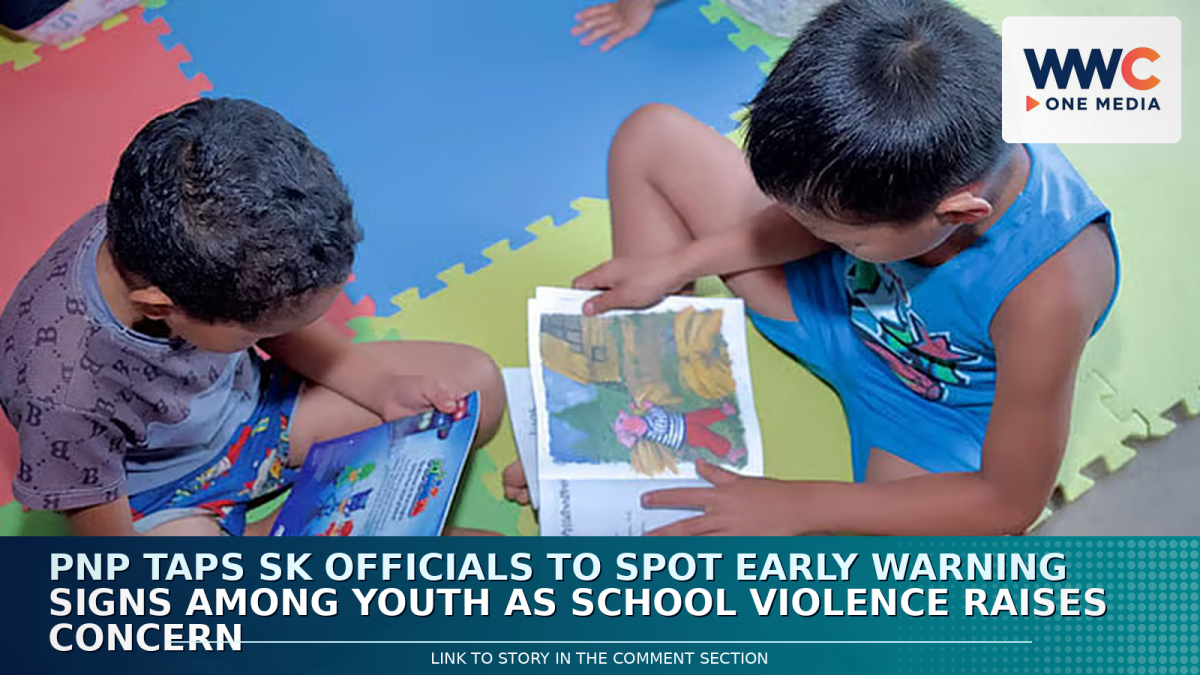
The Philippine National Police is turning to Sangguniang Kabataan officials to help identify early warning signs among young people as authorities step up efforts to prevent violence in communities.
PNP chief Gen. Jose Melencio Nartatez Jr. said SK officials are in a strong position to work with local police because of their close contact with students and other young people in their barangays. The police chief said they can help identify concerns, report potential risks and guide youths toward positive activities.
The initiative comes after police intervened in separate incidents involving students who posted disturbing content on social media, including images of themselves holding firearms and messages indicating an intention to commit violence.
One case involved a 13-year-old Grade 8 student, while another involved an 18-year-old. Police said concerned members of the community alerted authorities after seeing the posts, allowing officers to intervene. The younger student and his guardians also met with counselors from the PNP Women and Children Protection Desk and local government units.
Nartatez said the incidents demonstrated the importance of cooperation between police and communities, particularly when warning signs appear online before an incident occurs in the real world.
Under the proposed approach, police units will coordinate more closely with SK councils and local governments to expand activities focused on sports, leadership and anti-violence programs.
The PNP said the goal is not simply to monitor young people but to create additional channels through which students, parents and community members can raise concerns before they develop into more serious threats.
The move comes amid heightened concern over youth-related violence following several school shooting incidents in the Philippines in recent months. A September 18 shooting in Banga, South Cotabato, left two students dead and eight others injured before the 16-year-old suspect died by suicide, according to authorities. Investigators have also been examining possible connections to violent online communities.
Police have consequently increased attention on the online environment. The National Capital Region Police Office has ordered its anti-cybercrime unit to intensify monitoring of online spaces for threats, recruitment, grooming and other activities that could expose minors to violence or encourage dangerous behavior.
The PNP has also previously urged parents to report unusual behavioral changes among children and to pay closer attention to their online activities, particularly when there are indications of exposure to violent or extremist content.
Authorities have stressed that early intervention depends on information reaching police and other responsible officials before threats escalate.
For SK officials, the expanded role could put them closer to the front line of community-based prevention, particularly because they regularly interact with young people in schools, neighborhoods and youth programs.
The challenge now is determining how warning signs can be identified and reported without unfairly labeling young people, while ensuring that genuine threats are not overlooked.
As police, schools, parents and local youth leaders strengthen coordination, the focus is increasingly shifting from responding after violence occurs to identifying potential risks before they turn into real-world incidents.