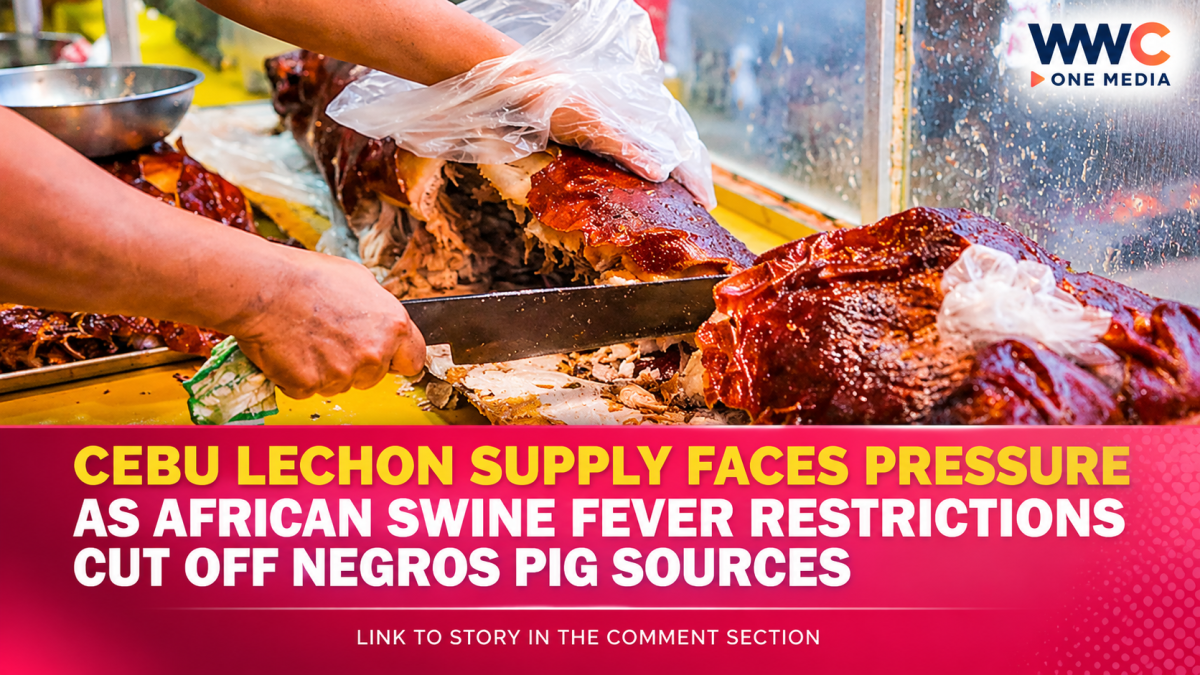
Cebu is not facing a general pork shortage, but its famous lechon industry could face tighter supplies of the specific pigs needed for roasting as African swine fever restrictions disrupt shipments from Negros.
Cebu City Department of Veterinary Medicine and Fisheries head Jessica Maribojoc said the province still has enough hogs to meet ordinary pork demand and expects supplies to remain adequate through the holiday season. The more immediate concern is the availability of lechon-sized pigs, which are often sourced from the Negros Island Region.
The distinction is important. Cebu has a surplus of larger “kilo-kilo” or slaughter pigs, with Pork Producers Federation of the Philippines vice chairman Rolando Tambago saying supplies could remain sufficient through the first quarter of 2027. But these pigs do not necessarily match the smaller size and breed preferred by Cebu’s lechon producers.
Negros has traditionally supplied many of these native lechon pigs. Traders value the smaller native varieties partly because their skin is considered crispier when roasted, according to Tambago. Cebu’s continued restrictions on the movement of live hogs, fresh and frozen pork, and processed pork products from Negros and other ASF-affected areas have therefore created a much narrower supply problem for the lechon trade.
The restrictions are linked to continuing concerns over African swine fever, a highly contagious disease affecting pigs. Cebu authorities have been tightening controls after cases were detected in upland communities.
In Barangay Toong, 14 pigs have died and another 57 are being culled as part of containment measures. Authorities are also conducting surveillance and blood collection within a 500-metre radius of affected areas. Neighboring Buhisan and Pamutan have been included in containment efforts because of their proximity to the affected locations.
Officials are still investigating how the virus may have entered the affected communities. Possible transmission routes being examined include the movement of pigs and people, contaminated slaughtering equipment and pigs linked to stockyards supplied by Negros. Authorities have stressed that these are possible routes under investigation and have not been confirmed as the source.
The situation has created an unusual imbalance in Cebu’s hog market: there can be plenty of pork for ordinary consumption while lechon producers struggle to obtain the particular pigs they want.
That pressure is also affecting local hog raisers. Tambago said farmgate prices have fallen to around P140 per kilogram of live weight, below production costs as farmers face rising feed and other operating expenses.
Some lechon sellers have already reported higher prices as their usual supply from Negros becomes more difficult to obtain. However, authorities say there is currently no citywide pork shortage and no indication that Cebu will run out of pork for the holiday season.
For affected hog raisers, the city is preparing assistance that includes government indemnification and alternative livelihood support. Authorities are also urging farmers to cooperate with testing and biosecurity measures, warning that early detection and proper disposal are critical to preventing the virus from spreading to other farms.
For now, Cebu’s Christmas tables are not facing a shortage of pork. The bigger concern is whether there will be enough of the right pigs to keep the province’s iconic lechon tradition running at full scale as ASF restrictions continue.