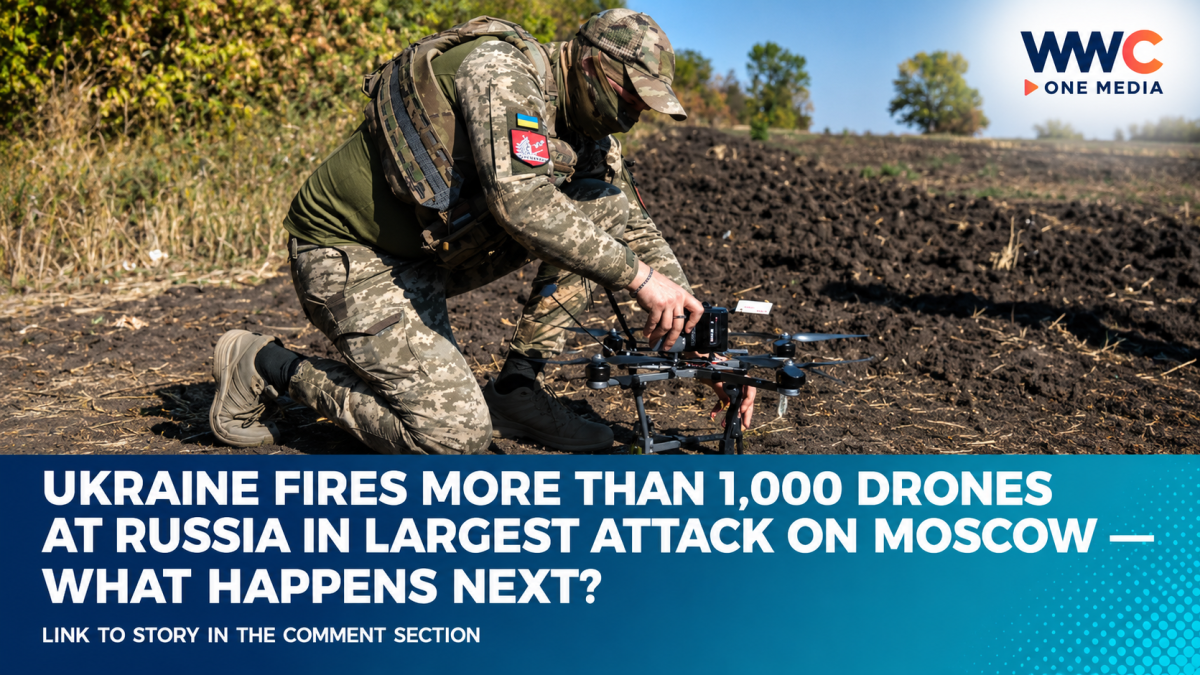
Ukraine launched more than 1,000 drones toward Russia in a massive overnight barrage, including hundreds aimed at Moscow, in what Russian authorities described as the largest drone attack on the capital since the war began.
The assault came as Russia was concluding the third and final day of its parliamentary elections, adding another layer of tension to an already escalating conflict. Moscow Mayor Sergei Sobyanin said Russian air defences intercepted hundreds of drones heading toward the capital.
The attacks caused damage at the Moscow oil refinery, one of the key facilities supplying fuel to the Russian capital. A residential building was also damaged, while authorities in the wider Moscow region reported deaths and injuries.
Russia’s Defence Ministry said its forces had downed 1,110 Ukrainian drones across Russia and occupied areas during the barrage. Moscow’s mayor separately said more than 1,600 drones had been intercepted since Saturday, including about 450 headed toward Moscow, although the different figures reflect separate reporting periods and areas.
Ukraine has not publicly provided an equivalent overall count of drones launched in the operation, but President Volodymyr Zelenskyy said Ukrainian forces used domestically produced long-range weapons to strike Russian oil and logistics infrastructure.
The attack also appears to have had a significant impact on Russia’s energy sector. The Moscow oil refinery subsequently halted crude processing after fires damaged its main crude-distillation units, according to industry sources cited by Reuters. Repairs could take several weeks, potentially reducing the refinery’s ability to supply fuel to the Moscow region.
The refinery processed about 11.6 million tonnes of crude in 2024, equivalent to roughly 230,000 barrels per day. Its disruption comes as Ukrainian attacks on Russian energy infrastructure have already contributed to fuel shortages and pressure on domestic supplies.
The scale of the Ukrainian operation also highlights how dramatically drone warfare has expanded since Russia’s full-scale invasion in 2022. Kyiv has increasingly developed long-range drones capable of striking targets hundreds of kilometres inside Russia, allowing it to target energy and industrial facilities far from the front line.
Russia responded with further attacks on Ukraine. Russian drones struck the southern city of Zaporizhzhia and other Ukrainian regions, while Ukrainian authorities reported casualties and damage from the continuing barrage.
The escalation comes as diplomatic efforts remain in focus at the United Nations General Assembly in New York. Zelenskyy is scheduled to meet US President Donald Trump and is expected to push for an energy truce that would stop both sides from attacking energy infrastructure.
Trump has also expressed concern about the damage Ukrainian strikes are causing to Russia’s oil-refining industry, while Kyiv has argued that attacks on Russian energy infrastructure can increase pressure on Moscow and its ability to sustain the war.
For now, however, the latest barrage shows that the air war is continuing despite diplomatic discussions.
The bigger question is whether the unprecedented scale of Ukraine’s strikes will push Russia toward negotiations — or trigger another round of even more intense attacks across Ukraine and Russia.