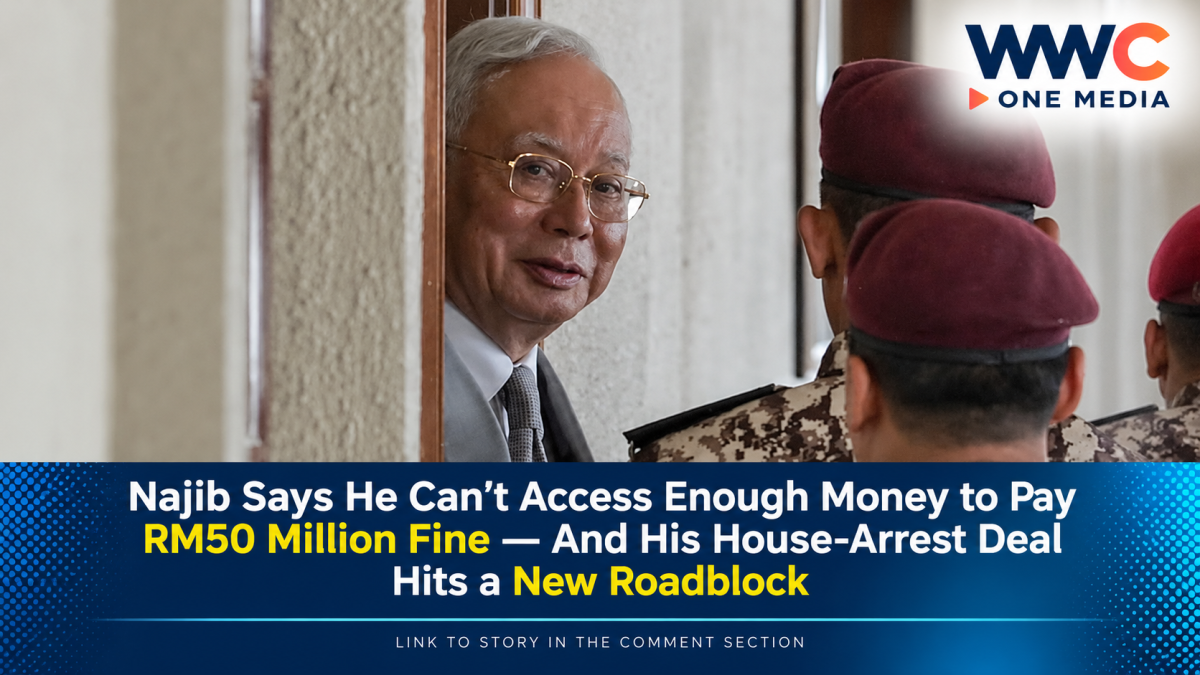
KUALA LUMPUR — Former Malaysian Prime Minister Najib Razak has been granted a path out of prison and into house arrest — but he now faces a major financial obstacle that could prevent the arrangement from taking effect.
Najib’s legal team said Sunday that the former premier is currently unable to simply produce the RM50 million (about US$12.2 million) payment required under the conditions of his conditional royal pardon because a significant portion of his assets, bank accounts and properties remain subject to government freezing orders and enforcement proceedings.
His lawyers said the disposal of those assets is therefore not entirely within Najib’s sole control.
The development means that, despite receiving royal approval for house arrest on Friday, Najib remains in Kajang Prison for now.
The Malaysian Prisons Department said Sunday that it is still awaiting formal written notification of the Pardons Board’s decision before it can implement the house-arrest arrangement.
The $12.2 Million Condition
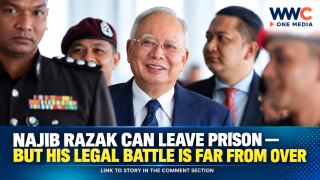
Malaysia’s King, Sultan Ibrahim Iskandar, granted Najib a conditional pardon on Sept. 18, allowing him to serve the remainder of his sentence under house arrest until Aug. 23, 2028.
But there is a critical condition attached: Najib must pay a RM50 million fine.
The condition was confirmed by Malaysia’s Legal Affairs Division and reported by Reuters, CNA, Malay Mail and other Malaysian outlets. If Najib fails to comply with the conditions of the pardon, the arrangement can be revoked and he would have to return to prison.
Najib’s lawyers now say the payment is complicated because some of his assets are effectively locked up by ongoing legal proceedings.
In a statement released Sunday, law firm Shafee & Co said a “significant part” of Najib’s assets, bank accounts and properties remained subject to freezing orders and government enforcement proceedings.
The lawyers said Najib is therefore taking legal advice and considering his options for satisfying the condition.
Najib Is Still Behind Bars
The distinction is important.
The King’s decision does not mean Najib has already been released from prison.
The former premier remains at Kajang Prison, where he has been held since August 2022.
The Malaysian Prisons Department said it had yet to receive the official written documentation needed to begin implementing the house-arrest decision.
Malay Mail reported that Attorney General Tan Sri Mohd Dusuki Mokhtar said Najib must first pay the RM50 million fine at the Kuala Lumpur High Court Registrar’s Office before the house-arrest process can proceed.
That creates two immediate hurdles: the financial condition and the administrative implementation of the royal pardon.
The Case That Put Najib Behind Bars
Najib’s current imprisonment stems from the SRC International case, involving RM42 million that prosecutors said was transferred into his personal bank accounts.
In July 2020, the Kuala Lumpur High Court convicted Najib on seven charges involving abuse of power, criminal breach of trust and money laundering.
He was initially sentenced to 12 years in prison and fined RM210 million.
Malaysia’s Federal Court upheld the conviction in 2022, and Najib began serving his sentence at Kajang Prison.
The case was linked to SRC International, a former subsidiary of the much larger 1Malaysia Development Berhad (1MDB) state investment fund.
Najib has consistently denied wrongdoing and has maintained that he was made a scapegoat in the broader scandal. Reuters reported that investigators have alleged that billions of dollars were misappropriated from 1MDB.
His Sentence Was Already Cut in Half
Najib’s latest conditional pardon is not his first encounter with the Pardons Board.
In January 2024, the board reduced his original 12-year prison sentence to six years and cut his fine from RM210 million to RM50 million.
That decision meant his scheduled release date for the SRC sentence became Aug. 23, 2028, assuming the sentence continued to be served in prison.
The new decision changes where he may serve that remaining sentence rather than eliminating the underlying conviction.
A Separate 1MDB Case Still Hangs Over Him
The house-arrest arrangement also should not be confused with the rest of Najib’s legal battles.
In December 2025, the former prime minister was convicted in a separate major 1MDB case involving RM2.28 billion.
He was sentenced to another 15 years in prison and ordered to pay a RM11.38 billion fine, according to The Star.
That conviction is under appeal.
The distinction is critical because the current conditional pardon concerns the sentence arising from the SRC International case.
It does not automatically erase the separate 1MDB conviction or other outstanding legal proceedings.
Malaysia’s Anti-Corruption Commission said Saturday that the status of pending 1MDB matters remains unchanged following the conditional pardon.
His Legal Problems Go Beyond the Prison Sentence
Najib also faces other financial and legal claims.
The Star reported that he faces an additional RM1.69 billion tax bill, while other legal proceedings include civil claims and asset-recovery matters.
His second major 1MDB conviction also included a substantial financial penalty and asset-recovery order.
These outstanding liabilities help explain why the question of which assets Najib can actually access is legally significant.
His lawyers are not simply dealing with a conventional bank transfer.
They are dealing with assets that may be frozen, subject to enforcement actions or otherwise constrained by ongoing litigation.
Najib Thanks Supporters — But Says He Doesn’t Want Them Burdened
In the statement released Sunday, Najib expressed gratitude to the King and the Pardons Board.
He also thanked Deputy Prime Minister Ahmad Zahid Hamidi, the president of UMNO and chairman of Barisan Nasional, along with party leaders, members and Malaysians who have offered assistance.
But Najib’s lawyers emphasized that he does not want UMNO members, supporters or the public to feel obligated to raise money on his behalf.
That statement comes as the RM50 million condition becomes the immediate practical obstacle to his transfer from prison.
The Political Fallout Is Already Growing
The conditional pardon has also triggered political repercussions.
Malaysia’s ruling coalition includes UMNO, the party historically associated with Najib, alongside parties that campaigned on institutional reform and anti-corruption issues.
The decision has therefore reopened tensions within the governing coalition.
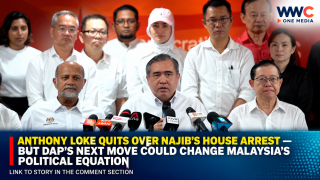
CNA reported that Democratic Action Party Secretary-General Anthony Loke announced his resignation as transport minister, while saying other DAP ministers would remain in Cabinet in the interest of political stability.
Prime Minister Anwar Ibrahim, meanwhile, defended the decision by pointing to the constitutional authority of the King and the Pardons Board while maintaining that ongoing cases should continue through due process.
What Happens If Najib Can’t Pay?
This is now the central question.
The official terms say the house-arrest arrangement is conditional.
If Najib fails to satisfy the conditions, the pardon can be revoked and he can be required to continue serving the sentence in prison.
But Najib’s lawyers are arguing that the situation is more complicated because assets that could potentially be used to satisfy the payment are not necessarily available for his unrestricted disposal.
They have not announced that the fine cannot ultimately be paid.
Instead, they say Najib is taking advice and considering his options.
That leaves several practical questions unresolved, including how the payment condition will be fulfilled and how the authorities will implement the house-arrest order.
A Rare Test For Malaysia’s Justice System
Najib’s case has already been one of the most consequential legal and political sagas in modern Malaysian history.
The former leader’s downfall followed the 2018 general election, when his Barisan Nasional coalition lost federal power after years of political dominance.
His conviction in the SRC case subsequently became one of the landmark corruption cases associated with the broader 1MDB scandal.
Now, the conditional house-arrest decision is creating another unprecedented chapter.
Legal experts cited by CNA said the arrangement breaks new ground in Malaysia and could raise questions about how similar mechanisms might be treated in future cases.
The immediate issue, however, is much more straightforward:
Najib has permission to serve his remaining sentence at home — but he has not yet met the condition that would allow him to leave prison.
The Next Move Could Decide Everything
Najib’s legal team is now examining how the RM50 million requirement can be satisfied while significant assets remain subject to government action.
Until that issue is resolved, the former prime minister remains behind bars.
The conditional pardon has opened the door to house arrest.
But the door is not open yet.
And the next move — whether involving Najib’s lawyers, the courts, government authorities or the assets caught up in enforcement proceedings — could determine whether Malaysia’s former prime minister actually walks out of Kajang Prison and begins serving the rest of his sentence at home.