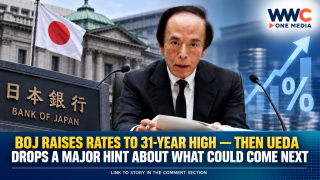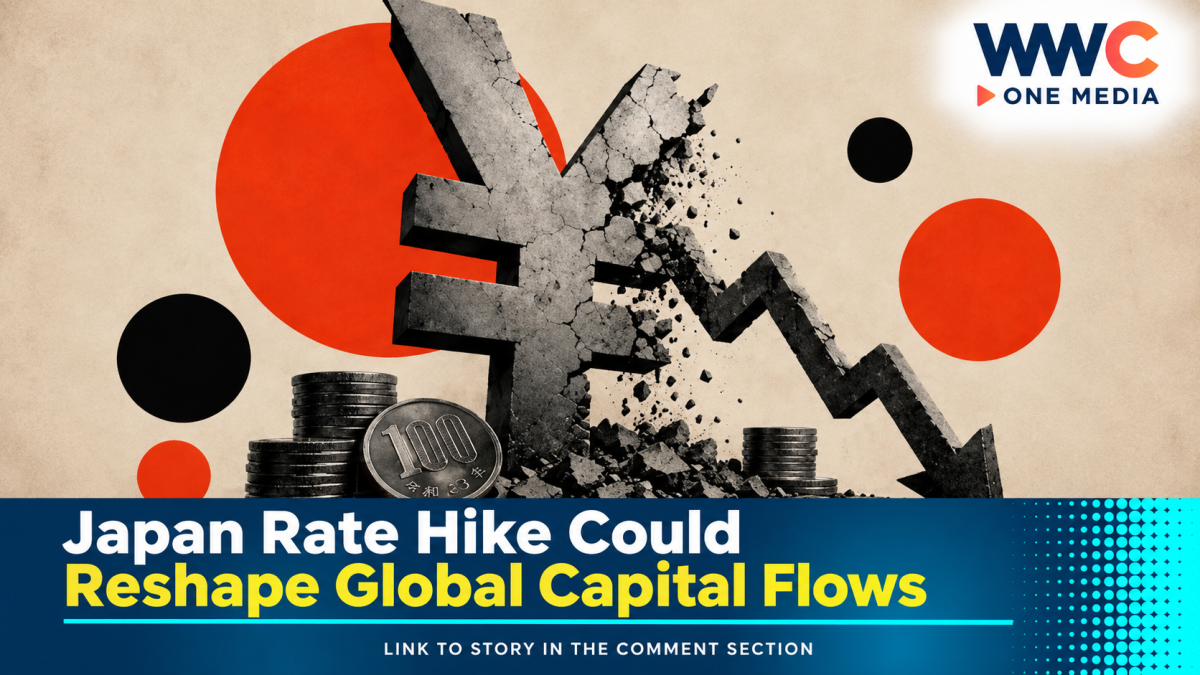
Japan’s expected interest-rate increase is raising concerns about the potential impact on global bond markets and the flow of international capital, as higher Japanese yields make domestic assets increasingly attractive.
The Bank of Japan is widely expected to raise its policy rate by 25 basis points, to 1.25%, marking its highest level in more than three decades. The move comes as Japanese government bond yields have climbed sharply.
Japan’s 10-year government bond yield reached 3.03% this week, its highest level in about 30 years, while the 30-year yield traded around 4.1%. The rise has been linked partly to concerns over Japan’s fiscal position and expectations of increased defence spending.
Higher Japanese yields could encourage domestic investors to keep more of their money at home instead of buying overseas assets. Japan has traditionally been a major source of global capital, with investors holding substantial amounts of US and European bonds and other foreign assets.
The shift could put additional pressure on government bond markets in the United States and Europe if Japanese investors reduce overseas purchases or repatriate some funds. The International Monetary Fund has also identified Japan’s large government bond market and sizeable international investment position as channels through which developments in Japanese markets can affect global financial conditions.
The prospect of higher Japanese rates could also affect the yen carry trade, in which investors borrow in Japan at relatively low interest rates and invest in higher-yielding assets elsewhere. As the interest-rate gap narrows, some investors could reduce such positions, potentially increasing volatility across currencies and risk assets.
Market analysts have also warned that rising Japanese yields could contribute to higher borrowing costs internationally. Vanguard said higher domestic yields could encourage Japanese investors to retain more capital at home, reducing demand for overseas assets such as US Treasury bonds.
The broader impact will depend on how quickly the Bank of Japan raises rates, how Japanese investors adjust their portfolios and how markets respond to the country’s fiscal plans. For now, Japan’s shift away from its long-standing ultra-low-rate environment is becoming an increasingly important factor for global investors.