
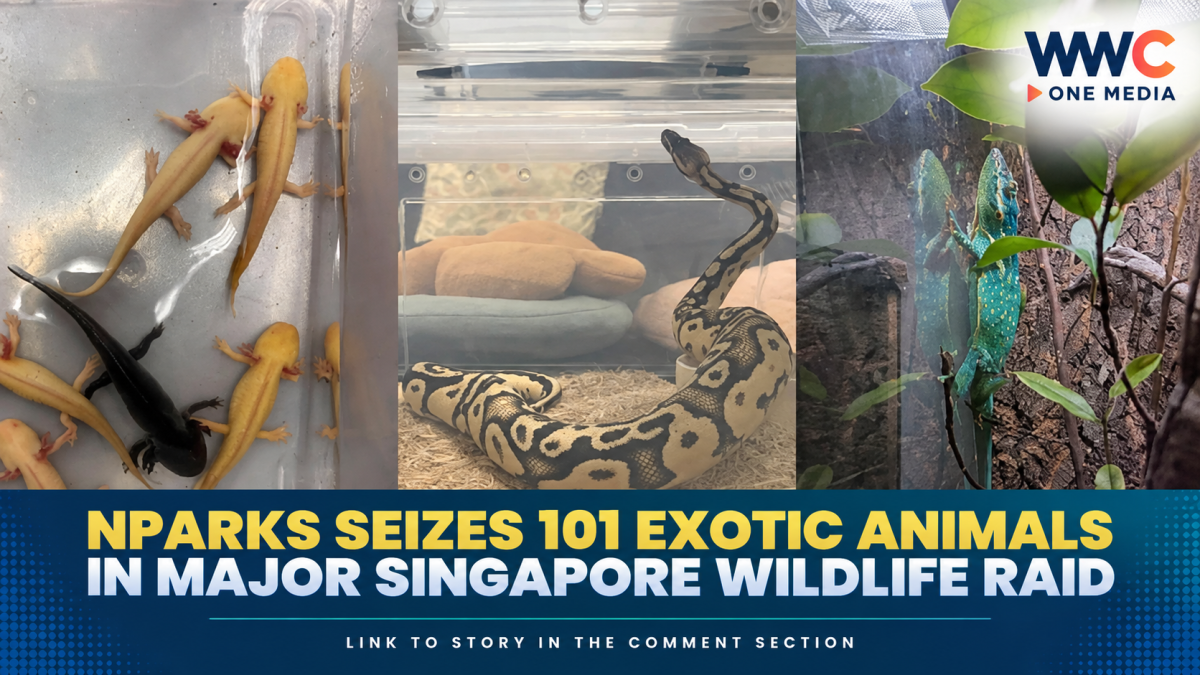
Singapore’s National Parks Board (NParks) has seized 101 exotic wildlife specimens in one of its largest operations against the illegal sale and possession of wildlife in recent years.
The animals were recovered during simultaneous raids on the homes of six individuals on September 14. The six people are currently under investigation for suspected offences involving the illegal sale or possession of wildlife.
The seizure included axolotls, leopard geckos, tarantulas, ball pythons, pig-nosed turtles, armadillo girdled lizards, blue beauty anoles, Mount Elliot leaf-tailed geckos and rosy boas.
Some of the species are protected under the Convention on International Trade in Endangered Species of Wild Fauna and Flora, or CITES. NParks said the operation followed the discovery of animals being advertised for sale on online platforms.
The condition of some of the animals raised additional welfare concerns. NParks said 13 specimens were found dead at the premises, with poor ventilation, cramped spaces and inadequate access to food and water among the conditions observed.
A leopard gecko with a ruptured and infected eye was also found in poor condition and was later euthanised on animal welfare grounds. Other surviving leopard geckos and axolotls were found to be lethargic and in poor body condition.
The surviving animals have been placed under mandatory quarantine at NParks’ wildlife rehabilitation facilities. The quarantine period is intended to allow the animals to be assessed and checked for diseases before decisions are made about their eventual placement, including possible repatriation or transfer to suitable animal establishments.
NParks said the operation forms part of its broader efforts to tackle illegal wildlife trading, including activity taking place through online platforms.
The agency also warned that illegally imported animals can pose risks to animal and public health because wildlife from unknown sources may carry diseases that can be transmitted to other animals or humans.
Under Singapore’s Wildlife Act, individuals convicted of offering wildlife for sale, selling it or exporting it can face fines of up to S$50,000, imprisonment of up to two years, or both. Those convicted of illegally importing CITES-listed species can face higher penalties of up to S$100,000 per specimen and up to six years’ imprisonment.
NParks urged the public not to purchase wildlife from unlicensed sources, saying that demand for illegally traded animals can contribute to the exploitation of endangered species and the wider illegal wildlife trade.




Leave a Reply