
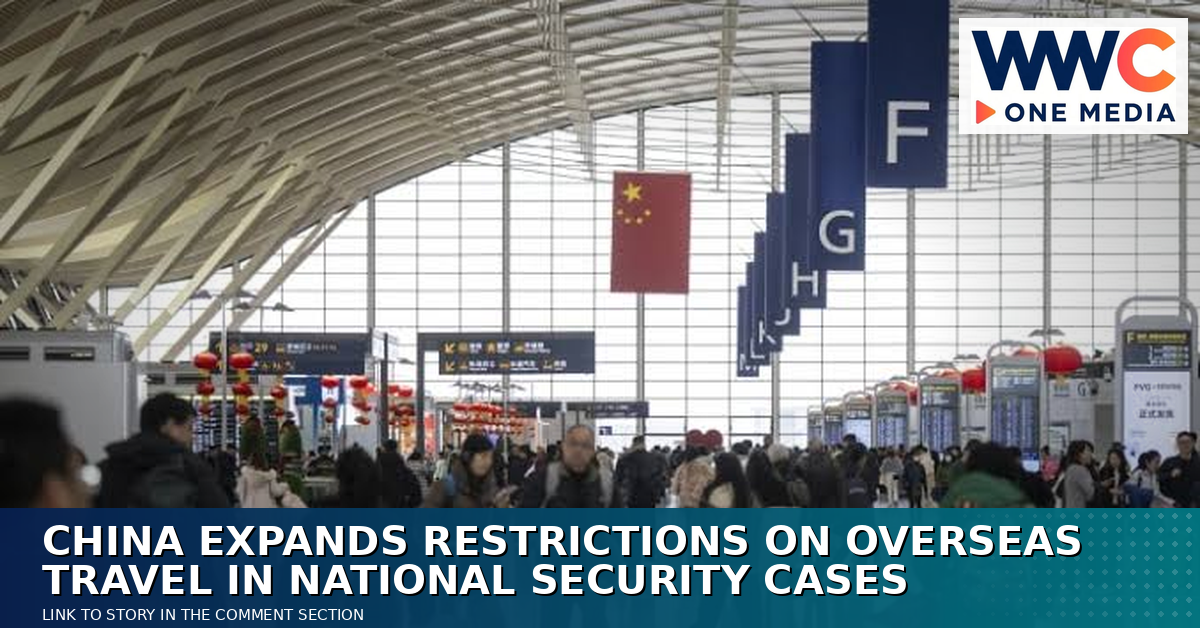
China has expanded the circumstances under which authorities can prevent citizens from leaving the country, citing national security concerns and violations involving technology exports.
The changes are part of amendments to China’s exit and entry administration framework, giving authorities broader powers to restrict overseas travel in cases involving national security, economic interests and other legal matters.
Under the revised rules, Chinese citizens may be stopped from leaving the country if authorities determine that their departure could endanger national security or cause significant harm to the country’s interests.
The measures also cover certain violations involving the export of sensitive technologies. People suspected of illegally transferring controlled technology or other restricted materials overseas could face travel restrictions while investigations are carried out.
Authorities have argued that tighter controls are necessary as China strengthens protection of sensitive technologies, intellectual property and national security interests amid growing competition with other countries.
The expanded powers come as Beijing has increased scrutiny of cross-border flows of technology, data and expertise. Chinese officials have repeatedly emphasized the need to protect strategic industries and prevent sensitive information from being transferred abroad without authorization.
The new rules could have implications for business executives, researchers and other professionals whose work involves controlled technologies or information. Companies operating internationally may also need to pay closer attention to China’s export-control requirements.
The changes come against a backdrop of heightened economic and technological tensions between China and the United States and other major economies. Restrictions on advanced semiconductors, artificial intelligence technology and other strategic products have become an increasingly important part of international trade policy.
China has also strengthened its own export-control system in recent years, introducing measures covering sensitive products, technologies and dual-use items that can have both civilian and military applications.
While the revised rules provide authorities with broader powers, restrictions on individual travel are expected to depend on the circumstances of each case and the relevant legal provisions.
The changes highlight the increasingly close connection between China’s border controls, national security policies and technology regulations as Beijing seeks to protect sensitive economic and technological interests.




Leave a Reply