
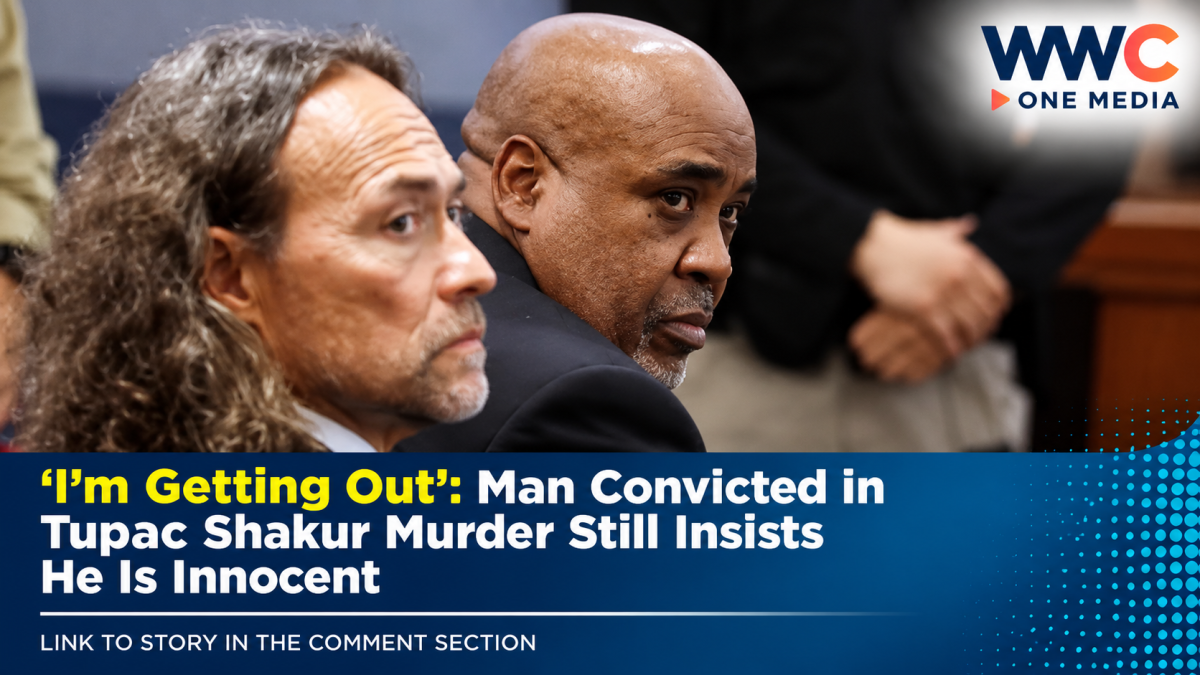
LAS VEGAS — Just days after a Las Vegas jury found him guilty in the decades-old killing of rap icon Tupac Shakur, Duane “Keffe D” Davis is refusing to accept the verdict.
The 63-year-old former gang leader insists he is innocent and says he is confident his conviction will be overturned on appeal.
“I ain’t worried. I’m getting out on an appeal,” Davis told The Hollywood Reporter, according to a report carried by AsiaOne.
Davis was convicted of first-degree murder over his role in the 1996 drive-by shooting that killed Shakur, finally bringing a criminal conviction to one of the most infamous unsolved cases in music history.
But while Tupac’s family and supporters saw the verdict as a long-awaited moment of justice, Davis is now preparing for his next legal battle.
Jury Reached a Verdict in Just Hours
A Las Vegas jury found Davis guilty on Aug. 31 after deliberating for less than three hours following a weeks-long trial.
Prosecutors argued that Davis was not the gunman but played a central role in orchestrating the attack that led to Shakur’s death.
Under Nevada law, a person can be held criminally responsible for murder even if they did not personally fire the fatal shots, depending on their role in planning or carrying out the crime.
Davis was the only person ever criminally charged in connection with Shakur’s killing. He now faces the possibility of life in prison, with sentencing scheduled for Oct. 13.
Davis Says He Is Innocent
Despite the guilty verdict, Davis has maintained that he should not have been convicted.
According to AsiaOne’s report, Davis claimed that his civil rights had been violated and said an appeal had already been filed before his trial began.
He also suggested that his previous lawyer had been confident that the legal case could eventually result in financial compensation.
Davis pleaded not guilty before going to trial and has consistently challenged the prosecution’s case.
His appeal could now become the next major chapter in a case that has fascinated and divided hip-hop fans for nearly three decades.
The Case That Haunted Hip-Hop for 30 Years
Tupac Shakur was shot on Sept. 7, 1996, while riding in a BMW near the Las Vegas Strip.
He had attended a Mike Tyson boxing match earlier that night.
Shakur was riding with Death Row Records executive Marion “Suge” Knight when a white Cadillac pulled alongside their vehicle and gunfire erupted.
Shakur was hit multiple times and died six days later. He was 25.
For nearly 30 years, his murder remained one of the biggest unsolved cases in American music history.
The killing generated countless conspiracy theories and became deeply connected to the broader story of the East Coast-West Coast hip-hop rivalry of the 1990s.
Prosecutors Said Revenge Was the Motive
At Davis’ trial, prosecutors argued that the shooting was retaliation for a confrontation earlier that night.
According to court evidence, Shakur and members of his entourage had been involved in an assault on Orlando “Baby Lane” Anderson, Davis’ nephew, at the MGM Grand.
Anderson was associated with the South Side Compton Crips.
Prosecutors said Davis then helped orchestrate the search for Shakur and those with him.
They argued that Davis played a key role in obtaining or providing the weapon and directing the group involved in the attack.
The prosecution described Davis as the organiser behind the deadly retaliation.
His Own Words Became Crucial Evidence
One of the most extraordinary aspects of the case was where much of the evidence came from.
Davis himself.
Over the years, Davis spoke publicly about the shooting in interviews and in his 2019 memoir, Compton Street Legend.
He had also made statements to investigators.
Prosecutors used those statements to argue that Davis had repeatedly placed himself inside the Cadillac connected to the shooting and described his involvement in the events.
According to Associated Press reporting, Davis’ own public and private statements ultimately became central to the prosecution’s case.
But the defence argued that Davis had exaggerated or fictionalised parts of his story for attention and financial gain.
That became one of the key battles during the trial.
Defence Challenged the Evidence
Davis’ defence team argued that prosecutors lacked physical evidence directly linking him to the murder.
The defence also questioned the reliability of Davis’ own statements, portraying them as exaggerated stories from a man who had spent years discussing one of hip-hop’s most famous crimes.
A former Las Vegas homicide detective also testified during the trial that he had been unable to independently corroborate some of Davis’ statements about his alleged involvement.
But prosecutors argued that Davis had implicated himself repeatedly over many years.
The jury ultimately sided with the prosecution.
What Happened to the Other Men in the Cadillac?
Davis was the only surviving person prosecutors connected to the Cadillac involved in the shooting.
The other three men associated with the vehicle have died.
Orlando Anderson, whom Davis identified in earlier statements as the gunman, was killed in an unrelated shooting in 1998.
Authorities have not brought charges against anyone else in connection with Shakur’s murder.
The identity of the shooter was not established through a criminal conviction in the case.
That means Davis’ conviction is historic for another reason.
Nearly three decades after Tupac’s death, he remains the only person ever convicted over the murder.
A Conviction That Brought Closure — But Not All the Answers
For Tupac’s family, the guilty verdict represented a major moment after decades of uncertainty.
His sister, Sekyiwa “Set” Shakur, was in court when the verdict was read and became emotional as the jury’s decision was announced.
The conviction brought an official legal outcome to a case that had become surrounded by rumours, conspiracy theories and competing accounts.
But the trial also exposed why the investigation took so long.
Recent reporting has highlighted years of missed opportunities, witness reluctance, distrust of law enforcement and conflicts between agencies investigating the case.
The result is a case that may finally have produced a conviction but still carries unanswered questions about the people, events and decisions surrounding Shakur’s death.
Davis Also Made Claims About Legal Funding
In his latest remarks, Davis also claimed that he had unsuccessfully tried to get Sean Combs and Dr Dre to pay for his legal representation.
AsiaOne reported the claim, but there is no indication in the report that either man agreed to fund Davis’ defence.
The claim is separate from the evidence that led to Davis’ conviction and should not be interpreted as evidence that either Combs or Dr Dre was involved in Shakur’s murder.
Now, All Eyes Turn to the Appeal
Davis has made his position clear.
He says the fight is not over.
His conviction could now be challenged through the appeals process, where his legal team may raise arguments concerning his trial, constitutional rights, evidence or other legal issues.
However, an appeal does not automatically overturn a conviction.
A higher court would have to find grounds for reversing or modifying the judgment.
For now, Davis remains convicted of first-degree murder.
And unless that conviction is overturned, he faces sentencing in October and the possibility of spending the rest of his life in prison.
Nearly 30 Years Later, the Tupac Case Is Still Making History
Tupac Shakur’s death changed hip-hop forever.
His murder became one of the defining tragedies of the 1990s music industry.
For years, fans wondered whether anyone would ever face criminal consequences.
Now, nearly three decades later, a jury has delivered the first conviction.
But Davis is refusing to concede defeat.
He insists he is innocent.
He says his civil rights were violated.
And he believes the appeal will set him free.
For the family of Tupac Shakur, the verdict may represent long-awaited accountability.
For Davis, it marks the beginning of another fight.
Nearly 30 years after Tupac was gunned down on a Las Vegas street, one of hip-hop’s longest-running murder mysteries has finally produced a conviction — but the legal battle may not be over yet.
WWC ONE MEDIA J.M.D



Leave a Reply