
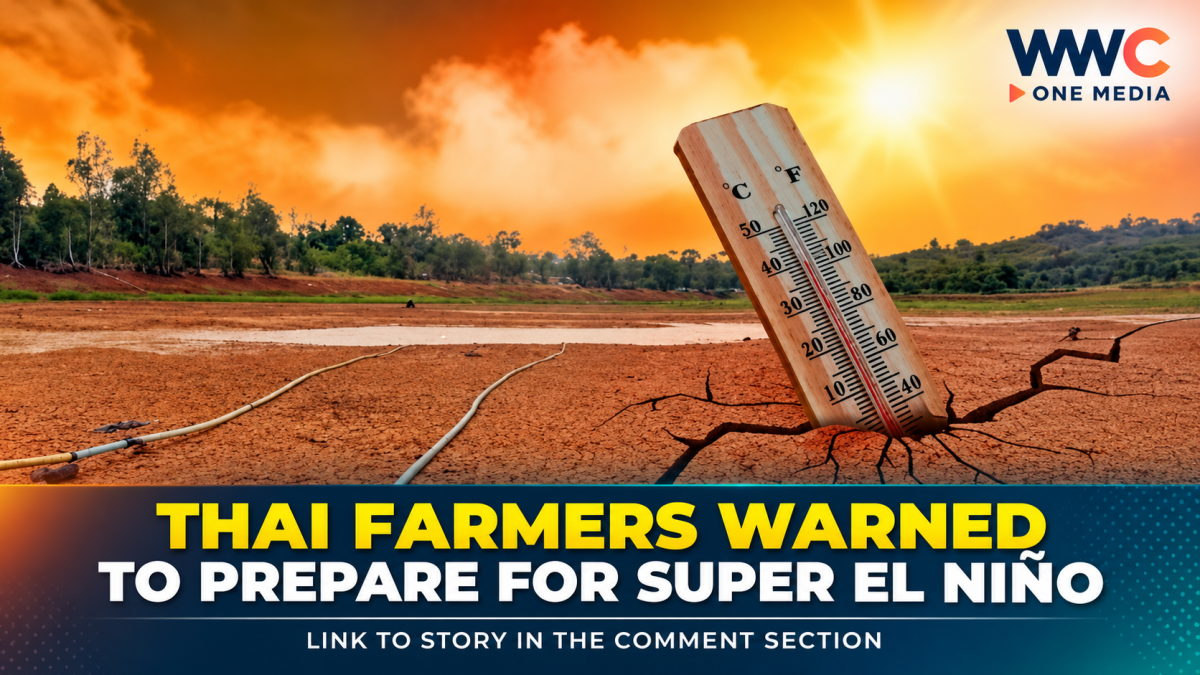
Thailand’s farmers are being urged to prepare for the possible arrival of an exceptionally strong El Niño later this year, with changing weather patterns expected to create challenges for agriculture and water management.
The developing climate pattern is being closely monitored by international forecasters, including the US National Oceanic and Atmospheric Administration and the World Meteorological Organization. Forecasts indicate that the event could strengthen significantly toward the end of 2026.
El Niño occurs when unusually warm waters develop in the central and eastern tropical Pacific, altering weather patterns around the world. Strong events can bring hotter and drier conditions to parts of Southeast Asia while producing heavier rainfall in other regions.
For Thailand, the potential consequences include longer dry periods, higher temperatures and increased pressure on water supplies. Previous forecasts have indicated that the country could experience reduced rainfall as the weather pattern develops.
Agriculture could be particularly vulnerable. Crops that depend heavily on regular rainfall may face water shortages, while higher temperatures can increase evaporation and place additional stress on plants and livestock.
The effects may also extend beyond individual farms. Disruptions to crop production can influence food supplies and commodity prices, particularly for agricultural products that are important to both domestic consumption and exports.
International commodity analysts have warned that strong El Niño conditions can affect crops including sugar, coffee and cocoa. Thailand’s sugar industry is among those exposed to the effects of reduced rainfall associated with El Niño conditions.
At the same time, El Niño does not produce identical weather conditions everywhere. Some areas can experience intense rainfall and flooding while others face drought, meaning the impact on Thai farmers may vary by region and crop.
The developing forecast has therefore increased attention on water planning, crop selection and agricultural preparedness. Authorities and farmers may need to monitor rainfall and reservoir conditions closely as the event develops.
With forecasts still subject to change, the eventual strength and regional effects of the El Niño will become clearer in the coming months. For farmers, early preparation could help reduce the risks posed by potentially hotter and less predictable weather.




Leave a Reply