
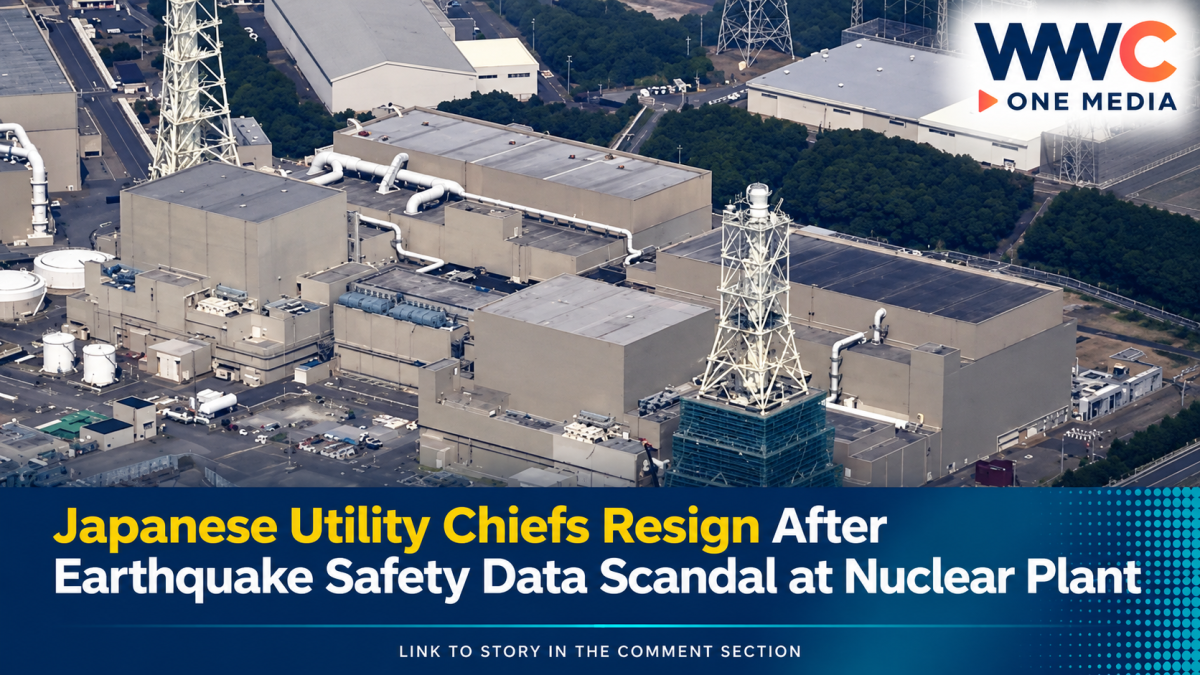
The president and chairman of Japan’s Chubu Electric Power will resign over a scandal involving the manipulation of earthquake safety data used in assessments for two nuclear reactors.
President Kingo Hayashi and Chairman Satoru Katsuno are scheduled to step down on Sept 30, taking responsibility after an independent investigation found that the company had submitted improper seismic data during regulatory reviews for the restart of reactors No. 3 and No. 4 at the Hamaoka nuclear power plant in Shizuoka Prefecture.
The utility will also withdraw its applications to restart the two reactors, effectively ending the current safety review process.
The investigation found that Chubu Electric had provided regulators with selected earthquake vibration data using a method different from the one it had reported to Japan’s Nuclear Regulation Authority. The data was manipulated in ways that made the estimated earthquake risk meet internal safety requirements.
The misconduct had reportedly continued for years. An internal investigation was launched after a whistleblower raised concerns, prompting the nuclear regulator to suspend its review of the reactors in December.
The independent panel concluded that pressure from senior management to achieve an early restart was among the factors that contributed to the misconduct. Hayashi and Katsuno were not found to have directly manipulated the data themselves.
Hayashi acknowledged serious problems with the company’s governance and corporate culture and apologised for the scandal. He said Chubu Electric would work to restore public confidence before seeking approval to restart the reactors again.
Minoru Yasui, currently a senior executive director, is scheduled to become president on Oct 1.
The Hamaoka plant is located in an area considered vulnerable to a potential Nankai Trough megaquake, making the accuracy of seismic safety assessments particularly important.
Chubu Electric had submitted applications for safety screening of the No. 3 and No. 4 reactors in 2014 and 2015. The reactors have remained offline since Japan’s nuclear plants were shut down following the 2011 Fukushima disaster.
Japan has been gradually restarting nuclear reactors as it seeks to reduce reliance on imported fossil fuels and meet its energy and emissions targets. The Hamaoka scandal, however, has added another setback to efforts to bring more reactors back online while addressing public concerns over nuclear safety.




Leave a Reply