
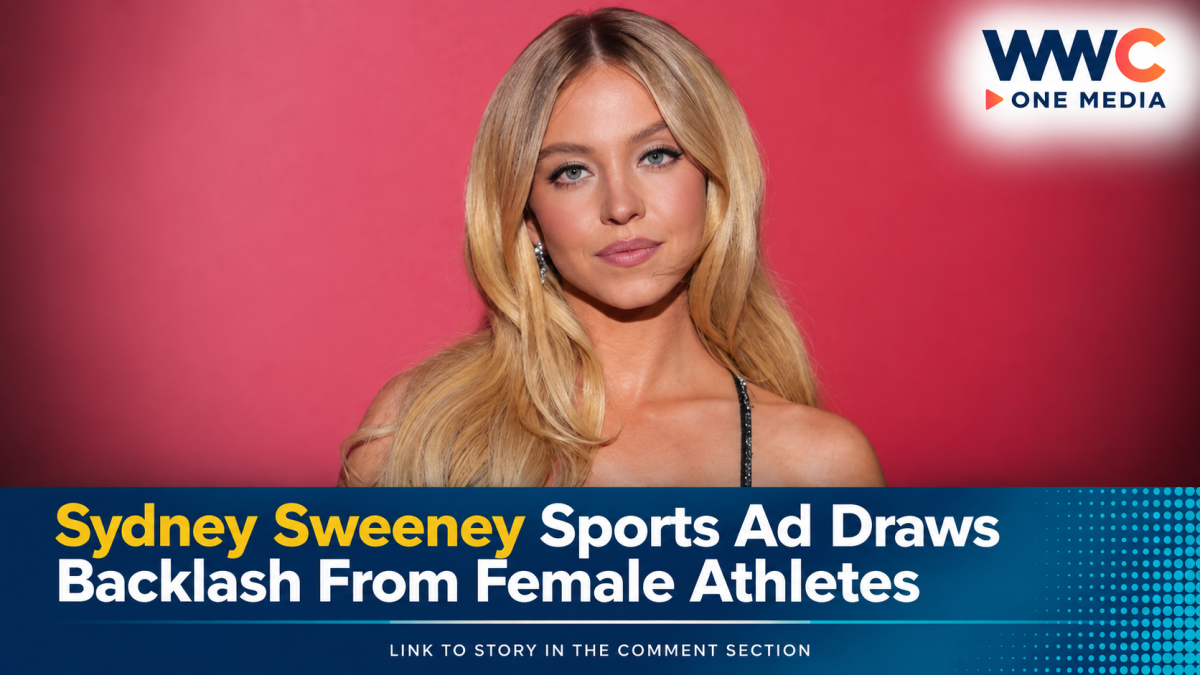
An advertising campaign featuring actress Sydney Sweeney has sparked criticism from female athletes, who say the campaign reduces women’s sports to sexualised imagery rather than highlighting athletic ability.
The 29-year-old actor appears in a series of provocative scenes for Novig, a US-based sports prediction platform. The advertisement features Sweeney posing with equipment from sports including tennis, baseball, basketball, football and hockey, often wearing little or no clothing.
The campaign quickly drew reactions from athletes around the world.
Four-time Olympic swimming gold medallist Ariarne Titmus was among the most prominent critics. She said she was frustrated by what she viewed as the continued use of women’s bodies to market sport.
British sprinter Amy Hunt also addressed the controversy after competing in the 200 metres at the World Athletics Ultimate Championship in Budapest. Looking into the camera during a post-race interview, she said: “Sydney Sweeney, this is what women in sport look like,” before highlighting the physical effort behind elite competition.
Former US gymnast Gracie Kramer was another early critic. She posted a video of herself training and competing, accompanied by a message contrasting the advertisement with the reality of women’s sport.
Other athletes, including Olympic cyclist Sophie Capewell and boxer Skye Nicolson, also criticised the campaign. Their comments focused on concerns that sexualised advertising can overshadow the skill, dedication and physical demands involved in women’s athletics.
Sweeney has not issued a detailed public statement specifically addressing the criticism. She did, however, share images from ESPN’s Body Issue featuring athletes who have posed nude, apparently responding to the debate over whether athletes can be represented both as sportspeople and as sexual beings.
Novig has defended the campaign, describing it as a playful way of promoting its sports prediction platform.
The controversy has also renewed a broader discussion about how female athletes are portrayed in advertising, particularly as women’s sports continue to attract growing audiences and commercial investment.




Leave a Reply