
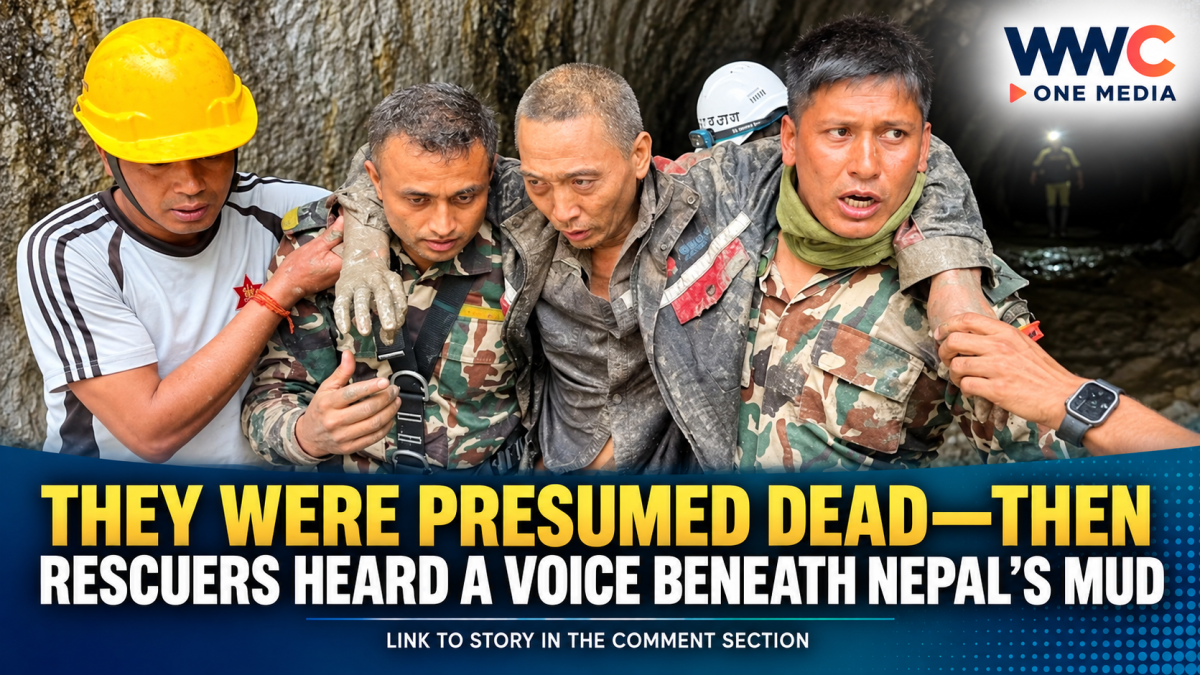
KATHMANDU, Nepal — A faint cry from beneath collapsed concrete and hardened mud has given rescuers in Nepal something they desperately needed after nearly two weeks of searching through one of the country’s worst recent disasters: hope.
Nepali rescue teams continued their search on September 6 as operations entered their 12th day following a catastrophic glacial and mountain collapse near the China-Nepal border that unleashed devastating floods and torrents of mud and debris downstream.
The disaster has killed more than 1,300 people across Nepal and China, while thousands remain missing, according to the latest reports. But a series of extraordinary rescues—including survivors found after spending days trapped beneath debris and inside tunnels—has kept search teams pushing forward despite increasingly difficult conditions.
A Woman Presumed Dead Was Found Alive
One of the most remarkable rescues involved Chandika Kumari Shrestha, a woman whose family had already begun mourning her presumed death.
Rescuers searching through the devastated village of Betrawati heard her cries coming from beneath the remains of a collapsed four-storey building. Shrestha had survived in a small air pocket surrounded by mud and debris.
Police and rescue personnel spent about 45 minutes reaching her before she was taken for medical treatment.
Her survival stunned rescuers and relatives alike—and became a powerful symbol of hope for families still waiting for news of missing loved ones.
Trapped Deep Inside a Tunnel—And Still Alive
Shrestha was not the only survivor to defy the odds.
Chinese national Lu Haitao was rescued after spending about 10 days trapped inside a hydropower tunnel in Nepal. AP reported that the 49-year-old worker survived by reaching higher ground inside the tunnel as floodwaters devastated the surrounding area.
Other workers have also been pulled alive from hydropower tunnels days after the disaster. In one operation, rescuers found two workers after hearing voices from inside a flooded tunnel at the Trishuli 3A hydropower plant.
Those discoveries have raised hopes that more people could still be alive in underground chambers and tunnel systems—but rescuers face a dangerous and increasingly complex operation.
Why the Search Is So Difficult
The disaster began on August 26, when a massive collapse involving ice, rock and debris triggered destructive flooding in Nepal’s mountainous border region.
Entire communities have been buried or swept away. Roads and bridges have been destroyed, while thick layers of mud and debris have made access to some of the hardest-hit areas extremely difficult.
Rescuers are using excavators, radar, search teams and manual digging to reach possible survivors. But the operation is especially challenging around damaged hydropower facilities, where hundreds of workers were reported missing and some were believed to have been trapped in tunnels.
Reuters previously reported that some tunnels may contain chambers with air supplies, giving rescuers a reason to continue searching even as the chances of finding survivors diminish with time.
Thousands Still Missing
The scale of the disaster continues to emerge.
CNA reported that at least 1,385 people had been killed across Nepal and China, with more than 5,500 people missing, although figures have varied between news agencies as authorities continue to recover bodies, identify victims and update missing-person lists.
On the Chinese side of the border, the once-busy Gyirong crossing was devastated, with buildings and infrastructure wiped out by the disaster. Reuters reported that search teams there have been using heavy equipment and forensic identification methods as recovery operations continue.
A Valley Left Almost Unrecognisable
Reuters journalists who visited the affected region described scenes of overwhelming destruction, with settlements reduced to mud, debris and flattened structures.
Authorities now face not only a massive search and recovery operation but also the enormous challenge of rebuilding homes and infrastructure.
Earlier estimates cited by Reuters suggested that around 20,000 homes may need to be rebuilt or replaced, with thousands completely destroyed, washed away or buried beneath mud. Officials are also considering moving some communities to safer locations rather than rebuilding in areas exposed to future disasters.
Hope Against the Odds
For rescue teams, every voice heard beneath the rubble and every worker pulled from a tunnel is a reminder that the search cannot be abandoned too soon.
But time is working against them.
As Nepal continues to dig through collapsed homes, buried villages and damaged hydropower tunnels, families remain caught between grief and hope—waiting for the next call, the next discovery, or perhaps another miracle.
Because in Nepal’s disaster zone, where thousands are still unaccounted for, rescuers have learned one thing: sometimes, hope can still be found where no one expects it.
WWC ONE MEDIA J.M.S




Leave a Reply