
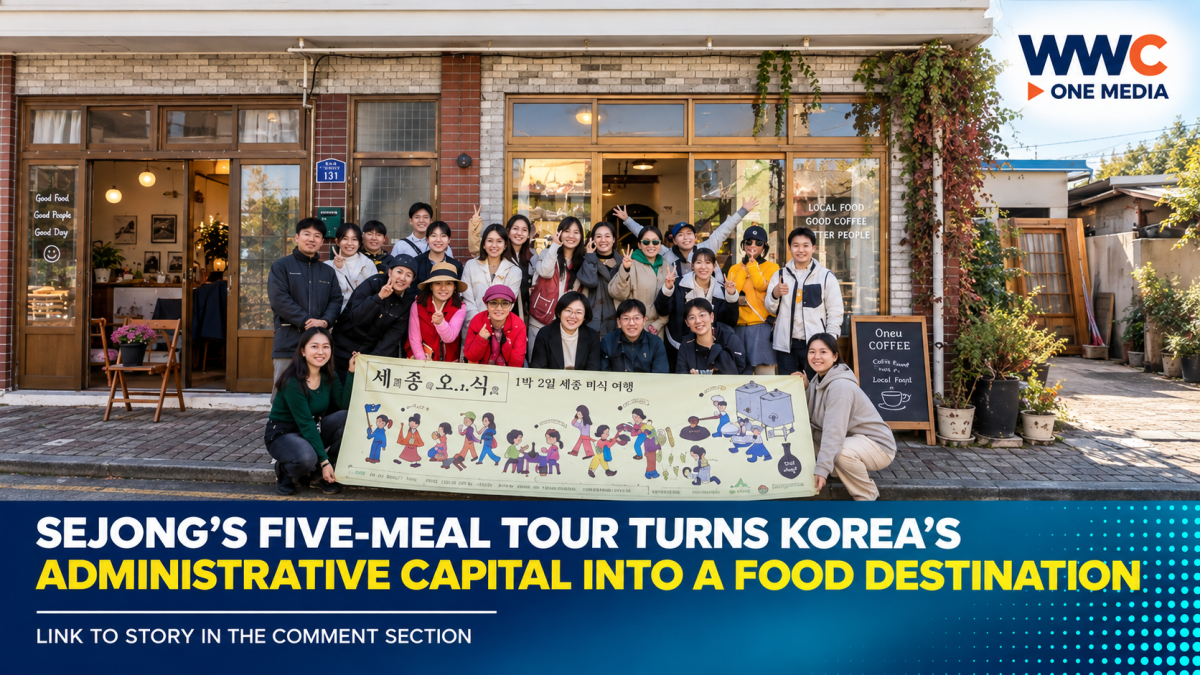
SEJONG, South Korea — South Korea’s administrative capital is getting a new identity — and it starts with food.
Sejong, a purpose-built city better known for government offices, wide avenues and modern architecture than for tourism, is launching a culinary experience designed to show visitors a very different side of the city.
Called “Sejong Osik,” or the Five-Meal Tour, the two-day, one-night program combines restaurants, traditional markets, cafés, cultural attractions and hands-on activities to connect Sejong’s sleek new districts with its older neighborhoods.
A city with two very different faces
Sejong has a striking contrast at its heart.
The newer part of the city is defined by government complexes, planned roads, parks, lakes and contemporary buildings. But travel a short distance toward the older Jochiwon area and the atmosphere changes dramatically, with traditional markets, older buildings, small businesses and long-established local food vendors.
The new food tour is designed to bring those two sides together.
The program was launched by the Sejong city government and the Sejong Culture and Tourism Foundation, with gastronomy at the center of the experience.
From charcoal-grilled ribs to rooftop matcha
The journey begins with seok galbi, or marinated pork ribs grilled over charcoal, at Sanjang Garden.
The restaurant has operated since 1995 and serves its pork ribs already cooked on heated stone plates, allowing diners to enjoy the smoky flavor without having to grill the meat themselves.
The experience then shifts from traditional Korean flavors to a modern café setting.
Participants visit Cafe Pleasure on the 49th floor of the Sejong Leader’s Fore Tower, where they can enjoy drinks including matcha lattes while looking across the city and the Geum River.
That contrast — old culinary traditions followed by contemporary urban dining — is central to the tour’s appeal.
Peach pizza puts a local twist on Italian food
Dinner introduces another unexpected combination.
At Fastars by Findfine, participants can try peach prosciutto pizza, pairing Jochiwon’s locally associated peaches with salty prosciutto.
The meal is accompanied by Korean traditional spirits produced by Baekkyung Distillery, which uses local rice, water and nuruk, a traditional fermentation starter. The distillery’s products include yakju, cheongju and takju and are exported to markets in Europe, the United States and Asia.
The pairing reflects a broader trend in Korean food culture: traditional ingredients and techniques being presented alongside international cuisine.
Day two heads to the traditional market
The second day moves away from Sejong’s polished modern districts and into Sejong Traditional Market in Jochiwon.
The market offers seasonal produce, fish, rice cakes, snacks and freshly prepared food.
Among its specialties is padak, crispy fried chicken topped with a large serving of shredded green onions.
Visitors can also try jjajangmyeon, handmade dumplings, savory pancakes and other market dishes.
Rather than simply eating at one restaurant, participants take part in a Market Potluck mission, using vouchers to collect different foods from vendors before gathering at Cafe Hwayangyeonhwa for a shared meal.
Food is only part of the journey
The program is designed to be more than a restaurant-hopping trip.
Participants can explore Sejong’s older neighborhoods, including streets containing historic homes, vintage storefronts and community businesses.
The itinerary also includes the Presidential Archives, where visitors can see recreated presidential spaces and former presidential vehicles, as well as the Sejong National Arboretum, which combines botanical displays with a Korean garden modeled on the grounds around Changdeok Palace.
There is even a hands-on glassmaking activity at Own Glass Studio, allowing visitors to create small pieces of their own.
Why Sejong is pushing food tourism
Sejong was created as a planned administrative city to help distribute government functions and economic activity away from Seoul. Although it has become an important government center, it has historically struggled to develop the same tourism profile as Korea’s better-known destinations.
The culinary program is an attempt to change that.
Han Kyung-ah of the Sejong Culture and Tourism Foundation said research showed that gastronomy was the leading reason people were interested in visiting the region. The foundation is using subsidies to make the program more affordable and encourage visitors to explore local businesses.
The package costs approximately 100,000 to 120,000 won ($75–$90) and includes a one-night stay at a four-star hotel, meals and guided experiences. Each session is limited to about 25–30 participants.
The initial program launched with a sold-out September 19 session, followed by dates in October and November.
Sejong wants visitors to taste the city’s identity
The bigger goal is to connect the city’s two halves.
Modern Sejong represents Korea’s rapidly developing administrative future, while Jochiwon’s markets, old buildings, artisans and long-established food businesses preserve a more traditional atmosphere.
By putting both experiences on the same itinerary, the Five-Meal Tour is attempting to create something Sejong has lacked: a tourism identity built around the city’s own food, people and history.
For travelers looking beyond Seoul, the message is increasingly clear.
Sejong may have been built around government — but its next chapter could be written around the dinner table.




Leave a Reply