
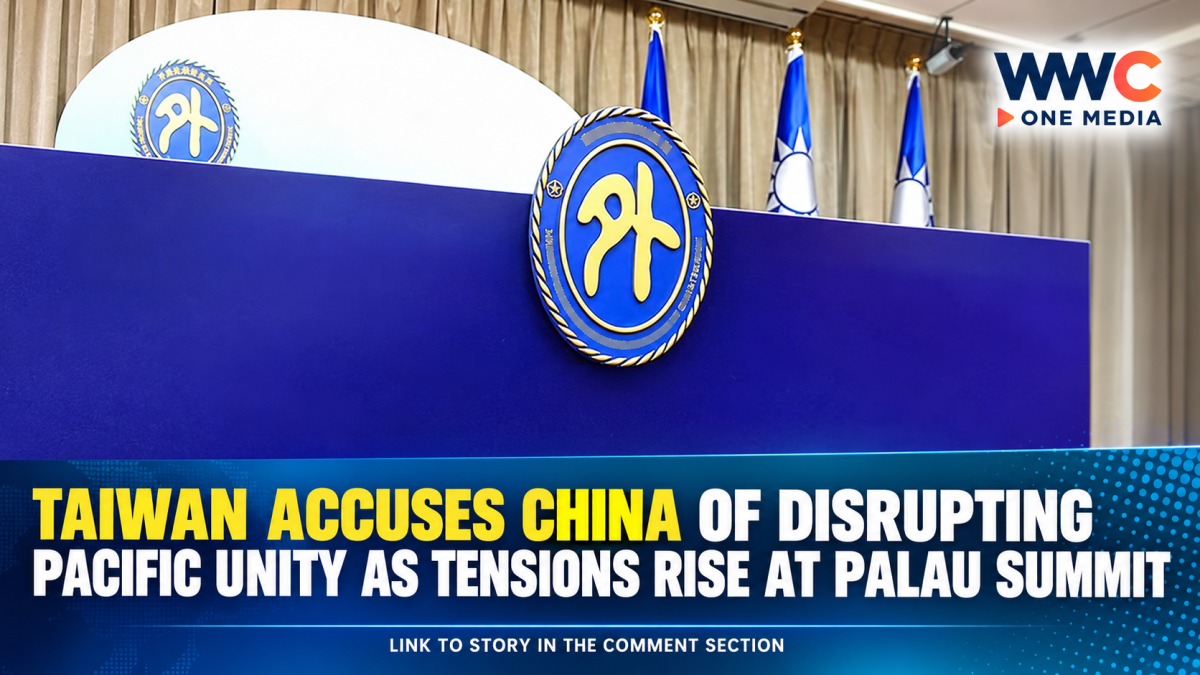
KOROR, Palau — Taiwan has accused China of disrupting discussions among Pacific nations and injecting geopolitical rivalry into a region already facing growing strategic pressure from major powers.
Taiwanese officials raised the alarm following the 55th Pacific Islands Forum (PIF) summit in Palau, where tensions surrounding Taiwan’s participation and China’s expanding influence became one of the major issues overshadowing regional discussions.
Taiwan’s Minister of Foreign Affairs Lin Chia-lung led a delegation to Palau, one of Taipei’s diplomatic allies, for events connected to the summit. A Taiwanese foreign affairs official said Beijing’s continued attempts to turn regional discussions into geopolitical confrontations deserve greater international attention.
China-Taiwan Rivalry Overshadows Pacific Summit
The Pacific Islands Forum is traditionally focused on issues affecting Pacific nations, including climate change, economic development, security and regional cooperation.
However, the latest gathering in Palau was increasingly overshadowed by the broader geopolitical competition involving China, Taiwan, the United States, Australia and New Zealand.
The Associated Press reported that tensions escalated after both Chinese and Taiwanese representatives attended events connected to the summit. Beijing objected strongly to Taiwan’s presence and warned of unspecified consequences, while Taiwanese officials accused China of attempting to undermine Pacific unity.
Taiwan participates in the Pacific Islands Forum as a development partner, while China holds dialogue-partner status.
Palau, which maintains official diplomatic relations with Taiwan, has emphasized that Pacific nations should be allowed to determine their own priorities without outside interference.
Taiwan’s Lin Chia-lung Slams China’s Conduct
Foreign Minister Lin has been particularly outspoken about what Taipei describes as increasingly aggressive Chinese diplomatic tactics in the Pacific.
According to Reuters, Lin accused China of using confrontational “wolf warrior” diplomacy and attempting to undermine unity during the Pacific forum.
The report said Taiwan raised concerns over Beijing’s objections to its participation and alleged pressure surrounding the summit. Chinese officials rejected Taiwan’s accusations, describing them as politically motivated and denying the allegations.
The diplomatic confrontation highlights the increasingly intense competition for influence across the Pacific — a region with relatively small populations but enormous strategic importance.
Why the Pacific Has Become a Major Geopolitical Battleground
The Pacific Islands region has emerged as one of the world’s most important geopolitical arenas.
Its vast maritime territory, strategic shipping routes and proximity to major powers have made it increasingly important to China, the United States and their regional partners.
Beijing has significantly expanded its diplomatic, economic and security engagement across the Pacific in recent years, while Washington and its allies have increased their own efforts to strengthen relationships with Pacific governments.
Taiwan also maintains important partnerships in the region. Several Pacific nations have historically been among the relatively small number of countries maintaining formal diplomatic relations with Taipei.
That competition has placed Pacific governments in an increasingly sensitive position as they seek investment, infrastructure, climate assistance and security partnerships while also protecting their political independence.
Questions Over Pacific Unity
The absence of some regional leaders from the summit has fueled questions about divisions within the Pacific Islands Forum.
Taiwanese officials said some observers interpreted the situation as evidence that regional unity was under pressure.
However, Pacific leaders have continued to stress the importance of dialogue and regional cooperation despite disagreements over major-power competition.
The Associated Press reported that divisions have also emerged over other sensitive security issues, demonstrating the difficulty of maintaining consensus among countries with different political and economic relationships with China and other global powers.
Beijing-Taipei Tensions Continue Beyond the Pacific
The diplomatic dispute comes as tensions between Taiwan and China remain elevated across several fronts.
China claims Taiwan as part of its territory and has increased political and military pressure on the democratically governed island. Taiwan rejects Beijing’s sovereignty claims and says its future must be decided by its people.
Taiwan has also recently criticized Chinese maritime activity near the island. Reuters reported that Beijing said it conducted a seabed survey in waters east of Taiwan in August, while Taiwan condemned Chinese activities in the area and rejected Beijing’s claims of jurisdiction.
Meanwhile, Taiwanese President Lai Ching-te has emphasized the need for stronger self-defense capabilities, announcing that Taiwan’s planned defense budget would exceed NT$1 trillion for the first time. Beijing criticized the move and accused Taipei of escalating confrontation.
The Bigger Picture: Pacific Nations Caught Between Global Powers
The confrontation at the Palau summit demonstrates that the struggle for influence between China and Taiwan is no longer confined to the Taiwan Strait.
It is increasingly being felt across the Pacific, where governments are seeking to protect their national interests while managing relationships with competing global powers.
Taiwan’s latest accusations reflect growing concern in Taipei that China is using diplomatic pressure to reduce Taiwan’s international space.
China, meanwhile, continues to oppose Taiwan’s participation in international and regional organizations where Beijing believes Taipei’s presence could be interpreted as recognition of separate sovereignty.
As competition intensifies, Pacific leaders face increasing pressure to ensure that regional priorities — including climate change, economic development and security — are not overshadowed by the geopolitical rivalry of larger powers.
What Happens Next?
The diplomatic dispute surrounding the Pacific Islands Forum is unlikely to end soon.
China is expected to continue expanding its influence throughout the Pacific, while Taiwan and its allies seek to maintain partnerships and international engagement.
The key question now is whether Pacific nations can preserve regional unity while navigating the growing rivalry between Beijing, Taipei and other major powers.
For Taiwan, the stakes are particularly high.
As China increases pressure on countries and international organizations to limit official engagement with Taipei, Taiwan’s relationships with Pacific partners such as Palau remain strategically and diplomatically important.
The battle for influence in the Pacific is intensifying — and the latest confrontation in Palau shows that the region is becoming an increasingly important front in the wider struggle between China and Taiwan.
WWC ONE MEDIA J.M.D



Leave a Reply