
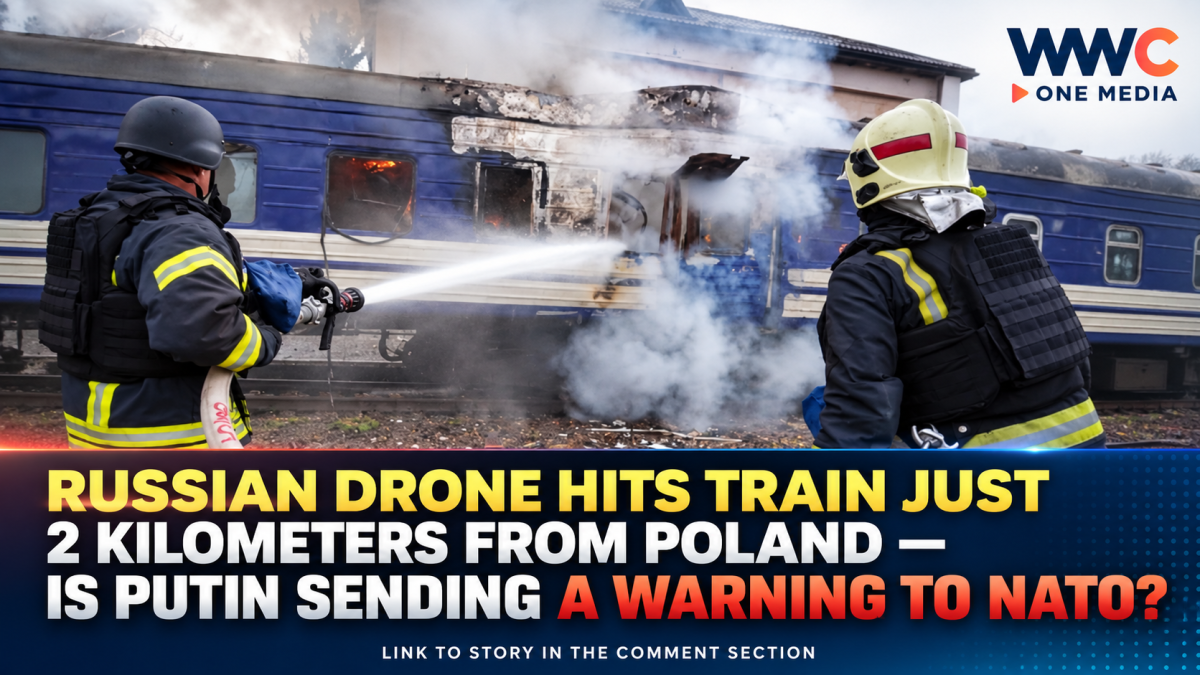
The strike occurred Sunday near Yahodyn, close to the Ukraine-Poland border, hitting the locomotive of a Kyiv-to-Warsaw passenger train. Ukrainian railway officials said the attack caused damage but there were no reported casualties.
The location has become the focus of international concern because a diplomatic train carrying former British Prime Minister Boris Johnson, former Swedish Prime Minister Carl Bildt and other European officials had passed through the area shortly before the strike.
Ukraine’s railway operator, Ukrzaliznytsia, said it was possible that the diplomatic train had been the intended target but had left the station earlier than scheduled. That assessment has not been independently established as fact, making the possible motive one of the most sensitive questions surrounding the incident.
Strike lands near NATO’s doorstep
The attack took place at a particularly sensitive location. The Yahodyn-Dorohusk crossing connects Ukraine with Poland, a NATO member and European Union country.
Another strike reportedly damaged infrastructure near the same border crossing, while a truck was hit less than a kilometer from Polish territory, according to reporting from ABC News and other outlets. The crossing was temporarily affected as authorities responded to the attacks.
Polish Prime Minister Donald Tusk warned that Russia’s military activity could intensify in the coming weeks and months and said Warsaw could not rule out the possibility that the escalation might eventually affect Polish territory. Poland subsequently moved to strengthen security along its Ukrainian border and kept its air-defense and surveillance systems on heightened alert.
The incident has therefore raised a broader question across Europe: How close can Russian attacks move toward NATO territory before the conflict creates a direct confrontation between Russia and the alliance?
Russia says it is striking Ukrainian targets
Moscow has acknowledged conducting strikes against railway infrastructure in western Ukraine.
The Russian Defense Ministry said the railway targets were connected to the movement of military supplies from Europe into Ukraine. Kremlin spokesman Dmitry Peskov subsequently said Russian forces would continue military operations across Ukraine.
However, the passenger train that was hit was traveling out of Ukraine toward Warsaw, rather than carrying military supplies into Ukraine. This discrepancy has fueled questions about the circumstances and intended target of the strike.
Ukraine and several European officials have characterized the attack as an escalation designed to intimidate countries supporting Kyiv.
Europe warns Moscow may be testing NATO
European officials have responded sharply.
EU foreign policy chief Kaja Kallas said the strikes appeared intended to frighten Western countries away from supporting Ukraine, arguing that the response should instead be increased support for Kyiv. Polish Foreign Minister Radoslaw Sikorski similarly called for allies to strengthen their backing for Ukraine.
NATO Secretary-General Mark Rutte also condemned Russia’s increasingly aggressive activity near NATO territory. He said the attacks demonstrated that Moscow was becoming increasingly reckless and pledged stronger support for Ukraine and additional efforts to reinforce NATO’s eastern defenses.
French Foreign Minister Jean-Noel Barrot described the train strike as an attempt to intimidate and divide European countries supporting Ukraine, according to Reuters.
Was the diplomatic train the real target?
That remains one of the biggest unanswered questions.
The diplomatic train carrying European figures had departed Yahodyn earlier than scheduled. Former Swedish Prime Minister Carl Bildt later described the incident and indicated that the train carrying the officials had passed through shortly before the attack.
Ukrzaliznytsia said the timing raised the possibility that the diplomatic train could have been the intended target. Some conflict analysts have gone further, arguing that the circumstances point toward a deliberate attempt to strike European officials.
But this remains an assessment rather than a confirmed fact. Neither the presence of European officials on the earlier train nor the timing alone definitively proves that Russia intended to target them.
NATO faces another difficult test
The incident comes amid a broader increase in Russian attacks against western Ukrainian infrastructure and border crossings.
Conflict analysts have noted that Russia has increasingly targeted transportation links and facilities close to Ukraine’s borders with NATO and EU countries. The Institute for the Study of War’s assessment said the attack near Yahodyn represented part of a wider pattern of Russian strikes against western Ukrainian border infrastructure.
For Poland, the danger is particularly serious because the country’s border with Ukraine is only a short distance from several major Ukrainian transportation routes used to move humanitarian and military assistance.
Warsaw has previously scrambled aircraft and increased defensive measures during major Russian attacks on western Ukraine. Polish authorities are now closely watching whether future strikes remain inside Ukrainian territory or begin crossing into NATO airspace or territory.
A warning for Europe?
The strike does not mean NATO and Russia are at war, and there is currently no indication that Polish territory was deliberately attacked in this incident.
But the geography makes the episode significant.
A Russian drone hitting a train only 2 kilometers from Poland, combined with other strikes near the border, puts renewed pressure on NATO to determine how it will respond if Russian attacks move even closer to alliance territory.
For Ukraine, the message is equally serious: western border infrastructure that once appeared relatively safer from Russian attacks is increasingly becoming part of the battlefield.
And with European officials now traveling through areas only minutes from the Polish border, the next Russian strike could carry consequences far beyond Ukraine.
The critical question now is whether the Yahodyn attack was an isolated strike on Ukrainian infrastructure — or a warning that Moscow is prepared to push the war even closer to NATO’s doorstep.
KYIV/WARSAW — A Russian drone strike on a passenger train in western Ukraine, just 2 kilometers from Poland, has triggered fresh alarm across Europe, with Polish and Ukrainian officials warning that Moscow’s attacks are moving dangerously close to NATO territory.
The strike occurred Sunday near Yahodyn, close to the Ukraine-Poland border, hitting the locomotive of a Kyiv-to-Warsaw passenger train. Ukrainian railway officials said the attack caused damage but there were no reported casualties.
The location has become the focus of international concern because a diplomatic train carrying former British Prime Minister Boris Johnson, former Swedish Prime Minister Carl Bildt and other European officials had passed through the area shortly before the strike.
Ukraine’s railway operator, Ukrzaliznytsia, said it was possible that the diplomatic train had been the intended target but had left the station earlier than scheduled. That assessment has not been independently established as fact, making the possible motive one of the most sensitive questions surrounding the incident.
Strike lands near NATO’s doorstep
The attack took place at a particularly sensitive location. The Yahodyn-Dorohusk crossing connects Ukraine with Poland, a NATO member and European Union country.
Another strike reportedly damaged infrastructure near the same border crossing, while a truck was hit less than a kilometer from Polish territory, according to reporting from ABC News and other outlets. The crossing was temporarily affected as authorities responded to the attacks.
Polish Prime Minister Donald Tusk warned that Russia’s military activity could intensify in the coming weeks and months and said Warsaw could not rule out the possibility that the escalation might eventually affect Polish territory. Poland subsequently moved to strengthen security along its Ukrainian border and kept its air-defense and surveillance systems on heightened alert.
The incident has therefore raised a broader question across Europe: How close can Russian attacks move toward NATO territory before the conflict creates a direct confrontation between Russia and the alliance?
Russia says it is striking Ukrainian targets
Moscow has acknowledged conducting strikes against railway infrastructure in western Ukraine.
The Russian Defense Ministry said the railway targets were connected to the movement of military supplies from Europe into Ukraine. Kremlin spokesman Dmitry Peskov subsequently said Russian forces would continue military operations across Ukraine.
However, the passenger train that was hit was traveling out of Ukraine toward Warsaw, rather than carrying military supplies into Ukraine. This discrepancy has fueled questions about the circumstances and intended target of the strike.
Ukraine and several European officials have characterized the attack as an escalation designed to intimidate countries supporting Kyiv.
Europe warns Moscow may be testing NATO
European officials have responded sharply.
EU foreign policy chief Kaja Kallas said the strikes appeared intended to frighten Western countries away from supporting Ukraine, arguing that the response should instead be increased support for Kyiv. Polish Foreign Minister Radoslaw Sikorski similarly called for allies to strengthen their backing for Ukraine.
NATO Secretary-General Mark Rutte also condemned Russia’s increasingly aggressive activity near NATO territory. He said the attacks demonstrated that Moscow was becoming increasingly reckless and pledged stronger support for Ukraine and additional efforts to reinforce NATO’s eastern defenses.
French Foreign Minister Jean-Noel Barrot described the train strike as an attempt to intimidate and divide European countries supporting Ukraine, according to Reuters.
Was the diplomatic train the real target?
That remains one of the biggest unanswered questions.
The diplomatic train carrying European figures had departed Yahodyn earlier than scheduled. Former Swedish Prime Minister Carl Bildt later described the incident and indicated that the train carrying the officials had passed through shortly before the attack.
Ukrzaliznytsia said the timing raised the possibility that the diplomatic train could have been the intended target. Some conflict analysts have gone further, arguing that the circumstances point toward a deliberate attempt to strike European officials.
But this remains an assessment rather than a confirmed fact. Neither the presence of European officials on the earlier train nor the timing alone definitively proves that Russia intended to target them.
NATO faces another difficult test
The incident comes amid a broader increase in Russian attacks against western Ukrainian infrastructure and border crossings.
Conflict analysts have noted that Russia has increasingly targeted transportation links and facilities close to Ukraine’s borders with NATO and EU countries. The Institute for the Study of War’s assessment said the attack near Yahodyn represented part of a wider pattern of Russian strikes against western Ukrainian border infrastructure.
For Poland, the danger is particularly serious because the country’s border with Ukraine is only a short distance from several major Ukrainian transportation routes used to move humanitarian and military assistance.
Warsaw has previously scrambled aircraft and increased defensive measures during major Russian attacks on western Ukraine. Polish authorities are now closely watching whether future strikes remain inside Ukrainian territory or begin crossing into NATO airspace or territory.
A warning for Europe?
The strike does not mean NATO and Russia are at war, and there is currently no indication that Polish territory was deliberately attacked in this incident.
But the geography makes the episode significant.
A Russian drone hitting a train only 2 kilometers from Poland, combined with other strikes near the border, puts renewed pressure on NATO to determine how it will respond if Russian attacks move even closer to alliance territory.
For Ukraine, the message is equally serious: western border infrastructure that once appeared relatively safer from Russian attacks is increasingly becoming part of the battlefield.
And with European officials now traveling through areas only minutes from the Polish border, the next Russian strike could carry consequences far beyond Ukraine.
The critical question now is whether the Yahodyn attack was an isolated strike on Ukrainian infrastructure — or a warning that Moscow is prepared to push the war even closer to NATO’s doorstep.




Leave a Reply