
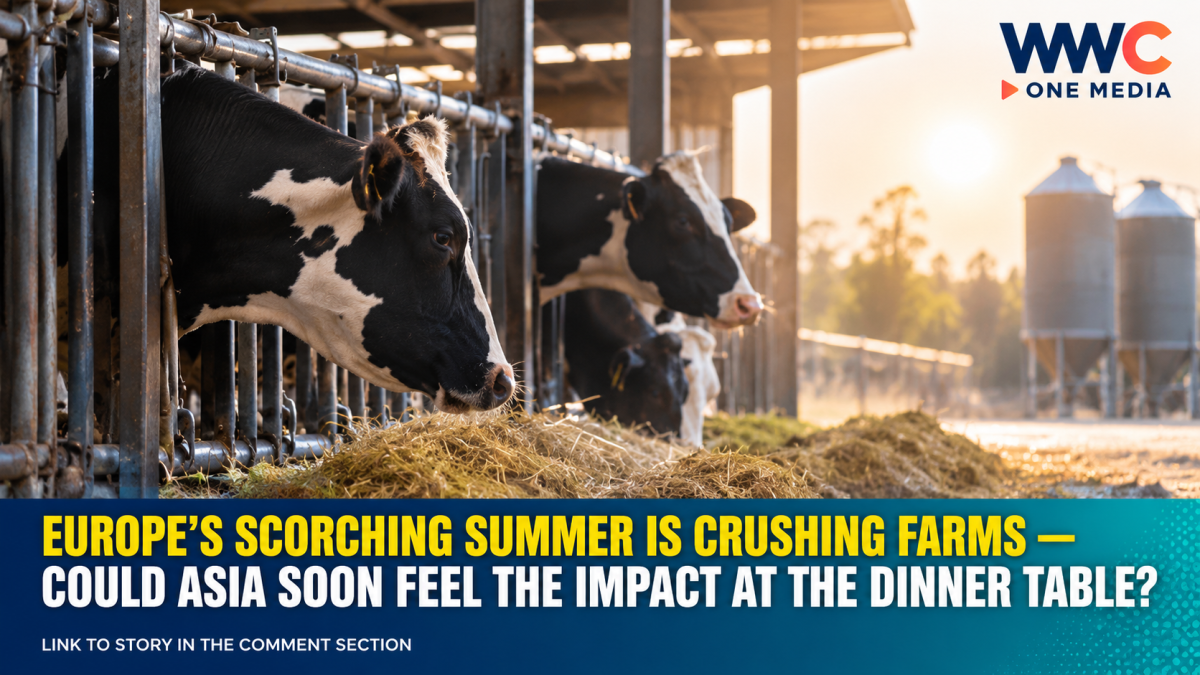
Europe’s brutal summer of extreme heat and drought is taking an increasingly visible toll on farms, raising fresh concerns over crop yields, livestock and the flow of food exports to markets in Asia.
From parched pastures and struggling cattle to shrinking maize harvests, farmers across Europe are confronting the consequences of one of the continent’s most punishing summers in years. The damage is no longer just a local agricultural problem. As Europe is an important supplier of a range of food products to international markets, weaker harvests could eventually add pressure to global food supplies and prices.
According to Channel NewsAsia, vulnerable crops and livestock across Europe have been hit by extreme heat, with farmers reporting falling yields. Farmers in southern Belgium, for example, have said unusually intense summer temperatures have taken a toll on cattle and farming conditions.
Europe’s Farms Under Pressure
The crisis stretches far beyond Belgium.
In Austria, Reuters reported that extreme heat and dry conditions have damaged both crops and livestock production. Parched Alpine pastures have left some dairy farmers struggling to provide enough grass and water for cattle, forcing them to use winter feed reserves earlier than expected. Some farmers have even faced pressure to send animals for slaughter earlier than planned.
Austria’s grain harvest has also been affected, with official forecasts pointing to a significant decline in yields. Corn has been particularly vulnerable to the prolonged heat and lack of rainfall.
The situation has been especially alarming in Central and Eastern Europe.
Hungary and Romania, traditionally important maize-producing countries, have been hammered by recurring drought, extreme heat and water shortages. Reuters reported that the European Commission expects the EU’s 2026 maize harvest to fall to around 50.1 million tonnes — a level close to a 20-year low and roughly 20 per cent below the recent average.
Hungary, once a cereal exporter, is even expected to import maize this year, while Romania’s exportable surplus has been sharply reduced.
Italy Records Its Hottest Summer in More Than 75 Years
Italy, one of Europe’s major agricultural producers, has also been hit by exceptional temperatures.
The country recorded its hottest summer since at least 1950, according to Italy’s National Research Council’s Institute for BioEconomy. The extreme heat affected important agricultural areas, particularly in northern and central parts of the country.
Italy’s experience highlights a growing concern for European agriculture: extreme heat is increasingly becoming a recurring threat rather than an isolated weather event.
Other parts of Europe have also reported problems with crops ranging from maize and barley to vegetables and olives, while drought and wildfires have placed additional pressure on farmers. The Guardian reported in August that European producers were warning of lower food production and potential price increases as heat, drought and fires damaged agricultural output.
Why Asia Should Be Watching
The effects of Europe’s agricultural problems could travel far beyond the continent.
Asian countries import a wide range of European agricultural products, including dairy products, meat, grains, processed foods, wine and other specialty goods. A significant decline in European production could tighten supplies, redirect trade flows and increase competition for alternative suppliers.
The concern is particularly important because the global food market is already dealing with multiple pressures.
Climate-related disruptions are affecting agricultural regions beyond Europe. China has also faced damaging heat and heavy rainfall in major corn, soybean and cotton-growing areas, potentially affecting crop quality and production. Reuters reported that these weather disruptions could increase demand for imported agricultural products.
At the same time, disruptions to Ukrainian grain exports and other global supply chains have already reshaped agricultural trade.
Argentina, for example, has been expanding corn exports as buyers seek alternative supplies amid disruptions in Ukraine and damage to European crops. Reuters reported that Argentina’s strong harvest and changing global trade conditions have helped the country capture additional demand in international markets.
A Global Food Supply Chain Under Growing Strain
The danger is not necessarily that Europe will suddenly stop exporting food to Asia.
Instead, the bigger risk is a gradual tightening of supply.
Lower harvests can reduce exportable surpluses. Countries facing domestic shortages may retain more products for their own markets. Buyers may then compete more aggressively for supplies from alternative exporters.
That can eventually translate into higher prices.
The United Nations’ climate chief has also warned that extreme weather in Europe is adding to broader inflationary pressures. Food production is particularly vulnerable because farmers face multiple risks at the same time, including heat, drought, water shortages and rising energy and production costs.
For import-dependent markets in Asia, these developments are another reminder that food security increasingly depends on events happening thousands of kilometres away.
Singapore and Asia Face a Wider Food Security Challenge
The issue is especially relevant for highly import-dependent countries such as Singapore.
Singapore has continued to focus on strengthening food resilience, with policymakers discussing measures including support for local farms and strategic preparations for supply disruptions. CNA recently reported that Singapore lawmakers have raised ideas such as stockpiling fertiliser and supporting local food production, while the country continues to balance food availability, affordability and supply assurance.
Europe’s agricultural troubles underline why food resilience is becoming a major strategic issue across Asia.
A drought in Europe, flooding in another agricultural region or a disruption to a major shipping route can all affect the same supermarket shelves.
Could Food Prices Rise Again?
It is still too early to determine exactly how much Europe’s extreme summer will affect food prices in Asia.
Much will depend on final harvest figures, available inventories, trade policies, weather conditions in other major producing countries and whether alternative exporters can fill supply gaps.
However, the warning signs are becoming harder to ignore.
Europe’s shrinking maize production, damaged livestock conditions and weaker harvests are emerging at a time when global food supply chains are already vulnerable to climate shocks and geopolitical disruptions.
The result could be a more volatile global food market in the months ahead.
For consumers in Asia, the consequences may not arrive overnight.
But if Europe’s scorching summer continues to reduce agricultural output and global buyers begin competing for fewer supplies, the impact could eventually move from Europe’s dry fields to dinner tables thousands of kilometres away.
And that is the question now facing global food markets:
Was Europe’s scorching summer just a regional farming disaster — or the beginning of another global food supply shock?




Leave a Reply