
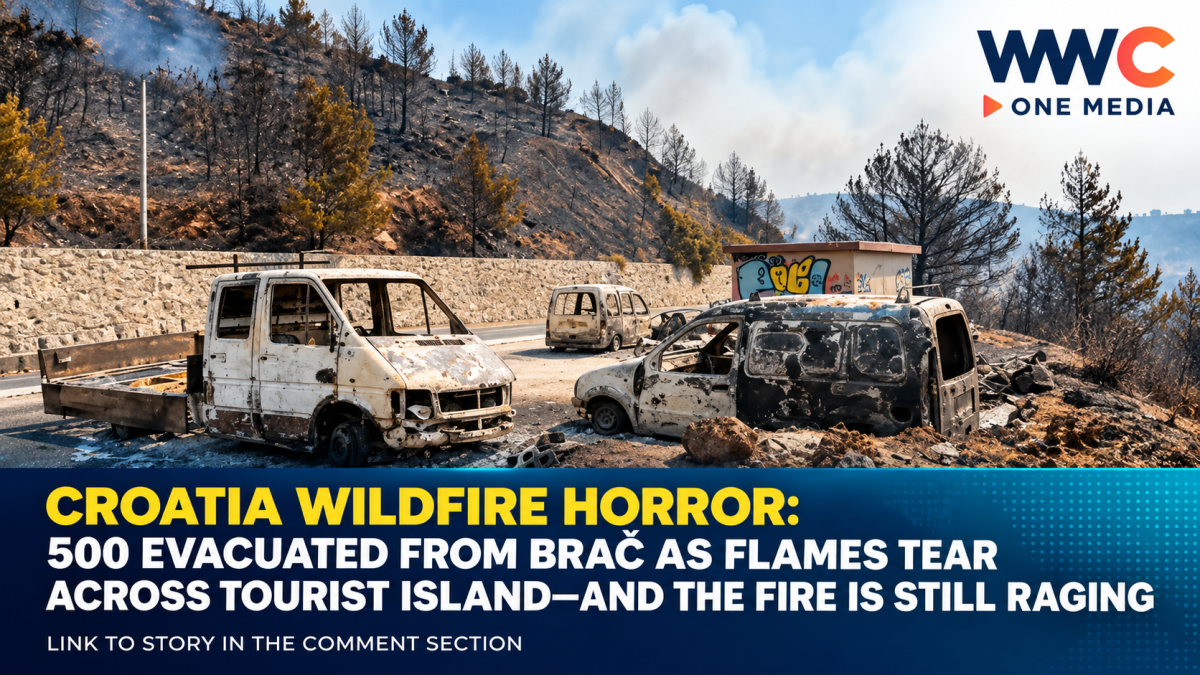
ZAGREB, Croatia — Hundreds of people have been evacuated from Croatia’s popular Adriatic island of Brač after a powerful wildfire tore through thousands of hectares of land and threatened communities near the western part of the island.
Around 500 people were evacuated as flames spread dangerously close to populated areas near the town of Milna, according to Channel NewsAsia, citing reports from Croatian authorities and AFP. The fire, driven by strong winds, had burned approximately 3,500 hectares of forest and scrubland.
The emergency unfolded after authorities raised the alarm shortly before midnight on Saturday, September 13, as the fast-moving blaze threatened homes and forced residents and visitors to flee the danger zone.
Dramatic Evacuation by Sea
The wildfire triggered a major rescue operation along Brač’s coastline, with authorities deploying boats and emergency services to help people escape.
Croatian reports said the evacuation operation involved people fleeing toward the coast, including children, elderly residents and vulnerable individuals. Preliminary information from the Split Port Authority indicated that rescue boats transported 185 people, while tourist vessels evacuated approximately 500 people by early morning during the wider emergency operation.
Another report placed the number of people evacuated by sea at around 700, highlighting how rapidly the situation was changing as authorities worked to move people away from the fire.
The differing figures reflect the evolving nature of the emergency and the various stages of the evacuation and rescue operations.
Firefighters Battle Massive Blaze Across Brač
The latest disaster is part of a prolonged and difficult wildfire battle on Brač.
Croatia’s national firefighting service reported that the fire initially broke out near Ložišća on September 10 and rapidly spread through grassland, low vegetation and difficult-to-access terrain. Strong winds pushed the flames toward communities including Ložišća and Bobovišća, forcing authorities to prepare possible evacuations.
At least 70 firefighters and 20 vehicles were initially deployed, while additional crews and aircraft were later brought in as the blaze expanded. Croatian firefighting authorities also deployed Canadair CL-415 water-bombing aircraft to attack the fire from the air.
At the height of the earlier firefighting operations, more than 100 firefighters were reportedly involved, supported by multiple firefighting aircraft and reinforcements from other Croatian regions.
Homes Defended, But the Battle Is Far From Easy
Despite the intensity of the wildfire, firefighters previously managed to protect homes in several threatened communities.
Croatia’s firefighting service said residential buildings near the fire zone were successfully defended, even as powerful winds repeatedly complicated efforts to contain the flames.
Officials have warned that changing wind conditions and difficult terrain can cause fires to spread unpredictably, creating new danger zones even after firefighters make progress on one section of the blaze.
The European Union’s Copernicus Emergency Management Service has also activated rapid mapping for the Brač wildfire, reporting that the fire spread toward settlements including Milna and Nerežišća and requiring emergency mapping to assess the fire’s extent and damage.
Popular Tourist Island Caught in Fire Emergency
Brač is one of Croatia’s best-known Adriatic destinations, famous internationally for its beaches, coastal towns and summer tourism.
The wildfire emergency has raised concerns for residents and tourists alike as flames spread across large areas of the island.
The scale of the destruction — estimated at approximately 3,500 hectares in the latest reports — underscores the seriousness of the disaster. For comparison, the burned area is roughly two-thirds the size of Manhattan, according to Channel NewsAsia’s report.
Croatia, like other parts of southern Europe, has faced increasingly dangerous wildfire conditions during periods of extreme heat, dry vegetation and strong winds. Experts have repeatedly warned that climate change is contributing to more intense and prolonged periods of extreme heat and drought, creating conditions that can allow wildfires to spread rapidly.
What Happens Next?
Emergency crews remain focused on protecting lives, homes and communities as firefighting and rescue operations continue.
Authorities have continued monitoring the fire zone and surrounding coastline following the large-scale evacuation effort, while emergency teams work to ensure that no one remains trapped or endangered near the affected areas.
For now, the immediate priority is clear: contain the flames, protect vulnerable communities and prevent the Brač wildfire from causing even greater destruction. But with strong winds capable of changing the situation within hours, the battle against the blaze may be far from over.




Leave a Reply