
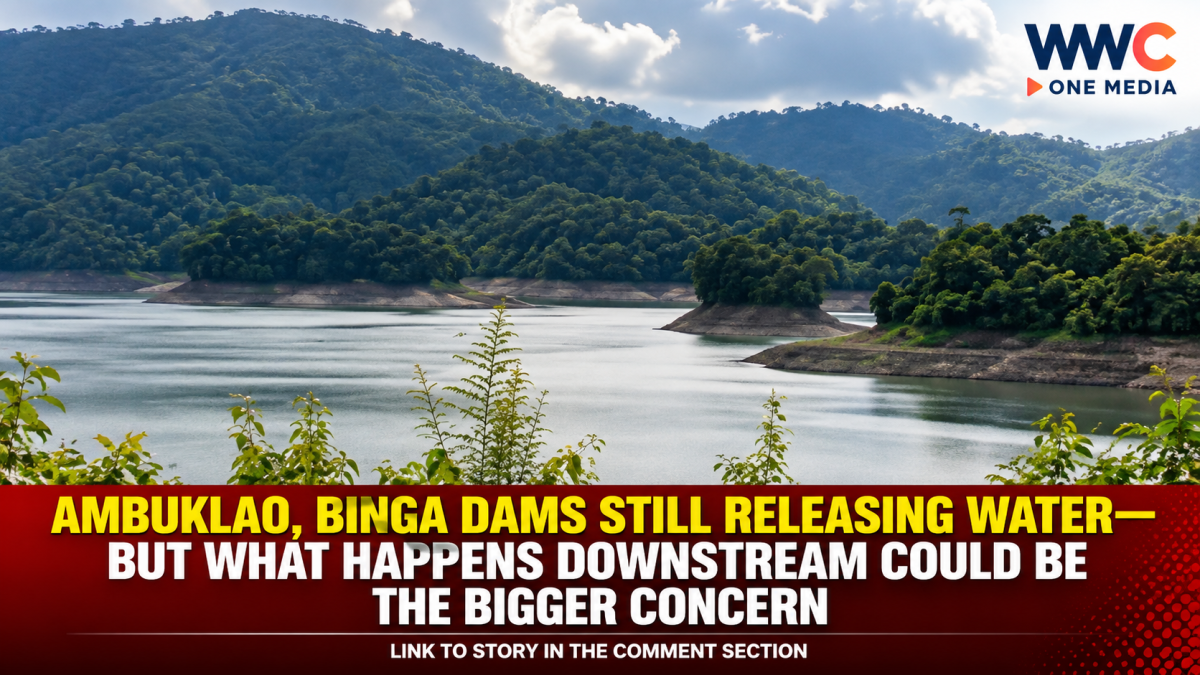
The Ambuklao and Binga dams in Benguet continued releasing water Sunday morning, September 13, as authorities maintained close monitoring of reservoir levels and downstream waterways following weeks of rain brought by the southwest monsoon, or Habagat.
According to the latest data cited by GMA News from the Philippine Atmospheric, Geophysical and Astronomical Services Administration (PAGASA), one gate at Ambuklao Dam was open at 0.3 meter as of 8 a.m., releasing about 102.17 cubic meters per second (cms).
Binga Dam, meanwhile, also had one gate open at 0.5 meter, with water being released at approximately 98.51 cms.
The continued releases come after the two reservoirs experienced elevated water levels amid persistent rainfall across parts of Luzon.
Why Ambuklao and Binga matter
Ambuklao and Binga are part of the Agno River dam system, with water released from Ambuklao flowing downstream into Binga before eventually reaching San Roque Dam in Pangasinan.
This cascading system means water-management decisions at one reservoir can affect conditions farther downstream.
GMA previously reported that when the three reservoirs were nearing their normal high-water levels at the end of August, authorities had opened multiple gates to manage the increased inflow. At that time, Ambuklao stood at 750.61 meters against a 752-meter normal high-water level, while Binga was at 574.75 meters against its 575-meter normal high-water level.
PAGASA data from September 11 showed Ambuklao at 751.19 meters, or 0.81 meter below its 752-meter normal high-water level, while Binga was at 573.66 meters, 1.34 meters below its 575-meter normal high-water level. Both dams still had gates open.
Habagat continues to influence dam conditions
The situation is linked to the prolonged period of rainfall associated with the southwest monsoon.
PAGASA’s monitoring earlier in September showed that several major Philippine reservoirs experienced rising water levels as the Habagat continued to affect parts of Luzon and the Visayas. In a September 7 report, Inquirer noted that Binga recorded the largest increase among the nine monitored dams at the time, rising by 0.50 meter, while Ambuklao increased by 0.08 meter. Two gates each at Ambuklao, Binga and San Roque were open during that monitoring period.
The National Power Corporation has also emphasized that dam releases are not determined by reservoir levels alone.
In a September 4 situation report, NAPOCOR said operators continuously assess rainfall, incoming water, reservoir levels, weather forecasts and downstream conditions before adjusting releases. The agency explained that controlled releases may be increased gradually to maintain safe reservoir conditions while also considering flooding downstream.
Flood watch remains important downstream
PAGASA’s flood-monitoring system has identified the Ambuklao-Binga-San Roque sub-basin under Flood Watch, underscoring the need for communities along affected waterways to remain alert.
The concern extends beyond the dams themselves.
In Pangasinan, provincial disaster officials have been closely monitoring the Agno River and its tributaries, together with Ambuklao, Binga and San Roque dams, amid elevated flood risks. The Pangasinan Provincial Disaster Risk Reduction and Management Office previously reported extensive flooding across the province and urged residents in flood-prone communities to remain vigilant and follow official advisories.
The recent history of the Agno River system also shows why authorities are watching the situation closely. San Roque Dam received substantial inflows from upstream reservoirs earlier this month. Inquirer reported that San Roque eventually closed its spillway gates on September 8 after its water elevation fell to 277.14 meters, following several days of releases.
What residents should watch
For communities downstream of Ambuklao and Binga, the key issue is not simply whether a dam gate is open.
River conditions, rainfall in the watershed, additional inflows and subsequent dam releases can all change rapidly.
Residents living near the Agno River and other waterways downstream of the dams should therefore continue monitoring PAGASA, local disaster-risk reduction offices and official dam advisories, particularly during periods of heavy rain.
For now, the latest available figures show that Ambuklao and Binga are still releasing water, while authorities continue balancing reservoir safety with the need to minimize risks to downstream communities.
And with the Agno River system connecting these major reservoirs, the next change in rainfall or inflow could determine whether releases remain limited—or have to be adjusted again.




Leave a Reply