
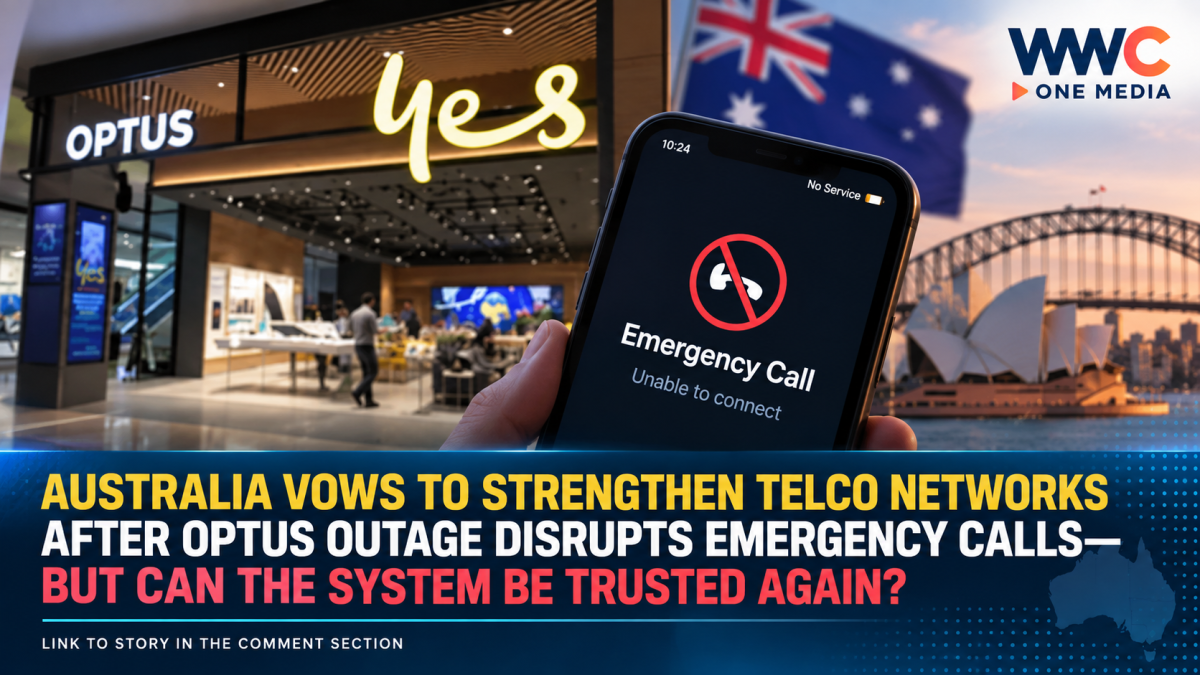
Australia’s government has pledged to strengthen the resilience of the country’s telecommunications networks after a major Optus outage disrupted voice services across multiple states and raised fresh concerns about Australians’ ability to reach emergency services during network failures.
The latest incident affected Optus customers in Victoria, South Australia, Tasmania and the Northern Territory, with the disruption lasting about 76 minutes. The outage caused problems with voice calls and affected some attempts to contact Australia’s Triple Zero emergency service.
The incident has put renewed pressure on Optus, Australia’s second-largest telecommunications provider, and intensified calls for stronger safeguards to ensure emergency communications remain available even when a major network goes down.
Government Promises Stronger Telecom Resilience
The Australian government said it would work to improve the resilience and reliability of the nation’s telecommunications infrastructure following the Optus outage.
The latest disruption is particularly concerning because telecommunications networks are now considered critical infrastructure, supporting not only everyday calls and internet services but also emergency response systems, businesses, hospitals and government operations.
Australia’s telecommunications regulator, the Australian Communications and Media Authority or ACMA, already requires telecommunications companies to keep customers and the public informed during major and significant outages. Since June 30, 2026, carriers have also been required to maintain public outage registers under strengthened communications rules.
However, the latest Optus incident has raised a bigger question: Are Australia’s existing safeguards enough when emergency calls are affected?
Dozens of Emergency Calls Trigger Welfare Checks
The outage prompted authorities to conduct welfare checks after emergency calls were affected.
Victoria Police carried out dozens of welfare checks following the disruption, while authorities in other affected states also responded to reports involving callers who may have struggled to connect to emergency services.
ABC News reported that the incident drew strong criticism from Victorian officials, with concerns growing over repeated telecommunications disruptions affecting emergency access.
Other Australian media reports said around 190,000 customers may have been affected by the widespread voice calling disruption. Police conducted welfare checks in Victoria, Tasmania and South Australia, although no critical incidents were reported from those checks.
Optus said it identified a technical issue and activated its response procedures, while investigations into the exact circumstances of the outage continued.
Fresh Trouble for Optus After Previous Emergency Failures
The latest outage comes as Optus remains under intense scrutiny over previous disruptions involving emergency services.
In July 2026, the ACMA launched Federal Court proceedings against Optus Mobile over a September 18, 2025 outage that affected some customers attempting to contact emergency services.
According to the regulator, Optus allegedly failed on 1,005 occasions to provide users with access to emergency call services or ensure emergency calls were properly carried to the relevant termination point.
The 2025 incident was particularly serious. Optus itself acknowledged that a technical failure during a network upgrade affected thousands of unique service numbers attempting to connect to emergency services across several parts of Australia. The company said the outage had been linked to fatalities and accepted accountability for failures associated with the disruption.
That history means the latest 76-minute outage is unlikely to be viewed as an isolated technical problem.
Instead, it could become another major test of whether Australia’s telecommunications industry has learned from previous failures.
Why the Latest Outage Is Raising New Questions
For millions of Australians, a mobile network outage may mean inconvenience.
For someone trying to contact Triple Zero during a medical emergency, fire or other life-threatening situation, however, the consequences can be far more serious.
Australian telecommunications rules require providers to maintain systems for informing customers and relevant stakeholders during major disruptions. The ACMA says carriers must provide timely, updated and accessible information through a combination of public and direct communication channels.
But critics argue that public notifications alone are not enough if emergency calls fail during the outage itself.
The key issue now facing regulators and telecommunications companies is whether networks have sufficient redundancy to automatically route emergency calls through alternative infrastructure when one provider experiences a major technical failure.
Optus Faces Another Reliability Test
The latest disruption adds to a difficult period for Optus, which has faced several major controversies and outages in recent years.
The company was also hit by a massive cyberattack in 2022 that compromised the personal information of millions of customers, while previous network disruptions have repeatedly raised questions about infrastructure resilience and corporate accountability.
Optus operates a public network status system and outage register that provide information about planned and unplanned disruptions across Australia. Its official register currently lists hundreds of significant outages recorded over the past two years, ranging from equipment failures and power interruptions to weather-related disruptions.
While not every outage involves emergency services, the latest incident demonstrates how quickly a network failure can become a public safety issue.
What Happens Next?
Australia’s pledge to bolster telecommunications resilience could lead to renewed discussions about stricter requirements for network redundancy, emergency-call routing, faster notification systems and stronger penalties for providers that fail to maintain critical services.
The government, regulators and telecommunications companies are now likely to face pressure to explain how Australia’s emergency communications systems can be better protected against future failures.
For Optus, the challenge is even more immediate.
The company must not only determine exactly what caused the latest outage but also convince customers and regulators that repeated network disruptions will not put emergency access at risk again.
Because when a telecommunications outage prevents someone from making a routine call, it is a technical problem.
But when it affects a call for emergency help, it becomes a question of public safety—and Australia is now demanding answers.




Leave a Reply