
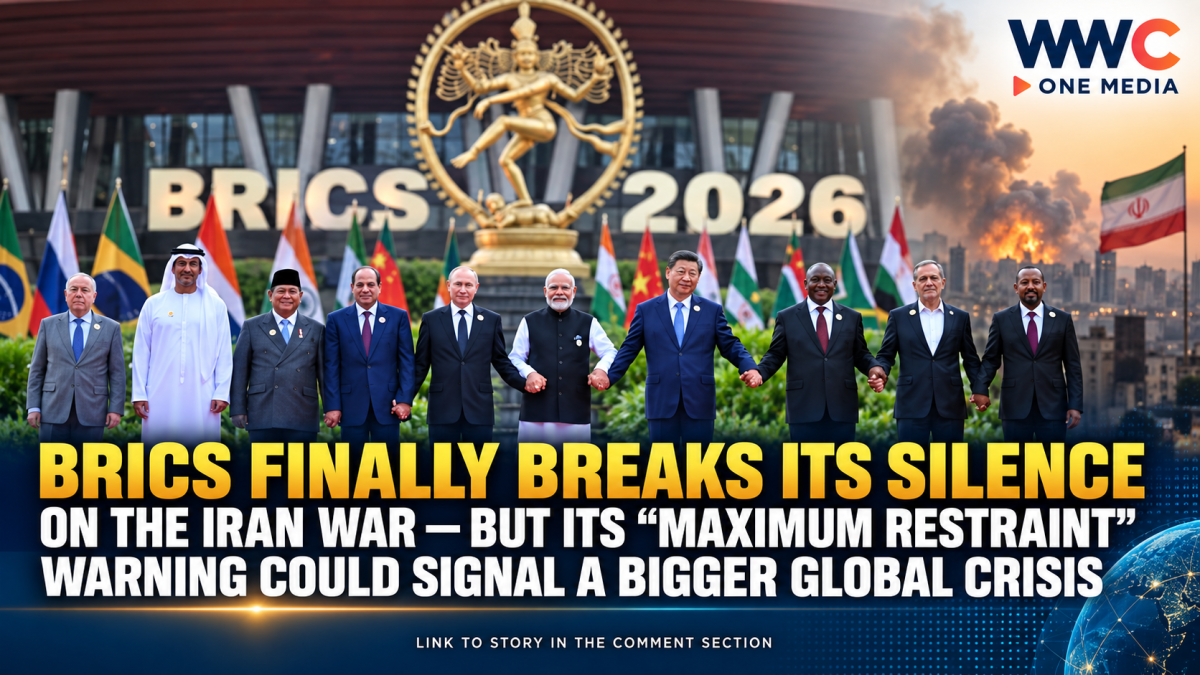
NEW DELHI — BRICS leaders have issued a rare unified call for “maximum restraint” over the escalating war in the Middle East, overcoming deep internal divisions and producing a joint declaration despite the presence of countries with sharply different positions on the conflict.
The breakthrough came during the 18th BRICS Summit in New Delhi, where the expanded bloc adopted the New Delhi Declaration on September 12, expressing “deep concern” over the continuing escalation of tensions in the Middle East and West Asia.
The declaration called on all sides to exercise maximum restraint and avoid actions that could further worsen the crisis.
A Difficult Agreement Between Countries on Opposite Sides
The agreement was particularly significant because BRICS includes both Iran, which is directly involved in the war, and the United Arab Emirates, a key regional power with close ties to Washington.
Reuters reported that reaching a consensus had been seen as particularly difficult because of divisions within the expanded BRICS bloc. Yet Iran and the UAE ultimately signed onto the same statement, marking an important diplomatic development amid the ongoing conflict.
Reports also indicated that intense negotiations were required to secure the declaration, with discussions continuing late into the night before leaders reached a compromise on the language surrounding the Middle East conflict.
What Does the BRICS Declaration Actually Say?
The New Delhi Declaration states:
“We express deep concern over the continued escalation of tensions in Middle East/West Asia… [and] call for exercising maximum restraint.”
The statement also urges countries to avoid actions that could further aggravate the situation.
However, the carefully negotiated language notably avoided directly naming the countries responsible for the latest escalation.
That cautious wording reflects one of BRICS’ biggest challenges: how to present a united front while bringing together countries with dramatically different geopolitical interests.
BRICS Also Raises Alarm Over Civilian and Nuclear Facilities
The declaration went beyond simply calling for calm.
According to multiple reports, BRICS leaders expressed concern over attacks affecting civilians and civilian infrastructure and stressed the importance of protecting nuclear facilities during armed conflicts. The bloc also reaffirmed the importance of diplomacy, dialogue and peaceful settlement of international disputes.
The statement’s broader message was clear: further escalation could have consequences extending far beyond the Middle East.
Why the Iran War Is Becoming a Global Economic Problem
The conflict is no longer just a regional security crisis.
Reports have warned that the prolonged war has disrupted energy supplies and major trade routes, creating wider concerns about oil prices, shipping and global supply chains. The situation around the Gulf has become especially important because of the region’s role in global energy exports.
The New Delhi Declaration also addressed global trade tensions and opposition to unilateral economic restrictions, reflecting wider BRICS concerns about sanctions, tariffs and disruptions to international commerce.
Xi Says the War Serves No One’s Interests
Chinese President Xi Jinping used the BRICS summit to call for stronger efforts to promote peace, arguing that continued conflict in the Middle East does not serve the common interests of the international community.
Xi’s remarks came as BRICS leaders attempted to demonstrate that the bloc could still find common ground despite growing internal differences.
The summit also highlighted other major geopolitical shifts, including efforts by India and China to stabilize their own relationship. Indian Prime Minister Narendra Modi and Xi held talks on the sidelines of the summit as the two Asian powers attempt to manage longstanding tensions.
A Diplomatic Victory — But Can BRICS Actually Influence the War?
The unanimous declaration is being viewed as a diplomatic success for BRICS and summit host India, particularly after earlier disagreements had made it difficult for the group to produce a common position on the Middle East crisis.
But the bigger question remains unanswered.
Can a joint call for “maximum restraint” actually change events on the battlefield?
BRICS has grown into a major geopolitical forum representing a significant share of the world’s population and economic output, but its expanding membership has also made consensus increasingly difficult. The bloc now includes countries with competing strategic interests, different relationships with Washington and sharply different views on regional conflicts.
For now, the New Delhi Declaration represents an important show of unity.
But as the Iran war continues and the risk of a wider Middle East conflict remains high, BRICS faces an even greater test: whether its call for restraint can eventually be transformed into meaningful diplomatic influence.
The message from New Delhi may have been carefully worded, but its warning was unmistakable — the Middle East crisis is becoming too dangerous for the world to ignore.



Leave a Reply