
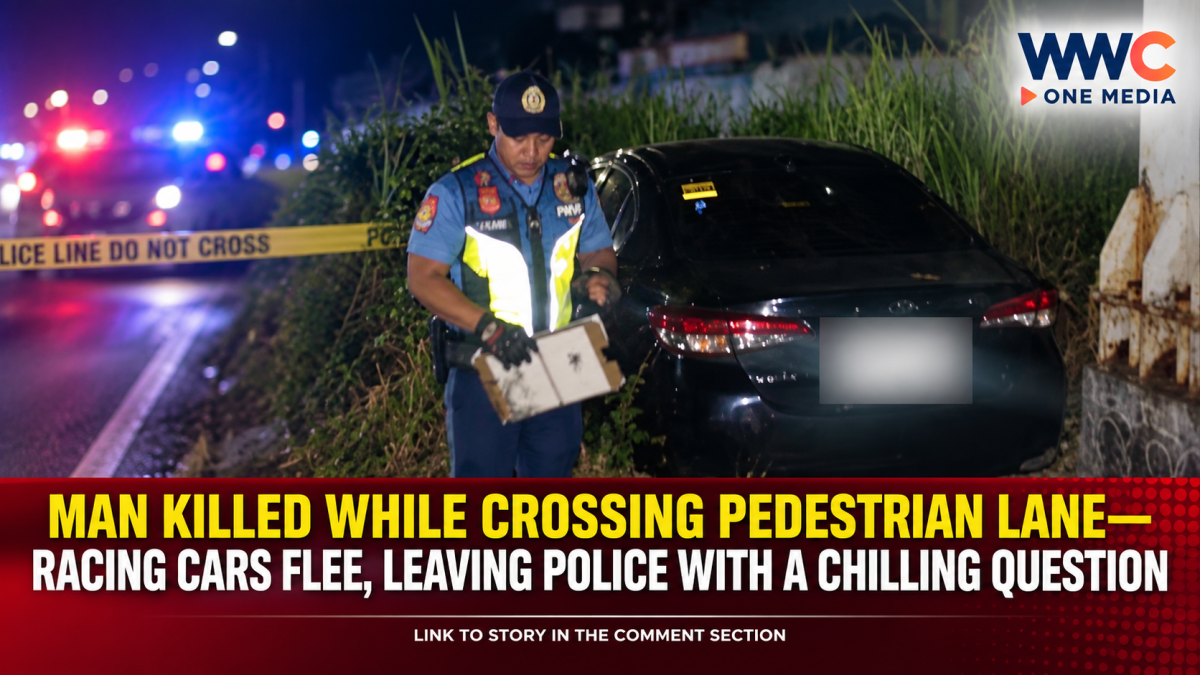
A routine road crossing turned deadly after a man was struck and killed while using a pedestrian lane, with authorities reportedly investigating an alleged car-racing incident and the subsequent flight of the driver.
The incident has once again raised concerns over reckless driving, pedestrian safety and the growing danger posed by motorists who treat public highways like racetracks.
According to the initial report, the victim was crossing the highway through a designated pedestrian lane when he was hit by a vehicle. The driver allegedly did not remain at the scene and fled following the collision.
Authorities are expected to examine available CCTV footage, witness accounts and other evidence that could help establish exactly what happened before and after the fatal impact.
Pedestrian lane becomes scene of tragedy
The circumstances are particularly alarming because the victim was reportedly crossing at a pedestrian lane—an area where motorists are required to exercise caution and give way to pedestrians under Philippine traffic rules.
Republic Act No. 4136, or the Land Transportation and Traffic Code, provides that drivers traveling on highways within business or residential districts must yield the right of way to pedestrians crossing within a crosswalk, subject to specified exceptions involving traffic signals or traffic officers.
The alleged racing component could further complicate the investigation. Philippine traffic guidance identifies car racing on public roads as a serious road-safety concern, while reckless driving and excessive speed can result in enforcement action.
Hit-and-run adds another layer to the investigation
The reported decision of the driver to flee could become a major part of the case.
Under the traffic code, drivers involved in accidents have specific duties, including stopping and dealing appropriately with the consequences of the collision. Police investigators generally examine the circumstances surrounding a driver’s departure, including whether the person rendered assistance or promptly reported the incident.
The investigation will therefore need to establish not only who was behind the wheel, but also the vehicle’s speed, its movements immediately before the collision, whether other vehicles were involved and why the driver allegedly left the scene.
Cebu has seen renewed scrutiny over dangerous driving
The tragedy comes amid a series of road-safety incidents in Cebu that have drawn attention to reckless driving and accountability.
In July, the Land Transportation Office revoked the license of an SUV driver in Cebu City after an investigation found the motorist guilty of reckless driving and deemed the driver an improper person to operate a motor vehicle.
More recently, LTO-7 issued a show-cause order and preventively suspended the license of a Cebu lawyer allegedly involved in a series of hit-and-run incidents. Authorities said the Mercedes-Benz involved allegedly struck several motorcycles before continuing toward San Nicolas and later crashing into a bakery.
Other fatal crashes have also underscored the risks facing pedestrians and motorists in Cebu. SunStar reported that three people were killed in two separate Cebu City road crashes in June, including a pedestrian who died after being struck by a motorcycle along F. Cabahug Street.
These cases have renewed calls for stricter enforcement of speed limits, stronger traffic monitoring and greater accountability for motorists whose driving puts other road users at risk.
The questions investigators must answer
For the latest fatality, investigators will have to determine whether the alleged racing directly contributed to the crash and whether the driver violated traffic laws before the collision.
Among the key questions are:
- How fast was the vehicle traveling?
- Were two or more vehicles actually racing?
- Did the victim have the right of way?
- Was the pedestrian lane clearly visible?
- Was there functioning street lighting?
- Did CCTV cameras capture the collision?
- Did witnesses obtain the vehicle’s plate number?
- Where did the driver go after the crash?
- Was the driver eventually identified or located?
The answers could determine the eventual charges and administrative sanctions.
For the victim’s family, however, the central issue is more immediate: a man went out onto a public road and never made it home.
A pedestrian lane is supposed to provide a safer place to cross—not become the final location of someone’s life.
And if investigators confirm that vehicles were racing before the fatal collision, the case could become another stark reminder that public highways are not racetracks—and that one reckless decision can permanently change several lives.


Leave a Reply