
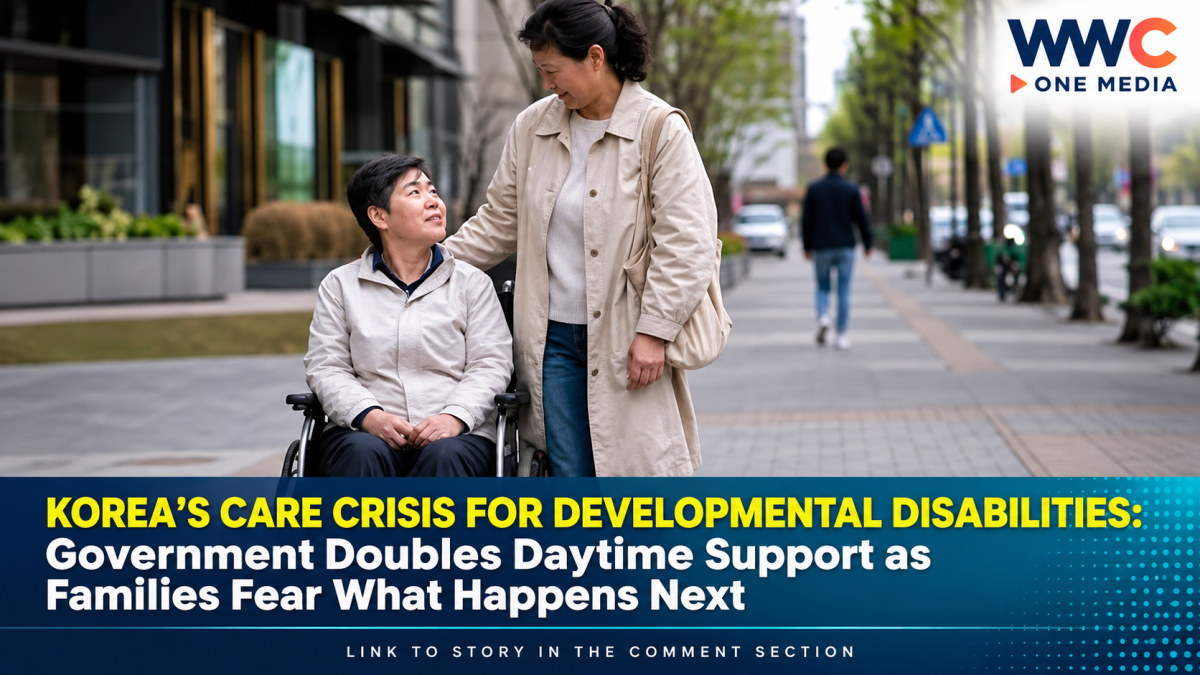
SEOUL — South Korea is moving to significantly expand government support for adults with developmental disabilities, promising to double access to daytime activity services by 2030 and strengthen round-the-clock care for people with the highest support needs.
The policy comes as families caring for people with developmental disabilities confront a deeply personal question: Who will take care of their loved ones when the parents who have supported them for decades are no longer there?
The government announced a comprehensive support plan on Sept. 10 aimed at creating a more continuous system of assistance from childhood through adulthood. The Korea Herald reported that the plan is designed to reduce gaps in care while the country’s developmental-disability population continues to grow.
Daytime support to double
Under the plan, the number of adults eligible for government daytime activity services is expected to increase from approximately 15,000 to 30,000 by 2030.
The government also plans to strengthen intensive support for people with the highest needs, including individuals whose behavioral or support requirements can pose risks to themselves or others.
South Korea’s Ministry of Health and Welfare already operates daytime activity services for adults with intellectual and autism-spectrum disabilities. The program is designed to promote community participation, independence and a more meaningful daily routine.
For people requiring more intensive assistance, the ministry also operates integrated care that can include 24-hour individual support, daytime one-to-one care and group-based daytime services.
More emergency facilities and intensive care
The new plan goes beyond simply expanding daytime programs.
According to the Korea Herald, the number of people receiving integrated care is scheduled to rise from 2,340 to 2,760 next year, while the number of emergency-care facilities is expected to increase from two to five.
The government also plans to introduce weekend one-to-one care for people requiring round-the-clock support.
For adults with lower support needs, authorities are planning greater assistance with employment and independent living.
The number of workers eligible for vocational-training support is expected to rise from 400 this year to 720 next year, while workplace support personnel for people with severe disabilities will increase from 11,700 to 12,200.
The disability population is growing
The government is acting as the number of people with developmental disabilities continues to increase.
The Korea Herald reported that the population has grown by an average of 3.1% annually over the past five years and is projected to reach approximately 335,000 by 2030, compared with 288,000 last year.
The financial commitment is also increasing.
Government-wide spending on related programs is expected to reach 2.8 trillion won (about US$2.1 billion) next year, representing a 15.9% increase from the previous year, according to Welfare Minister Jeong Eun-kyeong.
A father’s story brought the issue into sharp focus
Behind the policy announcement is a story that has resonated widely across South Korea.
Writer Jeon Gyeong-cheol, known publicly as the “Peter Pan Dad,” spent more than two decades caring for his 27-year-old son, who has severe autism.
After being diagnosed with terminal liver cancer, Jeon began searching for a safe long-term home for his son — confronting the reality faced by many parents who worry about what will happen to their adult children after they are gone.
Jeon’s story reached a much wider audience through television, including the popular program You Quiz on the Block. He died on Sept. 5, 2026, at age 64, just 24 days after his appearance on the program.
His search for a future for his son reportedly involved contacting care facilities across South Korea. Public attention eventually helped his son secure a place in a community for people with profound developmental disabilities.
His story exposed a problem bigger than one family
Jeon’s experience became a powerful illustration of the anxiety experienced by families who provide intensive care themselves.
The Korea Herald reported that adults currently account for 69.5% of South Korea’s developmental-disability population, with many families struggling to balance caregiving with employment and other responsibilities.
Caregivers can also face severe emotional and psychological pressure, particularly when they have no clear answer about who will provide care after their death.
Other Korean reporting has highlighted the continuing difficulty of securing adequate 24-hour support for people with severe disabilities. A Korea-focused report cited by Reddit, for example, described thousands of people with high support needs who still do not receive full 24-hour personal assistance because of eligibility rules and budget limitations.
That means expanding services is only part of the challenge.
Independent living becomes a bigger priority
Beginning next March, the government plans to make its pilot program for community-based independent living permanent.
The program combines housing, employment and activity support tailored to individual needs, with the goal of expanding it nationwide to local governments by 2030.
The government also plans to increase assistance for children with disabilities, including expanding caregiving hours and the number of childcare centers serving children with disabilities.
Next year, the number of children eligible for developmental rehabilitation services is expected to increase from 110,000 to 116,000, while those eligible for after-school activity services will rise from 11,500 to 13,000.
The bigger question: Is the expansion fast enough?
South Korea’s announcement represents a significant expansion of disability services, but the country’s challenge is larger than simply increasing the number of programs.
Families need care that remains available after school, after employment, during emergencies, on weekends — and eventually after parents can no longer provide care themselves.
The government’s plan attempts to build that continuum, from childhood services to adult daytime activities, vocational support, independent living and intensive 24-hour care.
But the emotional impact of Jeon Gyeong-cheol’s story shows why the issue has become so urgent.
For many parents, the question isn’t simply how much assistance their child receives today.
It is much harder:
What happens to their child tomorrow — when they are no longer there to help?




Leave a Reply