
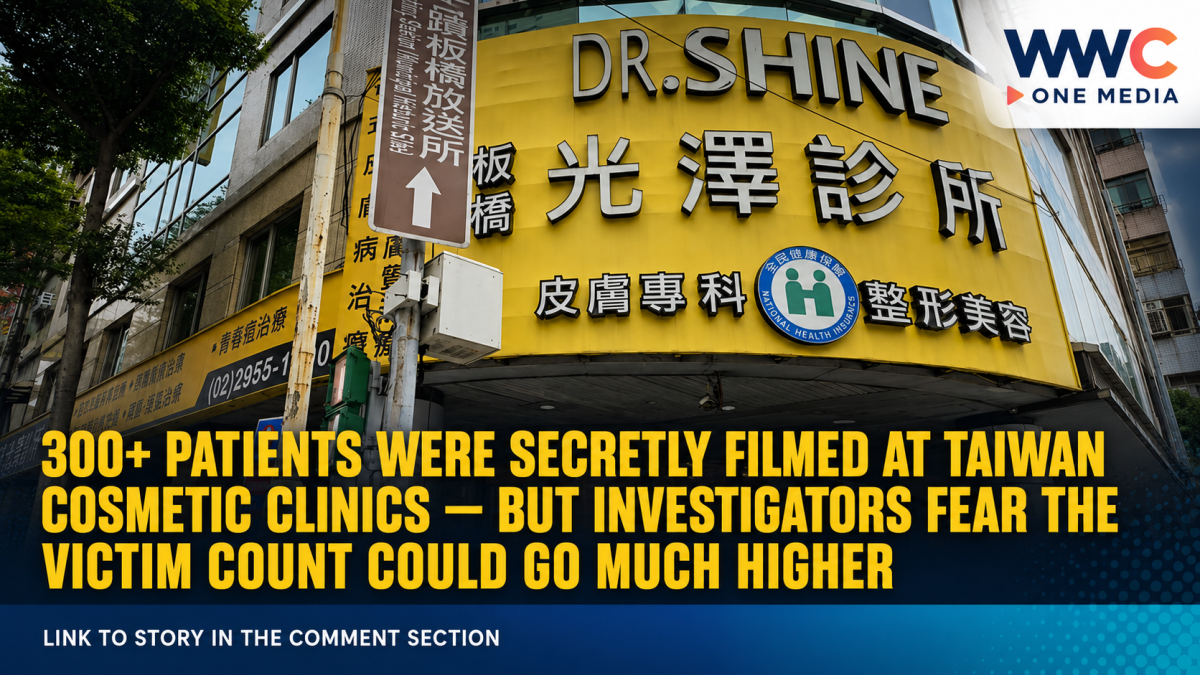
TAIPEI, Taiwan — A hidden-camera scandal involving Taiwanese cosmetic clinic chain Dr. Shine has escalated dramatically, with prosecutors indicting nine people over the alleged secret filming of more than 300 patients — including four minors — inside treatment and consultation areas where clients could be partially or fully exposed.
The New Taipei District Prosecutors’ Office said concealed surveillance cameras were allegedly installed across eight Dr. Shine branches in Taipei and New Taipei City between 2020 and March 2026. Investigators said some of the devices were disguised as ordinary smoke detectors or infrared sensor lights, making them difficult for patients to recognize as recording equipment.
According to prosecutors, cameras were placed in consultation rooms, treatment areas, laser rooms, recovery rooms and other spaces where patients could change clothes or expose parts of their bodies while receiving cosmetic procedures.
Authorities have so far identified more than 300 alleged victims, including four minors, but investigators have warned that the number could still increase as they continue examining other locations and evidence connected with the chain.
Prosecutors Seek Up to 16 Years in Prison
Among the nine people indicted are Dr. Shine operations manager Chen Chih-min and information technology chief Tang Yung-chieh.
Prosecutors are seeking a prison sentence of at least 16 years for Chen and 14 years for Tang, arguing that the alleged conduct represented a serious violation of patients’ privacy and bodily autonomy.
A surveillance equipment supplier and several other clinic employees were also indicted for their alleged roles in installing equipment, assisting with the operation or destroying evidence after the scandal began to surface.
Charges reported by Taiwanese media include alleged violations involving unauthorized recording of sexual images, protection of minors, personal-data laws and destruction of criminal evidence.
Investigators Say Staff Tried to Destroy Evidence
The investigation has also raised questions about what happened after clinic personnel allegedly realized authorities might discover the surveillance system.
According to prosecutors, Tang allegedly created a private LINE messaging group and coordinated efforts to remove concealed cameras from clinic branches between May 5 and May 8.
The alleged effort followed growing scrutiny of hidden-camera practices in Taiwan’s medical-aesthetics industry. Prosecutors said employees were sent to branches to dismantle equipment and remove evidence.
The Dr. Shine investigation itself accelerated after a customer reportedly discovered a concealed camera at the chain’s Banqiao Zhongshan branch on May 5 and contacted police. Investigators later seized surveillance recording equipment as the inquiry expanded.
Prosecutors have accused senior personnel of focusing on removing cameras instead of immediately informing affected customers. They also alleged that Chen and Tang continued denying responsibility during the investigation.
TVBS, citing the prosecution’s investigation, additionally reported that senior figures within the organization allegedly had the ability to remotely access surveillance footage through computers or mobile devices.
Dr. Shine Founder Remains Wanted
Another major unresolved part of the case involves Dr. Shine founder Wang Chao-huei.
Taiwanese prosecutors have placed Wang on a wanted list after he failed to return to Taiwan to face questioning.
Earlier CNA reporting said Wang had traveled to China before investigators sought his appearance in connection with the scandal and had not returned. Prosecutors subsequently urged him to come back to Taiwan and cooperate with the investigation.
Public Television Service reported that the Dr. Shine group operates as many as 48 branches nationwide, meaning investigators are continuing to determine whether patients or evidence at locations beyond the eight branches included in the current indictment could also be involved.
That unanswered question could ultimately determine whether the more-than-300 victim count represents the full scale of the alleged surveillance — or only the portion investigators have documented so far.
Clinics Had Already Faced Penalties
The controversy has been unfolding for months.
In May, Dr. Shine issued another public apology and said it had removed disputed recording equipment. The company also announced that it would allocate NT$80 million to a member-protection trust fund and provide assistance to customers seeking refunds.
New Taipei health authorities had also fined two Banqiao branches NT$500,000 each and ordered them to suspend operations for six months over privacy-related violations, CNA reported at the time.
Those measures, however, came before prosecutors announced the latest indictments.
A Bigger Privacy Crisis for Taiwan’s Cosmetic-Medicine Industry
The Dr. Shine case is not developing in isolation.
Focus Taiwan reported that concern inside Dr. Shine allegedly intensified after a separate hidden-camera investigation involving Airlee aesthetic clinics emerged earlier this year. Public Television Service later reported that seven people were indicted in that case in June, adding to concerns about privacy safeguards inside parts of Taiwan’s cosmetic-treatment industry.
For patients, the Dr. Shine case now goes far beyond allegations against individual employees.
The central question is how concealed recording equipment could allegedly remain inside sensitive medical and cosmetic-treatment spaces for years — and whether existing regulations, clinic inspections and internal safeguards were strong enough to protect patients who reasonably expected complete privacy.
Nine defendants now face prosecution, the chain’s founder remains wanted, and investigators are still examining whether more victims exist.
For Taiwan’s cosmetic-medicine industry, the biggest revelation may therefore still be ahead.




Leave a Reply