
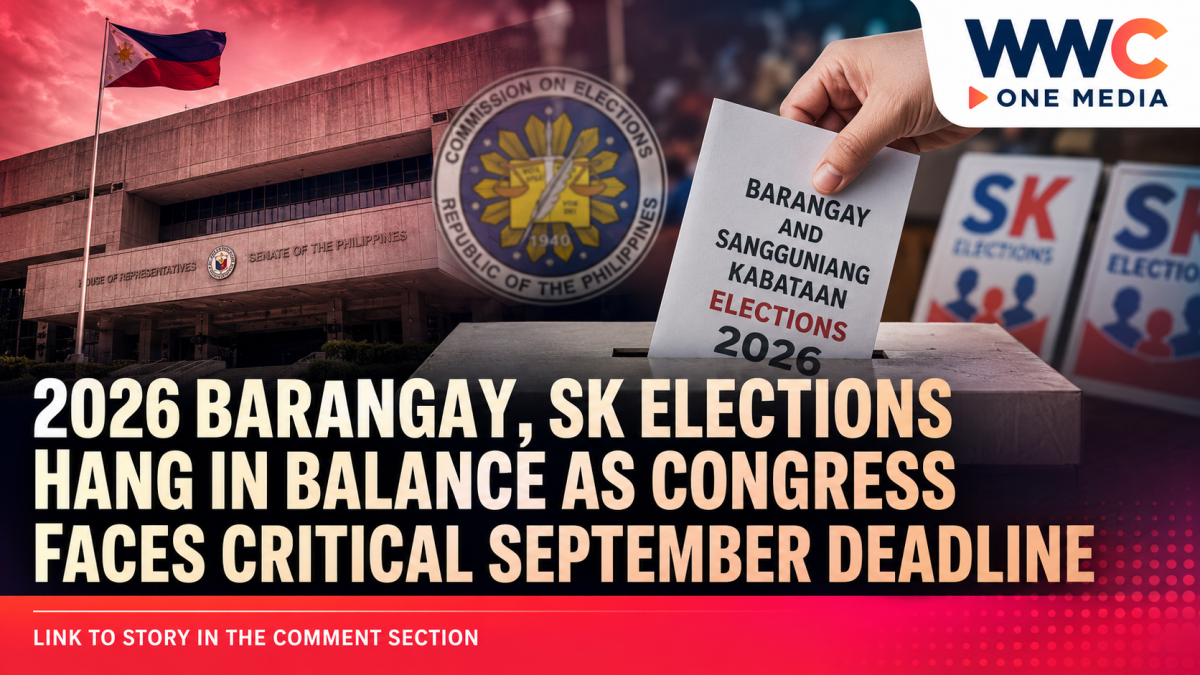
BACOLOD CITY, Philippines. The clock is running down on one of the biggest unresolved political questions of 2026: Will Filipinos vote for new barangay and Sangguniang Kabataan officials on November 2, or will Congress push the elections back again, possibly until 2028?
Negros Occidental Third District Rep. Javier Miguel Benitez says the answer now rests largely with Congress, where lawmakers are racing against an increasingly tight timetable as the Commission on Elections continues preparing for polls that remain legally scheduled for November 2.
Benitez, who is among the lawmakers supporting proposals to move the Barangay and Sangguniang Kabataan Elections, or BSKE, to 2028, said his camp is prepared whether Congress approves a postponement or allows the elections to proceed.
The uncertainty is becoming more urgent because Comelec wants lawmakers to settle the issue before candidates begin filing their certificates of candidacy on September 28.
November 2 Is Still the Official Election Date
Despite growing talk of postponement, there has been no final cancellation or reset of the 2026 BSKE.
Under Republic Act No. 12232, the next regular barangay and SK elections are scheduled for the first Monday of November 2026, which falls on November 2. The same law established four-year terms for elected barangay and SK officials.
That remains the law unless Congress passes new legislation and it takes effect.
Comelec Chairman George Garcia has repeatedly stressed that the poll body must continue preparing because November 2 remains the official election date.
Comelec has scheduled the filing of certificates of candidacy from September 28 to October 5. The formal election period is expected to run from October 3 to November 9, while the campaign period is scheduled from October 22 to October 31.
Congress Is Moving Closer to a Possible 2028 Reset
What has changed is the level of momentum inside Congress.
Benitez is among the proponents of House Bill No. 10591, which seeks to move the November 2 BSKE to the last Monday of November 2028.
Supporters of postponement have cited economic pressures, election costs, logistical difficulties and broader government concerns as reasons for delaying the vote.
Separate congressional proposals are also moving toward a five-year term for barangay and SK officials.
On August 25, the House Committee on Local Government approved in principle several measures that would establish or extend barangay and SK terms to five years. The proposed consolidated version includes holding the next elections on the second Monday of November 2028.
The Senate is moving in a similar direction.
A Senate committee has advanced a proposal associated with Sen. Francis Escudero that would establish a fixed five-year term and move the coming BSKE to November 2028. The measure still requires further legislative action before it can become law.
That distinction is crucial. Committee approval does not mean the 2026 elections have already been cancelled.
Both chambers would still have to complete the legislative process, reconcile any differences between their versions where necessary, and send an approved measure to the President.
Comelec Wants an Answer Before Candidate Filing
For Comelec, the biggest problem is no longer simply whether Congress wants to postpone the election. It is how long lawmakers can wait before making the decision.
Garcia has asked Congress to provide clarity by around the second week of September, well before the September 28 opening of certificate of candidacy filing.
The uncertainty is already affecting logistical preparations.
Comelec has temporarily held back the delivery of some election supplies and paraphernalia while awaiting clarity on whether the November polls will proceed. Election officials have also pointed to teacher training, venue costs, transportation and materials with limited shelf lives as reasons a late decision could create additional complications.
In Western Visayas, however, Comelec officials say preparations remain in full swing because election authorities cannot operate on the assumption that Congress will eventually postpone the vote.
Nearly P8 Billion Has Already Been Spent
There is also a multibillion-peso question hanging over the debate.
Comelec has a budget of about P19.57 billion for the 2026 BSKE and has already spent roughly P8 billion on preparations, including ballots, ballot boxes, election supplies and personnel-related expenses.
Garcia has warned that postponement could leave some of those expenditures wasted or unusable.
However, not everything already purchased would automatically be lost. Comelec has also said certain materials, including some election equipment and supplies, could be stored and used in a later election.
That means describing the entire P8 billion as automatically “wasted” would overstate the situation. The more accurate concern is that postponement could create substantial sunk costs while forcing Comelec to spend additional money when preparations resume.
Why the Legal Question Could Become Just as Important
Any new postponement would also face a sensitive constitutional history.
In 2023, the Supreme Court struck down Republic Act No. 11935, which had postponed the December 2022 BSKE. The Court emphasized that regular and periodic elections are fundamental to the right of suffrage and said election postponements must be supported by sufficiently important, substantial or compelling reasons.
The Court also made clear that postponement should be the exception rather than the norm.
However, the legal picture later evolved.
In November 2025, the Supreme Court upheld Republic Act No. 12232, the law that established four-year terms and moved the next elections to November 2026. The Court recognized Congress’ constitutional authority to determine the length of terms for barangay officials.
That means a new law moving the elections to 2028 would not necessarily be unconstitutional simply because it changes the election calendar. Its legal survival could depend on how Congress structures the measure, the reasons lawmakers provide and whether the extension can withstand constitutional review.
Critics Say Voters Should Decide
Election watchdogs and some civic groups have opposed another delay.
Critics argue that voters should be allowed to judge barangay and SK officials at the ballot box rather than have their tenure repeatedly prolonged through legislation.
Some groups have suggested a compromise: allow the November 2 elections to proceed, then apply a new five-year term to the officials elected this year.
Comelec has publicly said that approach is possible.
Supporters of longer terms, meanwhile, argue that barangay officials need more time to implement local programs, maintain continuity and avoid repeated disruptions caused by frequent election cycles.
Those competing positions have turned what might otherwise have been a routine barangay election into a broader debate about political accountability, public spending and how long local officials should remain in power between elections.
The Next Few Weeks Could Decide Everything
For now, voters, candidates and election workers are preparing for November 2 because that remains the date written into law.
But congressional committees in both chambers are now considering measures that could dramatically alter that calendar.
Benitez believes a postponement can still happen if lawmakers treat the proposal as a priority. Comelec, however, is signaling that the practical deadline is approaching quickly.
By the time certificate filing begins on September 28, thousands of prospective candidates need to know whether they are preparing for an election five weeks later, or an election that could be more than two years away.
Congress may legally hold much of the power to settle that question.
What it no longer has is unlimited time.



Leave a Reply