
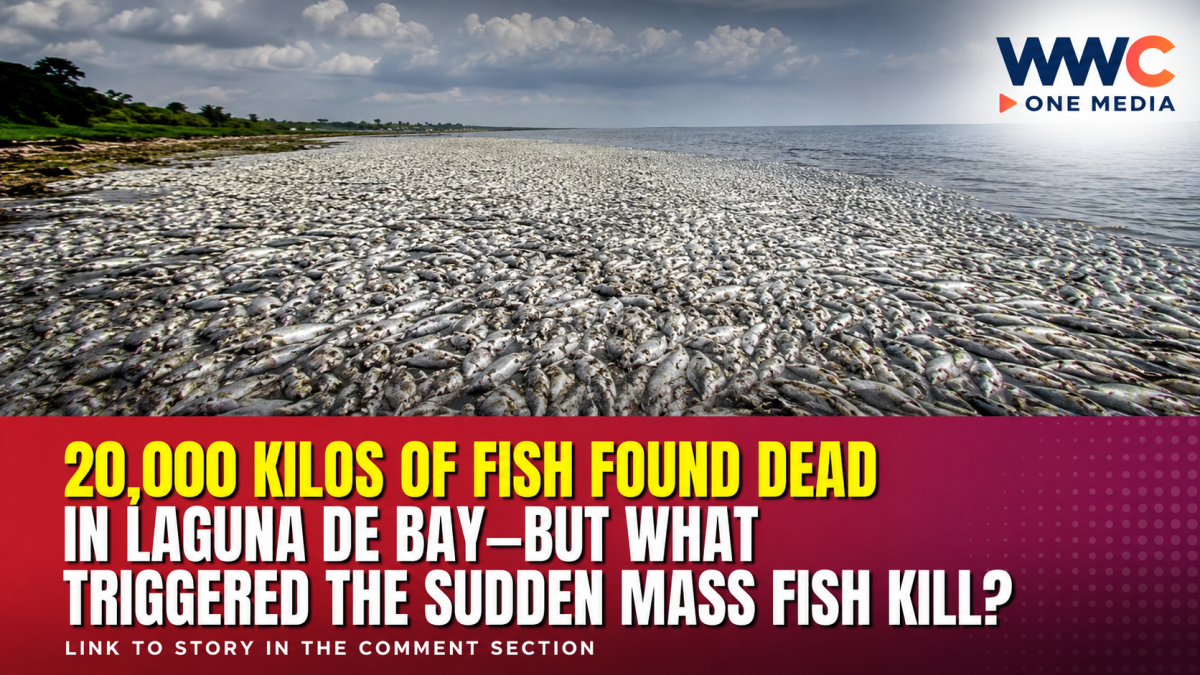
JALA-JALA, RIZAL — More than 20,000 kilograms of tilapia and bighead carp have died in the latest fish kill reported in Laguna de Bay, raising fresh concerns over the lake’s water quality and the livelihood of fish cage operators.
The incident affected more than 30 fish cages covering over seven hectares in Jala-jala, Rizal, according to fisherfolk group Pambansang Lakas ng Kilusang Mamamalakaya ng Pilipinas (Pamalakaya). Initial losses were estimated at around P700,000.
Local fishers and fish cage operators reportedly noticed that the lake water had turned rusty in color shortly before the fish began dying.
Pamalakaya described the latest incident as unusually rapid and widespread and raised the possibility that wastewater or chemical contamination may have played a role. However, that allegation has not been established as the official cause of the fish kill.
Algal bloom also remains a major concern
The latest fish kill comes amid continuing warnings from the Laguna Lake Development Authority (LLDA) about algal blooms and declining dissolved oxygen conditions in Laguna de Bay.
The LLDA previously explained that algae can multiply under favorable environmental conditions. When large amounts of algae die and decompose, they consume dissolved oxygen in the water. If oxygen levels fall sufficiently, fish can become stressed and eventually die.
Earlier investigations into fish kills in the Rizal portion of the lake also found that most affected fish were from commercial fish pens and cages, rather than wild fish in open waters.
The LLDA said in July that it was still too early to determine the exact cause of the earlier fish kill, noting that Laguna de Bay was experiencing a widespread algal bloom. It also pointed to changing weather and water conditions as factors that could affect water quality.
A previous fish kill adds to the concern
The latest incident is not an isolated event.
In July, another fish kill was reported in parts of Laguna de Bay. A Philippine Coast Guard assessment conducted with the Bureau of Fisheries and Aquatic Resources found preliminary conditions that could have contributed to fish mortality, including algal growth and decomposition, elevated water temperature, and limited wind or water circulation—all of which can contribute to lower dissolved oxygen levels.
The LLDA has also previously investigated a controversial water-flushing operation involving Manila Water Company Inc. in Binangonan, Rizal. The agency said it had not ruled out a possible environmental connection but stressed that additional scientific data, water sampling and field assessments were needed before drawing conclusions.
The LLDA subsequently sealed the discharge outlet involved in the operation while its investigation continued. The agency has emphasized the importance of identifying the actual source of any contamination rather than prematurely assigning blame.
What happens next?
For the latest fish kill, Pamalakaya is calling on the LLDA and other government agencies to investigate whether any companies discharged wastewater into Laguna de Bay and, if violations are found, hold those responsible accountable. The group is also seeking compensation for affected fisherfolk and fish cage operators.
But for now, the exact cause of the latest mass fish mortality remains unresolved.
That distinction is important: the rusty discoloration reported by fishers and the allegations of possible chemical or wastewater contamination warrant investigation, but they do not by themselves prove that pollution caused the deaths.
The LLDA has urged residents and local officials to report unusual water discoloration, excessive bubbling or foaming, and foul odors, which may help authorities trace possible sources of contamination.
The public has also previously been warned not to buy or consume fish found dead or floating in Laguna de Bay, as decomposing fish may carry harmful bacteria.
The bigger environmental question
Laguna de Bay is one of the Philippines’ most important inland fisheries and provides food and livelihood for communities around the lake. The recurrence of fish kills therefore goes beyond the immediate loss of thousands of kilograms of fish—it also raises questions about the lake’s long-term ecological health and the vulnerability of communities that depend on it.
For now, investigators face one critical question:
Was the latest fish kill driven primarily by natural changes in the lake, oxygen depletion associated with algal blooms, pollution—or a combination of factors?
Until laboratory tests and the authorities’ investigation provide an answer, no single cause should be treated as confirmed.



Leave a Reply