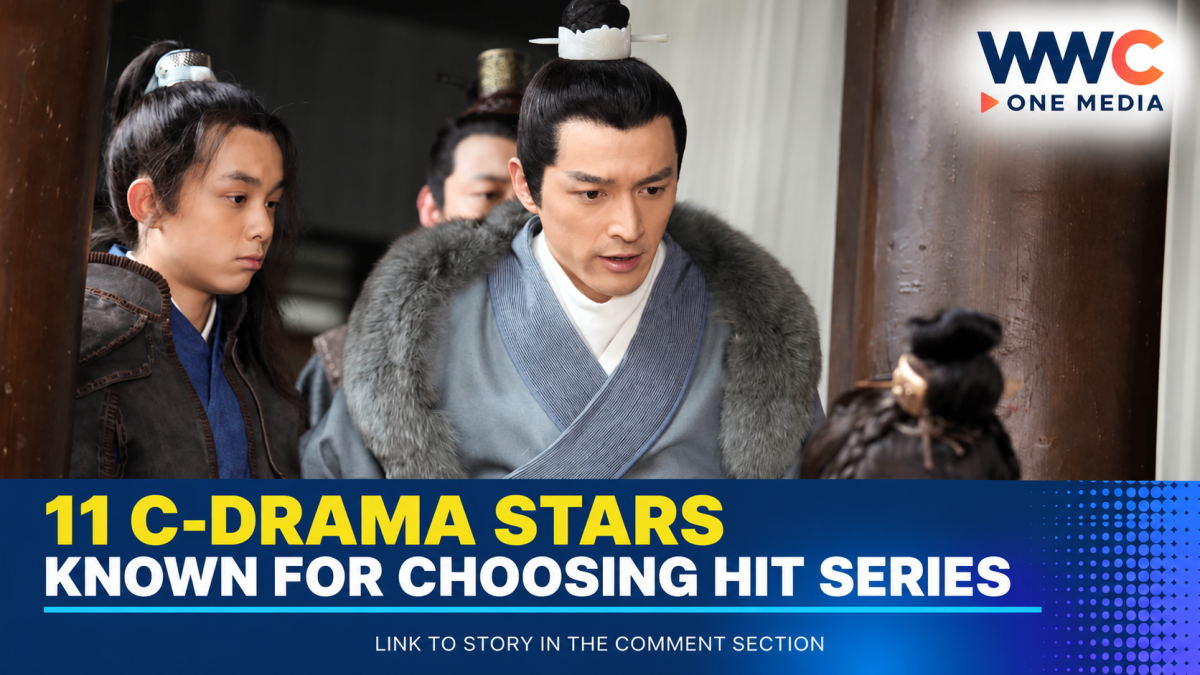
Some Chinese drama stars have built careers around more than popularity. Their filmographies show a consistent ability to take on projects that attract large audiences, perform strongly on streaming platforms and, in some cases, earn critical recognition.
From established television veterans to younger stars who have expanded beyond a single breakout role, these actors and actresses have worked across historical dramas, fantasy, romance, thrillers and contemporary series.
Zhao Liying is among the most established names on the list. After entering show business through a talent competition in 2006 and spending years in supporting roles, she broke through with Legend of Lu Zhen. Her later credits include The Journey of Flower, Princess Agents, The Story of Minglan, Wild Bloom and The Legend of Shen Li, demonstrating her ability to move between fantasy, historical and contemporary stories.
Yang Zi began her career as a child actor in Home with Kids before becoming a leading figure in adult dramas. Ashes of Love established her in the xianxia genre, while Go Go Squid!, Immortal Samsara and Lost You Forever further expanded her audience.
Hu Ge rose to fame with Chinese Paladin and later reshaped his career through more complex roles. His credits include The Disguiser, Nirvana in Fire and Wong Kar-wai’s Blossoms Shanghai, giving him a filmography spanning fantasy, espionage, historical drama and literary adaptations.
Wu Lei, who began acting at the age of three, successfully transitioned from child roles to adult leading parts. He has appeared in The Long Ballad, Love Like the Galaxy, Nothing But You and Amidst a Snowstorm of Love, working across historical, sports and contemporary romance dramas.
Bai Lu took an unconventional route into acting after previously pursuing opportunities in South Korea. Her breakout came with The Legends, followed by popular titles including Love Is Sweet, One and Only, Till the End of the Moon, Story of Kunning Palace and Northward.
Xiao Zhan was working as a graphic designer before joining the idol group X NINE through the survival programme X-Fire. His breakthrough came with The Untamed in 2019. Since then, he has taken on medical, workplace, fantasy and political dramas, including The Oath of Love, Sunshine by My Side, The Longest Promise and The Legend of Zanghai.
Bai Jingting has built his résumé across several genres rather than relying on a single type of role. His notable series include the time-loop thriller Reset, historical dramas New Life Begins and Destined, the contemporary series Always on the Move and romance drama The First Frost.
Zhang Ruoyun became a major streaming-era leading man through Joy of Life, in which he played Fan Xian. He later starred in Sword Snow Stride and returned for Joy of Life 2. His work also includes the police drama Ordinary Greatness, showing a range beyond historical and fantasy productions.
Liu Yifei had already established herself as a major television star before gaining international recognition as Disney’s live-action Mulan. Her early successes included Chinese Paladin and The Return of the Condor Heroes. After concentrating on film for years, she returned to television with A Dream of Splendour, followed by Meet Yourself and The Tale of Rose.
Cheng Yi spent years in supporting roles before gaining wider attention with Love and Redemption. He went on to star in Stand by Me, Mysterious Lotus Casebook and Deep Lurk, moving between costume romance, historical drama, wuxia mystery and espionage.
Tan Jianci has built his profile steadily through a mixture of crime, historical and ensemble dramas. His breakthrough in Under the Skin was followed by a prominent role in Lost You Forever. He later appeared in Go East before returning as detective Shen Yi in Under the Skin 2.
Together, the 11 stars represent different paths through China’s television industry. Some began as child performers, others came through idol programmes or supporting roles, while several spent years building their careers before landing major breakthroughs. Their shared feature is a diverse body of work spanning multiple genres and generations of C-drama audiences.