
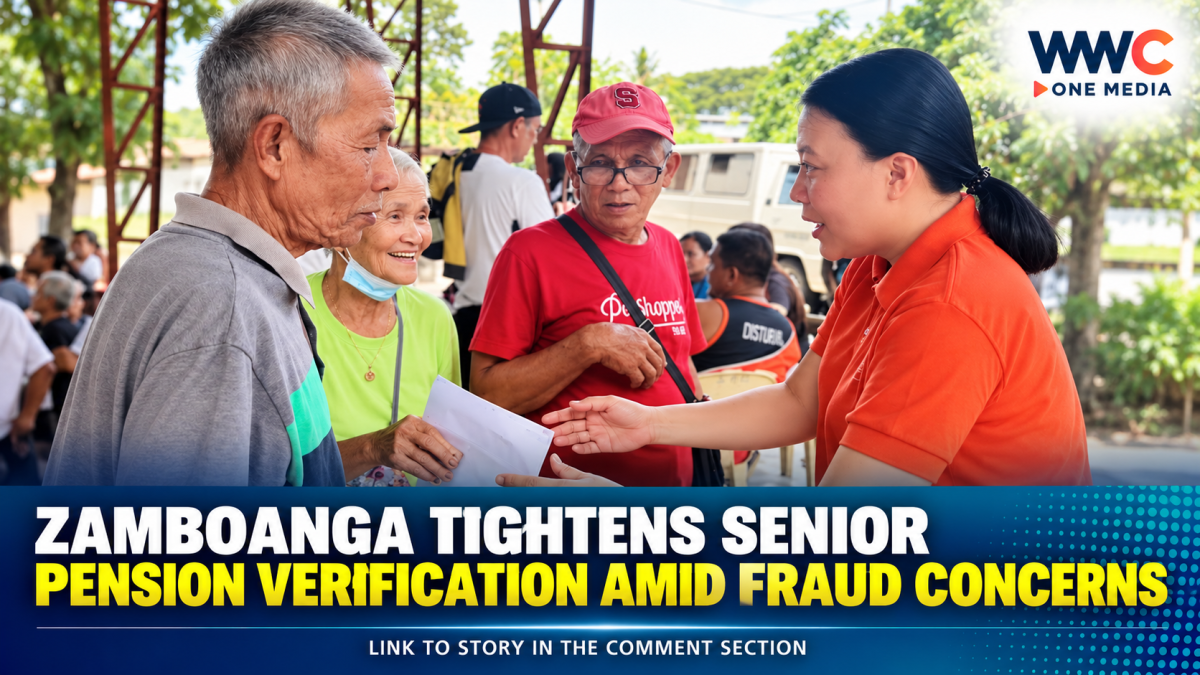
ZAMBOANGA CITY, Philippines — Zamboanga City is moving to tighten the verification of beneficiaries under its social pension program after authorities raised concerns over fraudulent claims, prompting Mayor Khymer Olaso to demand stricter checks before public funds are released.
The move is aimed at ensuring that government assistance reaches qualified senior citizens rather than individuals who are ineligible or improperly included in the beneficiary database, according to the Philippine News Agency.
The city government’s action comes as local authorities face the broader challenge of protecting social-welfare programs from fraud while ensuring legitimate beneficiaries—many of whom depend on the assistance for basic necessities—continue receiving support.
Mayor calls for tighter verification
Olaso has directed city officials to strengthen the verification process for senior citizens receiving social pension assistance.
The objective is to make sure that beneficiary records accurately reflect those who are genuinely entitled to the program and to prevent government money from being diverted through fraudulent or questionable claims.
The issue is particularly important because social pension funds are intended for vulnerable older Filipinos.
The national DSWD Social Pension Program provides ₱1,000 per month to qualified indigent senior citizens to help cover food, medicine and other basic expenses.
Why verification matters
A stronger verification system can help local authorities identify duplicate, outdated or otherwise questionable records while keeping legitimate senior citizens from being displaced by fraudulent beneficiaries.
Zamboanga City has already taken steps to strengthen controls over other assistance programs.
In June, the city government established a one-stop shop for burial assistance after officials reported that scammers were exploiting the program. The facility brought together personnel from the City Social Welfare and Development Office, City Treasurer’s Office and City Accountant’s Office to streamline applications and protect qualified beneficiaries.
That experience highlights a growing concern for local governments: assistance programs designed to help vulnerable residents can also become targets for people attempting to manipulate beneficiary lists or procedures.
The issue goes beyond Zamboanga
Fraud prevention is also a continuing concern across the country’s pension system.
The Philippines has previously uncovered cases involving so-called ghost pensioners, including a major 2011 investigation involving the Philippine National Police pension system. Authorities at the time identified thousands of questionable beneficiaries and estimated that fraudulent claims could cost the government hundreds of millions of pesos annually.
More recently, government pension agencies have increasingly turned toward digital identity verification to prevent similar problems.
The Social Security System launched a facial-authentication system with biometric liveness checks for certain pensioners completing their Annual Confirmation of Pensioners requirement. The system uses the Philippine Statistics Authority’s National ID eVerify system to confirm a pensioner’s identity remotely.
SSS also rolled out the facial-authentication option in the Zamboanga Peninsula in March 2026, allowing eligible pensioners to complete the annual verification requirement without physically visiting an SSS branch.
Protecting legitimate senior citizens remains the challenge
While stricter verification can help prevent fraud, authorities face another important responsibility: ensuring that legitimate senior citizens are not unfairly removed or delayed because of administrative problems.
DSWD has previously acknowledged implementation and payment issues affecting social-pension beneficiaries in several regions, including Zamboanga Peninsula. The agency said outstanding payments for eligible beneficiaries had been completed by the end of 2024 after management responses to Commission on Audit observations.
The DSWD’s Region 9 Citizen’s Charter also outlines the documentary requirements and channels through which indigent senior citizens can apply for social pension assistance, including through senior citizens’ associations, OSCA, local social welfare offices and DSWD’s regional social pension unit.
That makes accurate beneficiary records critical—not only for stopping fraud, but also for ensuring that genuine recipients are not caught in the crackdown.
A bigger test for Zamboanga’s welfare system
For Zamboanga City, the latest directive represents another push toward stronger controls over public assistance.
The goal is not simply to remove questionable names from a list. It is to ensure that limited government resources reach the people the program was designed to help.
With senior citizens among the country’s most vulnerable sectors, authorities will have to balance strict verification with accessibility, particularly for elderly beneficiaries who may have difficulty completing complicated or repeated requirements.
The coming verification effort could therefore become an important test of how Zamboanga City protects its social-welfare funds while keeping legitimate senior citizens from being left behind.
And as the city begins tightening its checks, the question now is not only how many questionable beneficiaries will be uncovered—but whether the new safeguards can stop fraud without making legitimate seniors pay the price.



Leave a Reply