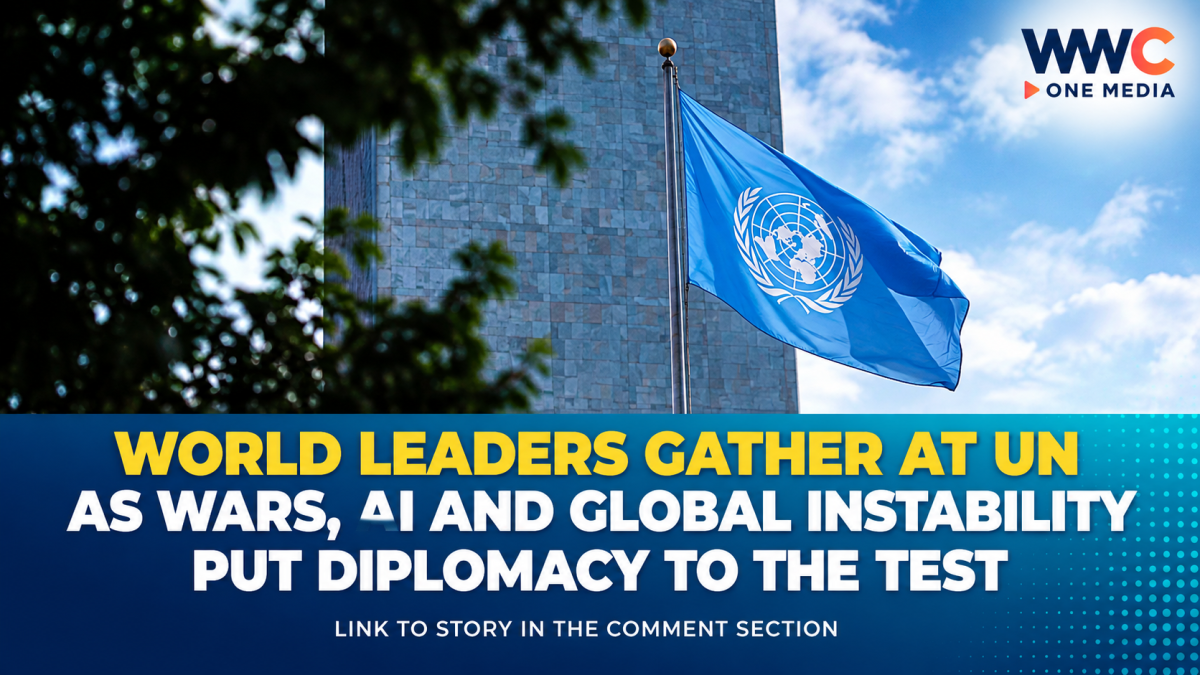
World leaders are gathering in New York for the United Nations General Assembly against a backdrop of escalating wars, economic uncertainty and a rapidly shifting global order, with diplomats warning that international cooperation is becoming increasingly difficult.
The annual high-level meeting opened on Sept. 22 as nearly 130 heads of state and government prepared to address conflicts in the Middle East and Ukraine, climate-related disasters, artificial intelligence and the future of the international system. UN Secretary-General António Guterres has described the moment as one of “deep uncertainty,” saying global power is shifting and international institutions need to adapt.
The Middle East is expected to dominate discussions. The conflict involving Iran, Israel and the United States has created wider regional instability and disrupted shipping through the Strait of Hormuz, a crucial route for global energy supplies. Diplomats are expected to use meetings on the sidelines of the assembly to discuss maritime security and ways of reducing tensions.
The Russia-Ukraine war is another major focus. More than four years after Russia’s invasion, fighting has continued despite repeated diplomatic efforts. Ukrainian President Volodymyr Zelenskyy and Russian Foreign Minister Sergei Lavrov are both scheduled to address the General Assembly, while the UN Security Council remains constrained by Russia’s veto as a permanent member.
Artificial intelligence has also moved higher on the diplomatic agenda. Governments are grappling with the security, economic and social implications of rapidly developing AI systems, while Guterres has called for stronger international oversight of the technology.
In his final General Assembly address as UN secretary-general, Guterres urged countries to regulate AI risks, address climate change and reform international institutions. His second term ends on Dec. 31, 2026.
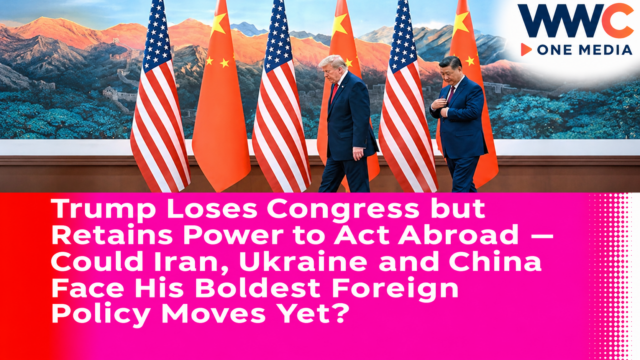
The UN is also facing its own institutional challenges. The organisation is dealing with financial pressures, questions over its effectiveness and disagreements among major powers over international law and global security. The United States under President Donald Trump has reduced its contributions and withdrawn from several UN-related bodies, adding to concerns about the organisation’s ability to respond collectively to crises.
Diplomats interviewed ahead of the gathering described a world in which alliances and relationships are becoming less predictable. Some officials said the international community is struggling to find common ground on issues ranging from peace and security to climate change and adherence to international law.
Yet the week also provides an opportunity for countries that disagree publicly to hold direct discussions away from the main General Assembly chamber. Officials are looking to those meetings for progress on issues that have stalled through formal diplomatic channels.
The challenge for the 193-member organisation is therefore not simply addressing individual conflicts, but finding areas where countries with increasingly different interests can still cooperate.
As leaders take the UN stage, the central question is how much diplomacy can accomplish when wars are expanding, strategic rivalries are deepening and new technologies are creating risks faster than international rules can keep up.