Food companies around the world are increasingly focusing on something consumers can feel rather than simply taste: texture.
From extra-crispy chicken and airy coffee to chewy sweets and gooey pastries, the sensation of food in the mouth is becoming a bigger part of how consumers judge and enjoy what they eat. Food scientists describe this as “mouthfeel,” and industry researchers say it can influence satisfaction, perceptions of quality and whether customers want to buy a product again.
The trend is already visible across different categories. Starbucks has introduced an air-whipped iced espresso known as the Aerocano, while other products are being designed around combinations of crunchy, soft, chewy and liquid textures.
In China, stretchy yogurt has emerged as a growing product category, while Swedish confectioner Cloetta has introduced sweets combining a crunchy coating with a soft marshmallow centre. French bakers have also experimented with the “crookie,” which combines a crisp croissant exterior with a melted chocolate-cookie centre.
Texture itself is not a new culinary idea. Japanese mochi, Turkish ice cream and Taiwanese bubble tea have long incorporated distinctive textures into the eating experience.
What has changed is the intensity of consumer interest and the number of products deliberately engineered around contrasting sensations. Market researchers say searches for qualities such as chewy, gooey, soft and melt-in-the-mouth have been rising, while viral food trends such as Cronuts and Dubai chocolate have helped make layered textures part of online food culture.
Social media has added another dimension. Videos showing people breaking crunchy candy, cutting through layered desserts or slurping creamy noodles turn texture into something audiences can almost experience through sound and visuals.
Candy makers have responded particularly aggressively.
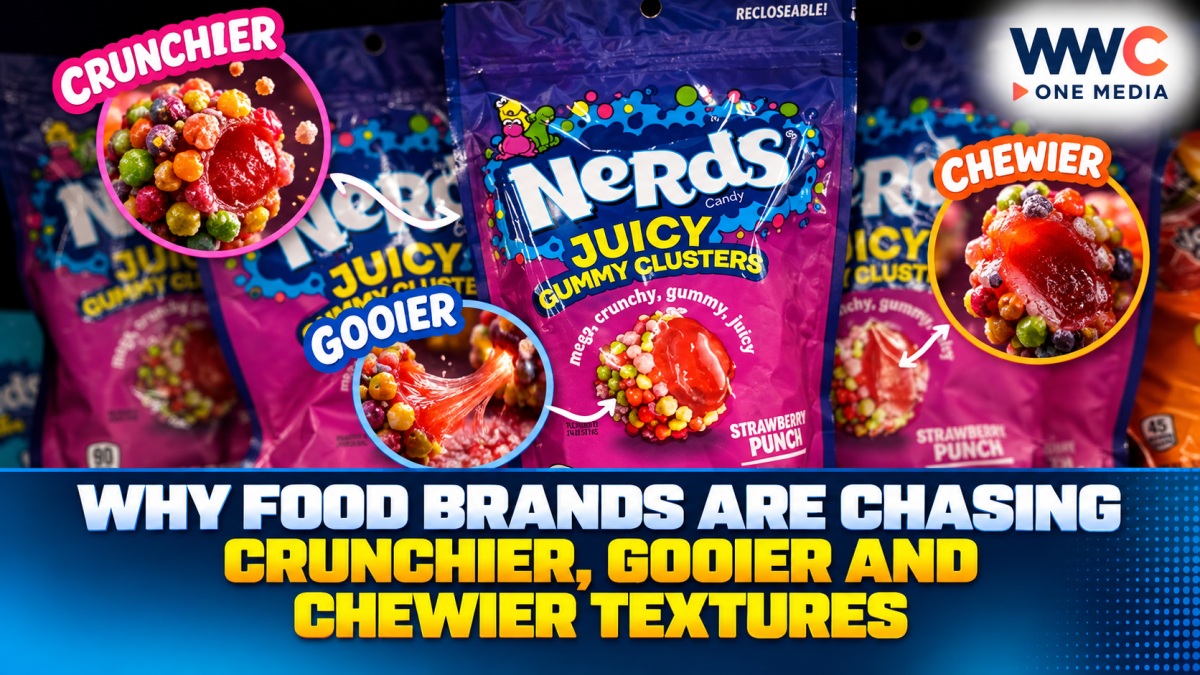
Ferrara’s Nerds Gummy Clusters, introduced in 2020, combine a soft gummy centre with a crunchy candy coating. The popularity of the product helped inspire other developments, including freeze-dried candy and products with additional liquid or fizzy centres.
The company has also introduced Nerds Juicy Gummy Clusters, adding a liquid centre to an already layered sweet.
Food companies are also facing a technical challenge: keeping the desired texture intact from production to consumption.
This is especially difficult with food ordered for delivery. Fried foods can lose their crispness during transportation, while other products can become soggy or lose their intended consistency.
Ingredient companies are therefore developing new solutions to extend the life of specific textures. One potato-starch-based coating, for example, is designed to keep french fries crispy for about 30 minutes, with development work aimed at extending that period further.
Texture is also becoming important as manufacturers attempt to make products healthier or more affordable without making them feel different.
Reducing sugar or changing ingredients can alter a food’s consistency, so companies are developing ingredients that help products retain characteristics such as creaminess even after reformulation.
The COVID-19 pandemic may have also contributed to the renewed interest. According to candy-industry researchers, temporary losses of smell and taste during the pandemic made other sensory characteristics, including texture, more noticeable to consumers.
Research suggests the trend could continue expanding into products designed for specific age groups and eating needs. Food companies are expected to explore how texture can improve experiences for different consumers, including older people.
At the same time, there appears to be a communication gap between what consumers want and what food companies tell them about their products. Mintel data cited in the report found that 59% of packaged foods introduced in the United States this year did not make textural claims on their labels, despite consumer interest in novel textures.
That could change as brands increasingly treat mouthfeel as part of a product’s identity rather than a secondary characteristic.
The food industry’s next wave of innovation may therefore be less about inventing entirely new flavours and more about changing how familiar foods feel — making them crunchier, stretchier, creamier, gooier or chewier.
As consumers increasingly seek a more engaging eating experience, texture is becoming one of the food industry’s most important tools for creating products that stand out.