
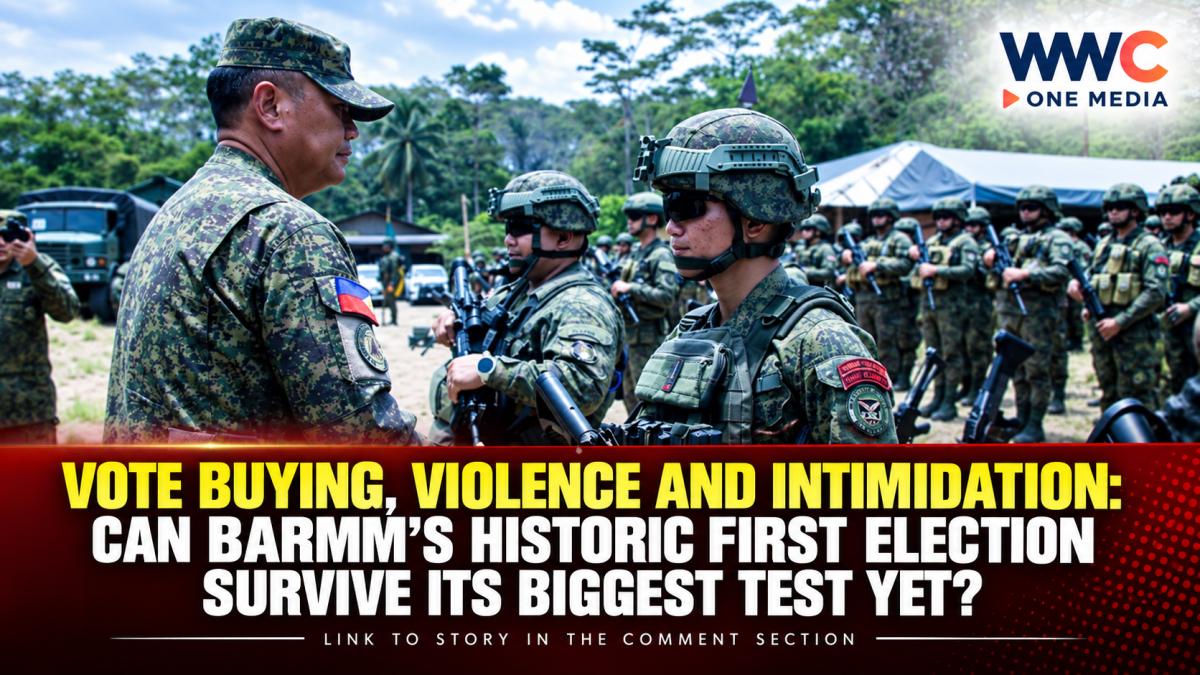
COTABATO CITY, Philippines — The Bangsamoro Autonomous Region in Muslim Mindanao (BARMM) is just hours away from making history with its first regular parliamentary election on Monday, September 14, but serious concerns over vote buying, voter intimidation and political violence are threatening to overshadow one of the most important milestones in the region’s peace process.
The election will mark BARMM’s transition from the Bangsamoro Transition Authority to an elected regional parliament. But while the Commission on Elections (Comelec) has completed key technical preparations, election observers and security agencies warn that the biggest threats may not come from the machines.
They may come from outside the polling precincts.
Reports compiled by election observers have raised concerns about vote buying, voter intimidation, so-called flying voters, private armed groups, clan feuds and political rivalries—longstanding problems that could affect both Election Day and the acceptance of the results afterward.
Vote Buying Remains a Major Concern
A pre-election assessment by the Asian Network for Free Elections (ANFREL) and the National Democratic Institute identified vote buying as one of the major concerns ahead of BARMM’s first parliamentary polls.
The assessment also cited fears involving voter intimidation, controlled voting areas and the possible use of flying voters, particularly in remote communities where election safeguards may be harder to enforce.
GMA News, citing the same assessment, reported that vote buying remains a significant concern and has been described by stakeholders as a widespread and normalized practice in some areas.
Election observers warned that the combination of political influence, government resources, entrenched local rivalries and weak enforcement in remote communities could undermine public confidence in the historic vote.
The credibility of the election, therefore, may depend not only on whether voters are able to cast their ballots—but whether they can do so freely.
Violence Could Extend Beyond Election Day
The Manila Times reported that Climate Conflict Action Asia warned that electoral risks could continue even after voting ends.
The peacebuilding group said political violence and election-related tensions could potentially affect post-election stability and the broader Bangsamoro political settlement.
Security analysts have repeatedly pointed to political rivalries, clan feuds or “rido,” land disputes, private armed groups and other armed threats as major risk factors in the region.
The Philippine National Police has intensified security operations, including the enforcement of the election gun ban, in an effort to prevent violence and the movement of loose firearms.
Earlier reports said Comelec had identified 108 areas in BARMM as areas of concern because of varying security risks.
Lanao del Sur and parts of Maguindanao were among the areas receiving heightened attention.
AFP and PNP Mobilize for Historic Vote
The Armed Forces of the Philippines has pledged full support for a peaceful, orderly and credible election.
AFP Chief of Staff Gen. Antonio Nafarrete said the military’s mission is to protect voters and prevent election-related violence, intimidation, threats and other forms of undue influence.
The Philippine National Police, meanwhile, has intensified operations against armed groups and election-related security threats.
Government agencies have also strengthened coordination through joint security control centers involving the PNP, AFP, Comelec and other authorities.
President Ferdinand Marcos Jr. earlier directed security and law enforcement agencies to ensure that BARMM’s first parliamentary election is peaceful, orderly and credible.
But despite the heavy security preparations, election observers say the challenge goes beyond troop deployment.
The real test is whether voters will feel safe enough to participate.
Low Voter Turnout Could Create Another Crisis
Civil society groups have also warned that fear and uncertainty could lead to low voter turnout.
MindaNews reported that civil society leaders fear threats, harassment and violence could discourage voters from going to polling centers.
A weak turnout could raise questions about the democratic legitimacy of the new Bangsamoro government, particularly because this election represents the region’s first major step toward an elected parliamentary system.
Namfrel has also warned of possible post-election legitimacy challenges as unresolved political and security issues converge ahead of the vote.
The election watchdog stressed that the problems do not necessarily mean the election will fail—but warned that multiple risks occurring at the same time could create disputes regardless of who wins.
Why Monday’s Election Is Different
The September 14 vote is more than just another election.
BARMM voters will elect representatives to an 80-seat parliament, replacing the transitional arrangement that has governed the region during the implementation of the Bangsamoro peace agreement.
According to election information published by GMA News, the parliament will include party representatives, district representatives and sectoral representatives.
The results will help determine the future direction of the autonomous region and could influence the next phase of the decades-long Bangsamoro peace process.
That is why election observers say the stakes are unusually high.
A credible election could strengthen public trust and reinforce the transition toward democratic governance.
But widespread allegations of vote buying, intimidation or violence could create disputes that extend far beyond Election Day.
Comelec Completes Final Technical Preparations
As security concerns intensified, Comelec continued its final preparations for the historic polls.
The Manila Times reported that the poll body conducted final testing and sealing of automated counting machines ahead of Monday’s election.
Election observers have generally acknowledged the technical preparations for the vote.
However, independent monitors say the greater threats now involve external factors—including political pressure, security risks and possible electoral manipulation.
In other words, the machines may be ready.
The question now is whether the political environment is.
BARMM Faces Its Biggest Democratic Test Yet
For years, the Bangsamoro peace process has been built around the promise of replacing conflict with democratic participation.
Monday’s parliamentary election is supposed to be one of the clearest signs of that transformation.
But as voters prepare to head to the polls, the warnings are impossible to ignore.
Vote buying remains a concern.
Voter intimidation remains a concern.
Political violence remains a concern.
And even after the ballots are counted, the battle for public trust may continue.
BARMM is about to make history.
But whether that history becomes a democratic breakthrough—or the beginning of another political crisis—may depend on what happens before, during and after the votes are cast.


Leave a Reply