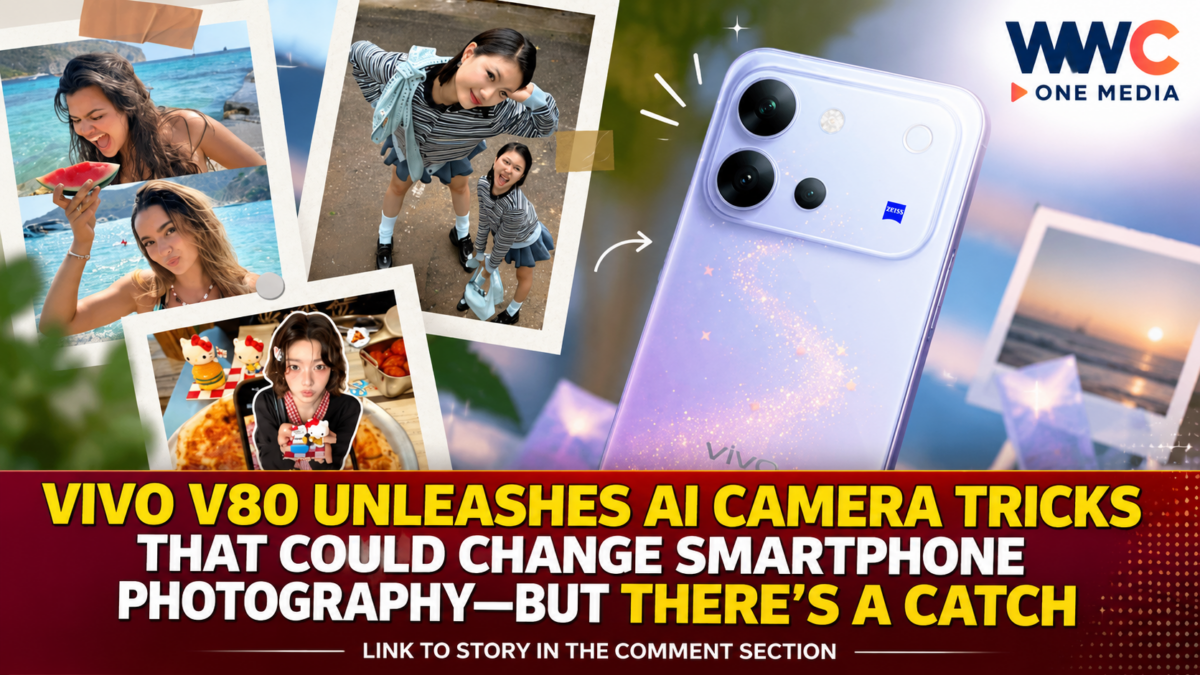
The smartphone’s new AI-powered photography tools promise creative lighting, smarter portraits and easier photo editing, but there’s more to the camera story than megapixels alone.
Vivo is putting artificial intelligence at the center of its latest smartphone photography experience, with the Vivo V80 introducing a collection of creative camera tools designed to make everyday photos look more polished and expressive.
The device combines AI-powered image effects with ZEISS co-engineered imaging technology, giving users more ways to experiment with portraits, lighting and visual styles without relying entirely on third-party editing applications.
The features are particularly relevant to social media creators, travelers and smartphone users who want eye-catching photos without spending hours adjusting individual settings.
AI Creative Camera: Change the Mood of Your Photos
One of the Vivo V80’s main attractions is its AI Creative Camera, which allows users to experiment with different lighting effects and atmospheres.
According to Vivo’s official product information, available effects include Glow, Sunlight, Top Lighting, Underwater and other creative styles. The company also describes a library of more than 30 AI styles spanning categories such as Travel, Stage, Anime and Landscape.
These tools are designed to help users change the appearance of their photos and create distinctive visuals with less manual editing.
For example, a portrait can be given a warmer, sunlit appearance, while other effects can create a more dramatic or stylized atmosphere. Users can also revisit images and adjust their appearance through supported editing features.
The appeal is straightforward: rather than relying solely on the lighting available when a picture is taken, users have additional creative options for shaping the final result.
However, AI-generated lighting and visual effects can change how a scene appears. Users should distinguish between creative edits and an unaltered photographic record, particularly when images are used for news reporting or documentary purposes.
ZEISS Portrait Photography Takes Center Stage
Beyond AI effects, Vivo is emphasizing portrait photography through its collaboration with ZEISS.
The V80 features a 50-megapixel ZEISS telephoto camera, a 50-megapixel main camera using a Sony LYTIA 700V sensor, an ultra-wide camera and a 50-megapixel autofocus front camera.
The telephoto camera supports optical image stabilization and 3x optical zoom, while the portrait system offers different focal-length options for varied compositions.
Vivo is also highlighting its ZEISS 85mm Portrait and 100mm Center-Stage Portrait experiences, which are designed to help users capture more focused portraits with distinctive background blur and color treatments.
For users who frequently photograph people, these features offer more flexibility when shooting close-ups, travel portraits and group gatherings.
AI Editing Tools Can Fix More Than Just Lighting
The V80 also expands its editing capabilities with AI-powered tools intended to make photo adjustments easier.
According to Vivo’s announcements, these include:
- AI Erase: Removes unwanted objects or reflections from images.
- AI Magic Move: Allows users to reposition a subject within a composition.
- AI Image Expander: Extends the image beyond its original framing.
- AI Best Face: Helps select better facial expressions from frames captured in a Live Photo.
- Color Palette: Provides controls for adjusting the visual tone and appearance of an image.
- Live Sticker Collage: Lets users combine cutouts of people, pets or objects from Live Photos into creative compositions.
These features could be useful when a photo contains distracting background objects, an awkward composition or an expression that does not quite capture the moment.
Still, the results depend on the scene and the AI processing involved. Removing objects or expanding an image may introduce generated details that were not present in the original photograph.
More Than a Camera Phone: 4K Video and a Large Battery
The Vivo V80 is also designed for people who record videos alongside taking photos.
Vivo says the smartphone supports 4K recording at 60 frames per second on both its front and rear cameras. Its video features include cinematic color styles intended to give recordings different visual moods.
The device is backed by a 7,200mAh battery and 90W FlashCharge, according to Vivo’s product announcement. The large battery is intended to support extended periods of photography, video recording and everyday use.
These additions make the device relevant to vloggers and content creators who need a smartphone for both capturing and editing material throughout the day.
What Other Technology Reports Say
Coverage from technology publications reinforces the V80’s emphasis on AI-assisted photography.
Digital Camera World highlighted the combination of ZEISS portrait features and AI editing tools, including the ability to alter lighting and reposition subjects. The publication also noted that the phone’s imaging results depend partly on software processing, rather than camera specifications alone.
Meanwhile, 9to5Google examined Vivo’s AI Creation experience and reported that its effects can produce striking results, although some edits may look artificial when examined closely. Its coverage also raised a transparency concern: AI-altered images may not be clearly identified through widely recognizable labeling systems.
These observations point to a broader issue in smartphone photography. AI can make image creation more accessible, but users should understand when software has substantially changed a photograph.
Is the Vivo V80 Worth Watching?
The Vivo V80’s most interesting feature is the way it combines traditional camera hardware with software that gives users more control over the final image.
Its 50-megapixel cameras, ZEISS portrait modes, AI Creative Camera, image-editing tools and 4K video capabilities make it a smartphone worth watching for photography enthusiasts and social media creators.
The more important question is whether these tools consistently deliver convincing results in everyday situations—and how much users will value AI-assisted creativity compared with natural-looking photography.
As AI becomes increasingly common in smartphone cameras, the competition is no longer just about who offers the highest megapixel count. It is also about who can make capturing, editing and sharing compelling images easier.
The bottom line: The Vivo V80 aims to turn AI into a practical creative companion for smartphone photography. Its success will ultimately depend on real-world image quality, editing reliability, usability and value for money.