
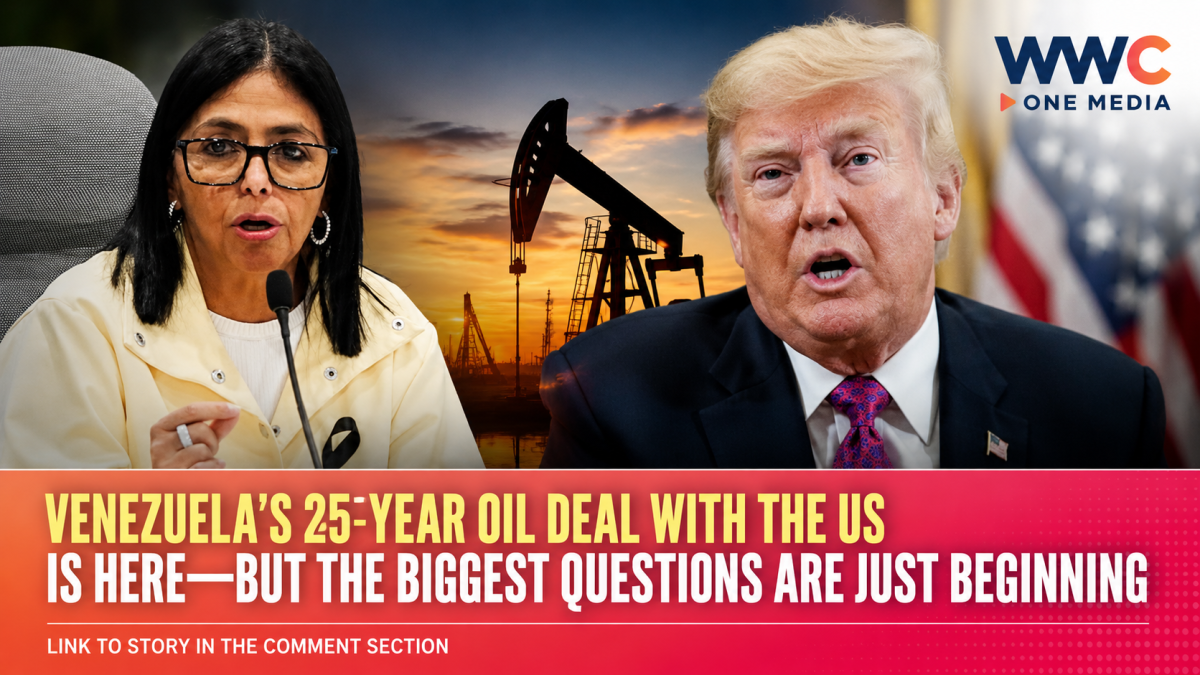
CARACAS, Venezuela — Venezuela’s interim President Delcy Rodríguez has announced that a newly forged energy agreement with the United States will last 25 years, setting the stage for an ambitious push to revive the country’s struggling oil industry and dramatically increase crude production.
But while both governments are portraying the agreement as historic, major questions remain over exactly how the deal will work—and whether Venezuela can deliver on its enormous promises.
Rodríguez said the bilateral project aims to develop 17 strategic oilfields and raise production to more than 1.5 million barrels per day, describing the agreement as a potential turning point for Venezuela’s economy.
“This 25-year bilateral project envisages the development of 17 strategic oilfields,” Rodríguez said in an address carried by state television, according to Reuters. She maintained that Venezuela would retain sovereignty over its natural resources despite the expanded partnership with the United States.
A Deal Worth Billions—and Billions of Barrels
The announcement comes after U.S. President Donald Trump said Washington had reached an agreement giving the United States access to a massive portion of Venezuela’s oil resources.
According to reporting by the Associated Press, the broader arrangement involves 17 oil fields containing roughly 65 billion barrels of reserves, with plans for a new operating structure involving the U.S. and private-sector partners. AP reported that the United States is expected to hold a 55% effective output stake, although several aspects of the financing, corporate structure and implementation remain unclear.
Rodríguez has said the project could generate substantial revenues for Venezuela and help rebuild an economy battered by years of political turmoil, sanctions and declining oil production. The plan also includes the development of eight additional greenfield oil blocks, according to Reuters reporting.
Venezuela Insists: ‘We Keep Our Sovereignty’
The scale of the agreement has sparked immediate debate inside Venezuela, particularly because the country holds some of the world’s largest proven oil reserves.
Rodríguez has pushed back against suggestions that Venezuela is surrendering control of its resources, insisting that the country will retain ownership and sovereignty. She said the agreement is designed to bring investment and technology into the country’s oil sector while generating revenue for the Venezuelan state.
That message, however, has not silenced critics.
The Associated Press reported that Venezuelans and political figures have raised concerns about foreign control, transparency and the legal foundations of the agreement. The Financial Times likewise reported criticism from figures across Venezuela’s political spectrum, with opponents demanding greater clarity about the role of the state oil company and the terms governing the oil fields.
Can Venezuela Actually Reach 1.5 Million Barrels a Day?
That may be the biggest question of all.
Venezuela possesses vast oil wealth, but years of underinvestment, operational problems, sanctions and deteriorating infrastructure have severely limited production. Experts cited by AP have warned that restoring major output could take years and require enormous investment, even with international participation.
The deal is expected to attract potentially massive foreign investment, but major oil companies and investors will be watching closely for details on contracts, legal protections and how the agreement will be implemented.
Reuters has also reported separately that U.S. oil services company SLB recently secured access to important Venezuelan oilfield data through a contract with state-run PDVSA, underscoring the growing effort to modernize and better understand the country’s energy infrastructure.
Why This Deal Matters Beyond Venezuela
For Washington, greater access to Venezuelan crude could have implications for U.S. energy security and global oil markets. Trump has promoted the agreement as a major breakthrough and linked expanded oil production to broader efforts to strengthen American energy supplies.
For Venezuela, the stakes may be even higher.
If the promised investments materialize and production targets are achieved, the agreement could become one of the most consequential attempts in decades to rebuild the country’s oil industry. But with important details still undisclosed and political opposition growing, the 25-year partnership is entering its most difficult phase: turning an extraordinary announcement into a working reality.
The deal has been signed. The promises have been made. Now comes the question that could define Venezuela’s economic future: can 65 billion barrels of oil and a 25-year partnership actually deliver the comeback both sides are promising?


Leave a Reply