
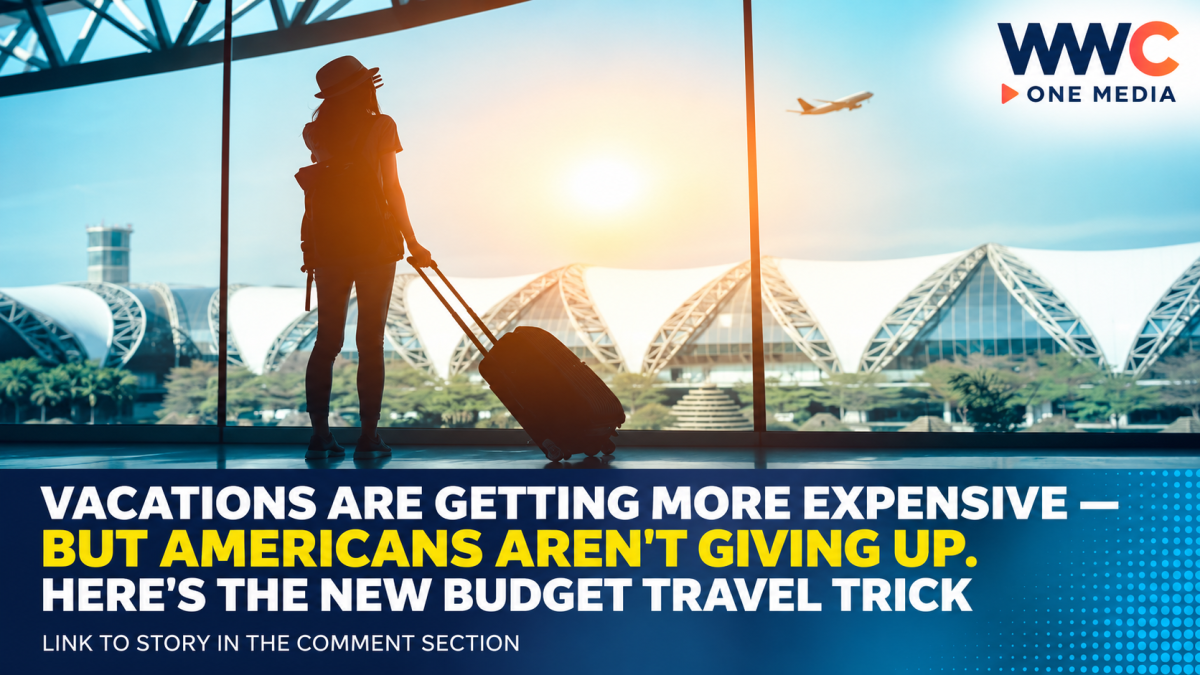
Rising airfare, gasoline and accommodation costs are putting more pressure on travelers in 2026, but Americans are not necessarily abandoning their vacation plans. Instead, many budget-conscious travelers are finding increasingly creative ways to make trips fit their wallets.
Data cited by CNBC shows that Americans with lower incomes are continuing to spend on travel even as transportation costs climb, while travel companies are responding with cheaper packages, mystery destinations and other value-focused options.
Travel gets more expensive — but demand refuses to disappear
According to PNC card data analyzed for CNBC, consumers earning less than $36,675 a year recorded higher monthly travel spending earlier in 2026 than at any point since at least 2019.
In July, spending by that group was 7% higher than a year earlier, suggesting that even financially pressured consumers are still prioritizing travel.
The trend comes as major components of travel become substantially more expensive.
Airline fares were more than 25% higher year over year in July, according to Bureau of Labor Statistics data cited in the CNBC report. At the same time, gasoline prices had climbed roughly 30% annually, according to AAA, adding another layer of pressure for travelers who choose road trips over flights.
And the timing is particularly difficult for consumers because the traditional fall “shoulder season” has not delivered the usual relief.
Condé Nast Traveler reported that average July airfares were nearly 26% higher than July 2025, while fall fares were running about 2% above summer levels according to Expedia data.
The $199 vacation where you don’t know where you’re going
One of the most unusual responses to rising travel costs is the growing popularity of mystery vacations.
Groupon has expanded its mystery-vacation business, offering packages that combine airfare and hotel accommodations while keeping the destination secret until after the customer books.
The flagship package ranges from $199 to $299 per person, depending on the departure airport, and is advertised as a 50% discount.
The concept appears to be gaining traction.
Groupon recorded approximately 5,500 mystery-vacation orders during the second quarter of 2026, more than five times the volume recorded when the company had only one flagship mystery product in the first quarter of 2025, according to data provided to CNBC.
But there is a catch: travelers don’t get to choose the destination.
Most customers are sent to U.S. destinations such as Las Vegas, Atlanta or Orlando, while only a small percentage receive international destinations such as Singapore or Paris.
Cheap doesn’t always mean simple
Travelers considering these deals also need to look beyond the headline price.
Groupon’s current mystery-vacation listings confirm that airfare and hotel accommodation are included, but additional travel expenses can still apply depending on the package and departure airport. Some versions also impose restrictions around travel dates and destination selection.
That means the advertised $199 price is not necessarily the final amount a traveler will spend on the entire vacation.
Travelers may still need to budget for meals, local transportation, baggage, seat selection and other personal expenses.
Other travel companies are seeing the same shift
Groupon isn’t alone in benefiting from the search for cheaper travel.
Hostelworld reported a 10% year-over-year increase in transactions from U.S. and Canadian consumers during the first half of 2026, while other travel companies have also reported stronger demand for budget-oriented products. Expedia, for example, has seen a sharp increase in searches using budget filters, according to reporting based on company data.
Travelers are also increasingly willing to compromise on where they stay, when they travel and even where they go if doing so keeps the total cost manageable.
KAYAK’s 2026 travel-trends research found that travelers are increasingly looking toward less-established destinations and shorter trips, while price remains a major factor shaping travel decisions.
Why some travelers are choosing flexibility over luxury
Interestingly, not every traveler is simply looking for the absolute cheapest option.
A 2026 NerdWallet survey found that 89% of Americans planning summer trips were taking some action to reduce costs, including driving rather than flying and choosing accommodations based on price rather than amenities.
At the same time, 67% of respondents said refundable flights were worth paying extra for, while 62% said the same about travel insurance.
That suggests a more complicated picture of the budget traveler.
People want to save money — but they also increasingly value flexibility, particularly when unexpected disruptions could turn a cheap trip into an expensive problem.
The debt problem behind the travel boom
There is another side to the continued appetite for vacations.
NerdWallet found that 84% of 2026 summer travelers planned to use credit cards for at least part of their travel expenses. Although 61% expected to pay their balances with their first statement, 23% said they would charge travel expenses without paying them off immediately.
Meanwhile, 35% of travelers who charged their 2025 summer vacations still had not paid off those balances, according to the same survey.
That raises an important question: how much are consumers willing to sacrifice financially to keep traveling?
For some Americans, the answer is increasingly creative budgeting rather than canceling the trip altogether.
The new rules of budget travel
With transportation costs elevated, travelers looking to stretch their money are increasingly turning to a few strategies:
- Be flexible with destinations. Being willing to travel somewhere less popular can unlock lower prices.
- Consider shorter trips. KAYAK says shorter “nanocations” are becoming increasingly popular.
- Compare airports. Different departure airports can produce dramatically different fares.
- Look beyond traditional hotels. Hostels, vacation rentals and value-oriented accommodations can reduce lodging costs.
- Use rewards strategically. Points and miles can offset airfare and hotel expenses when used effectively.
- Watch the fine print. A cheap headline price doesn’t necessarily represent the total cost of a trip.
The bigger travel story
The surprising takeaway from the latest data is that rising prices haven’t killed Americans’ appetite for travel.
Instead, travelers are changing how they vacation.
Some are accepting mystery destinations. Others are choosing shorter getaways, cheaper accommodations, alternative transportation or less-famous destinations. Still others are using rewards programs and travel deals to keep their plans alive.
But with airfare and fuel prices still elevated, the definition of a “budget vacation” is changing.
The question is no longer simply whether Americans can afford to travel.
It’s how much they’re willing to compromise — or spend — to keep getting away.
WWC ONE MEDIA M.J.E




Leave a Reply