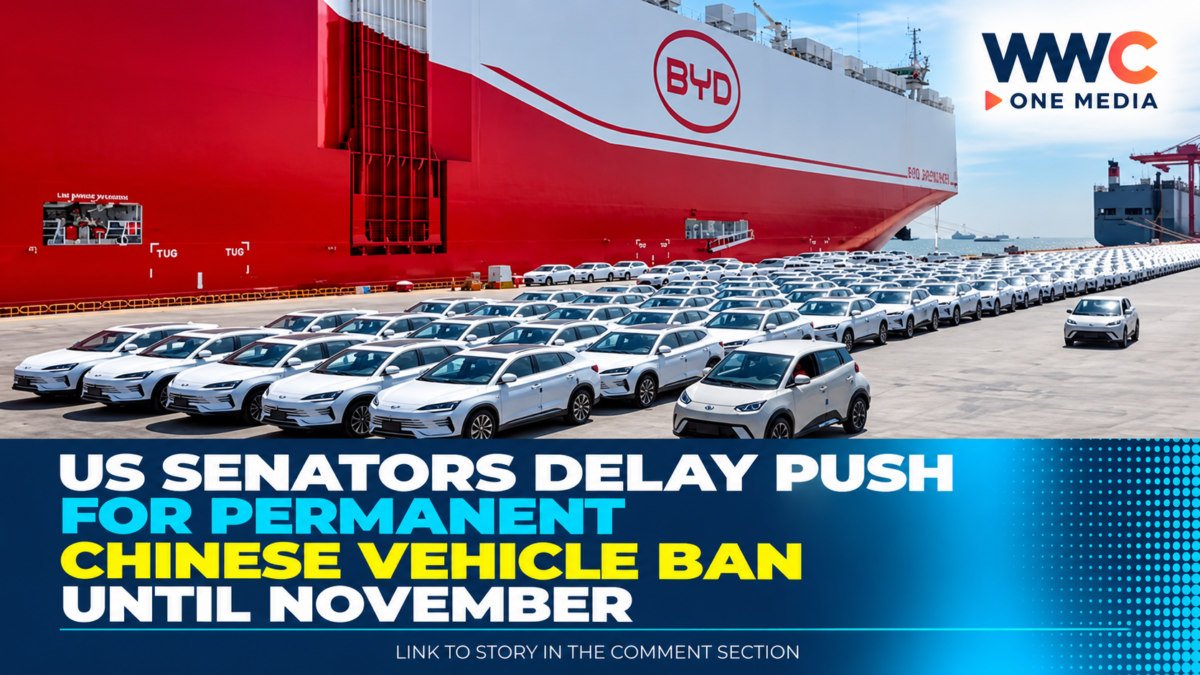
US senators seeking to make restrictions on Chinese vehicles permanent will wait until November to pursue approval of the legislation, after lawmakers failed to resolve objections that stalled an earlier attempt to fast-track the measure.
Republican Senator Bernie Moreno and Democratic Senator Elissa Slotkin are backing the bipartisan Connected Vehicle Security Act, which would restrict the import, manufacture and sale of internet-connected vehicles, software and hardware linked to China and other countries considered security risks by Washington.
The bill was approved by the Senate Commerce Committee in July. An earlier version would bar companies with more than 15% Chinese ownership from selling vehicles in the United States, a provision that raised concerns because German automaker Mercedes-Benz has nearly 20% passive Chinese ownership.
Moreno has said the final legislation would be written to ensure Mercedes-Benz is not prohibited from selling its vehicles in the US. Republican Senator Rand Paul had objected to the measure, arguing that its ownership threshold could unfairly affect the German manufacturer.
The Senate effort had initially been expected to move forward before lawmakers left Washington ahead of the November congressional elections. Because unanimous consent was not secured, the sponsors will instead return to the issue after the Senate reconvenes in November.
A companion version in the House has attracted more than 100 co-sponsors, giving the proposal support beyond the Senate. Lawmakers and industry representatives have expressed interest in completing the legislation before the end of the year.
The proposed law would build on restrictions already imposed by the US government. A regulation introduced under the previous administration effectively restricts Chinese automakers from selling or manufacturing passenger vehicles in the United States because of concerns over connected-vehicle technology and access to sensitive driver data. The US also maintains tariffs exceeding 100% on Chinese electric vehicles.
The legislation comes as Washington continues to debate how much access Chinese automakers should have to the US market. President Donald Trump said earlier in September that he would accept Chinese companies building vehicles in the United States, provided they employ American workers, a position that has drawn concern from some automakers and lawmakers.
US automakers, suppliers and dealers have separately urged lawmakers to maintain restrictions on Chinese vehicle manufacturers. Industry groups have cited concerns involving national security, connected-vehicle technology and competition with heavily subsidized Chinese electric vehicles.
China has previously criticized US restrictions on its companies and urged Washington to respect market-economy principles and fair competition. Beijing has described earlier proposals targeting Chinese businesses as discriminatory and unreasonable.
With the Senate vote now pushed to November, the proposed permanent restrictions remain subject to further negotiations over the bill’s scope, ownership threshold and treatment of companies with Chinese investment. No final ban has yet been enacted through this legislation.