
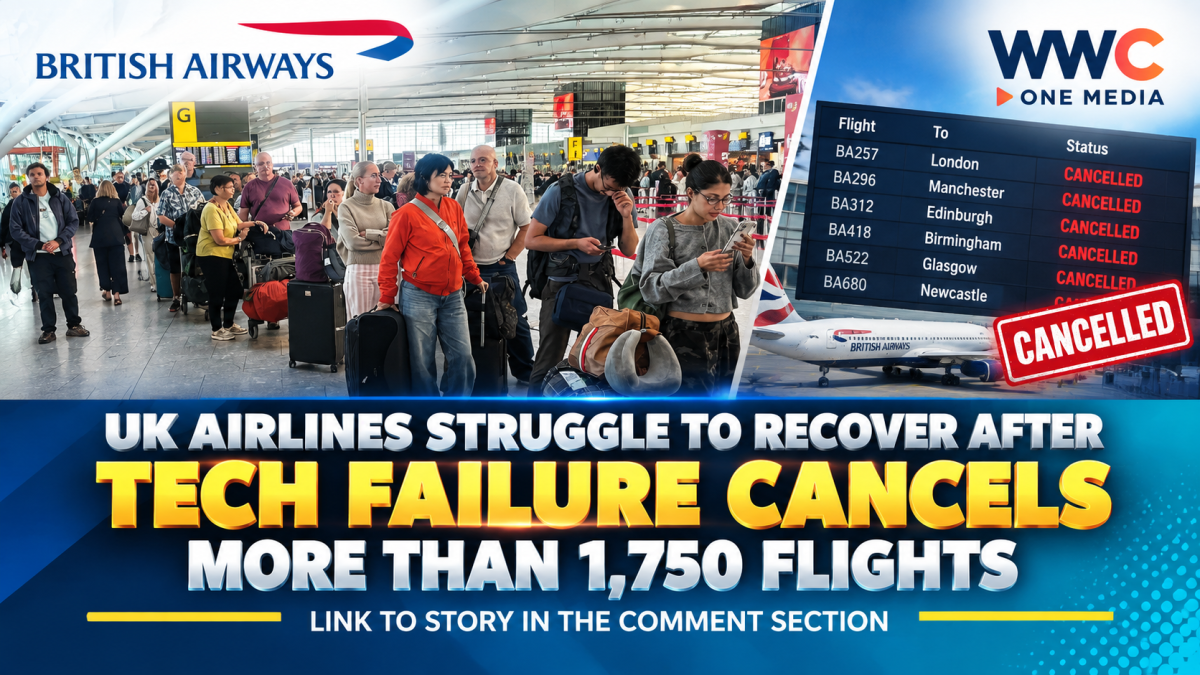
LONDON — Airlines across Britain are scrambling to restore normal operations after a technical failure in the country’s air traffic control system triggered the cancellation of more than 1,750 flights and stranded thousands of passengers.
The disruption began on Tuesday, Sept 8, when Britain’s National Air Traffic Services (NATS) experienced a problem with its flight processing system.
Although the technical issue has since been resolved, airlines continued dealing with widespread delays and cancellations on Wednesday as they worked to rebook passengers and reposition aircraft and crews.
Major airports hit by widespread disruption
The failure affected airports across the United Kingdom, including major hubs such as Heathrow, Gatwick, Luton and Stansted.
Some flights were cancelled, delayed or diverted as air traffic operations were disrupted.
Airlines also faced a complex logistical challenge after aircraft and crews ended up in the wrong locations because of the cancellations.
Even after NATS said the system had been restored, the backlog continued to affect schedules across the country.
More than 1,750 flights cancelled
More than 1,750 flights were cancelled as a result of the technical problems, according to reports.
The disruption affected hundreds of thousands of passengers, with many left waiting for flights, searching for alternative travel arrangements or dealing with last-minute cancellations.
Airlines warned that recovery would take time because restoring normal operations involves more than simply restarting flights.
Aircraft, flight crews and passengers all need to be moved back into position before schedules can fully return to normal.
NATS says safety was not compromised
NATS said the problem was linked to its flight processing system.
The organisation said the issue had been resolved and stressed that safety was not compromised.
NATS chief executive Martin Rolfe apologised for the disruption but defended Britain’s air traffic control system, saying safety remained the organisation’s top priority.
He said action is only taken when necessary to ensure aircraft and passengers remain safe.
Airlines demand answers
The latest outage has renewed criticism of NATS and its leadership.
Budget airlines Ryanair and Wizz Air called for greater accountability, with both carriers criticising the repeated technical problems affecting Britain’s aviation system.
The incident was particularly damaging because it marked another major disruption involving the UK’s air traffic control network within the past three years.
Airlines have raised concerns about whether enough is being done to improve the resilience of the system and prevent future failures.
Transport secretary summons NATS chief
UK Transport Secretary Heidi Alexander summoned Rolfe to explain the latest failure.
She said she wanted assurances that lessons would be learned and that the systems supporting Britain’s aviation industry were capable of handling future challenges.
The government is now facing renewed pressure to ensure that the country’s air traffic infrastructure is strengthened following a series of high-profile disruptions.
Passengers urged to check flights
Airports and airlines have advised passengers to check the status of their flights before travelling.
Although the technical fault itself has been fixed, schedule changes and delays may continue as airlines work through the backlog.
Passengers whose flights were cancelled may also need to wait for rebooking arrangements as airlines manage the large number of people affected.
The bottom line
Britain’s airlines are still working to recover after a technical failure in the country’s air traffic control system led to the cancellation of more than 1,750 flights.
While NATS has resolved the underlying system problem, the impact continues as airlines reposition aircraft, organise crews and rebook thousands of passengers.
The latest disruption has also intensified pressure on Britain’s air traffic control operator, with airlines demanding accountability and the transport secretary seeking assurances that similar failures can be prevented.
The technical problem may be fixed, but for thousands of travellers, the journey back to normal is still far from over.
WWC ONE MEDIA J.M.D
Leave a Reply