
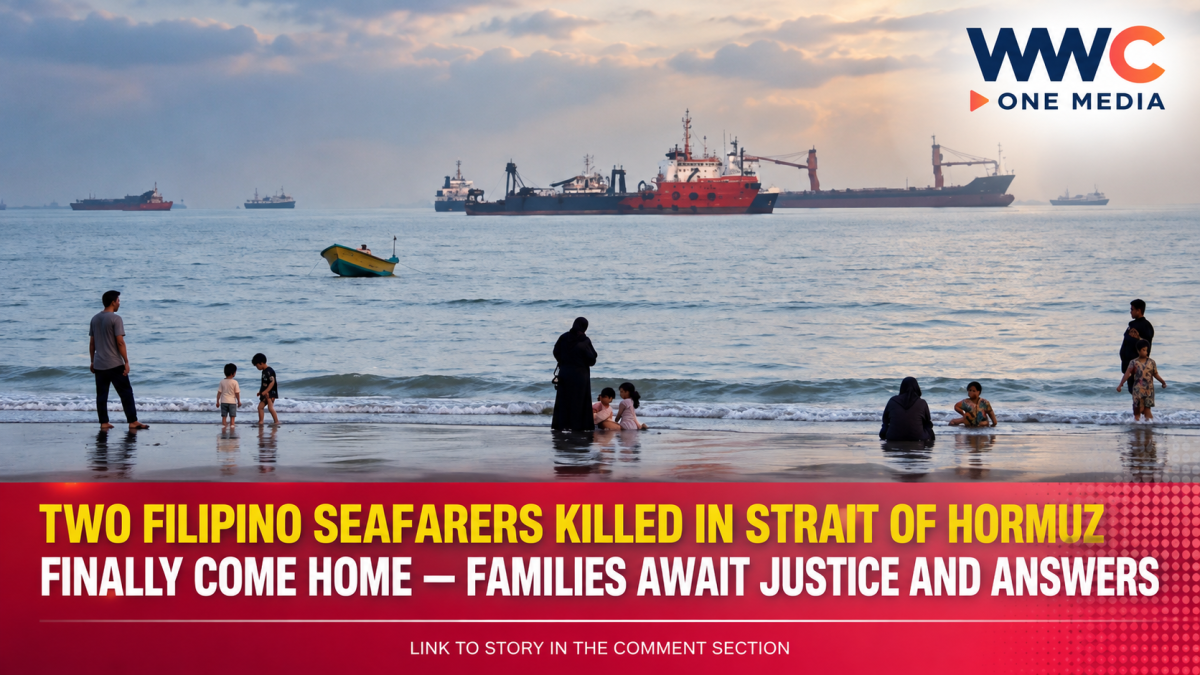
MANILA, Philippines — The remains of two Filipino seafarers who died after the Saudi-flagged crude oil tanker Sidr was struck in a security incident near the Strait of Hormuz have finally been brought home to the Philippines, bringing a painful end to their families’ long wait.
The Department of Migrant Workers (DMW) confirmed that the remains arrived in the Philippines on Friday, September 11, following the deadly incident on August 31. The agency, together with the Overseas Workers Welfare Administration (OWWA), has been coordinating the repatriation and assistance for the victims’ families.
The two men were among 16 Filipino seafarers aboard the Sidr when the vessel was struck by projectiles while transiting the Strait of Hormuz. A fire broke out but was contained by the crew. Fourteen Filipino seafarers survived and were later repatriated to the Philippines.
What happened aboard the Sidr?
Saudi shipping company Bahri, which operates the vessel, said the incident occurred at about 11:40 p.m. local time on August 31. Bahri confirmed the deaths of two Filipino crew members but initially did not identify the nature of the security incident.
The United Kingdom Maritime Trade Operations (UKMTO) separately reported that a tanker had been struck by three unknown projectiles about 17 nautical miles east of Khasab, Oman, while completing an outbound transit of the Strait of Hormuz. Authorities said an investigation was underway.
Saudi authorities subsequently blamed Iran for the attack. Iran’s responsibility has not been independently established in the maritime reports, which initially described the projectiles as unidentified. That distinction is important in reporting the incident accurately.
14 surviving Filipino crew members already back in the Philippines
The 14 surviving Filipino seafarers arrived back in Manila earlier this week and were met by DMW and OWWA officials.
OWWA Administrator Patricia Yvonne Caunan said the priority was to reunite the crew with their families while providing medical intervention and psychosocial counseling following the traumatic incident.
The government had initially worked with authorities in Oman to facilitate the return of both the surviving crew and the remains of the two fatalities.
Government promises compensation and assistance
President Ferdinand Marcos Jr. earlier ordered government agencies to provide immediate assistance to the bereaved families, including applicable benefits, compensation and insurance proceeds.
The two deceased seafarers were from Cabuyao, Laguna, and Daanbantayan, Cebu, according to the Presidential Communications Office.
The DMW, DFA, OWWA, Philippine Embassy and Migrant Workers Office in Oman were involved in coordinating assistance and repatriation efforts.
Questions over why the Filipino crew was sailing through the danger zone
The tragedy has also raised questions about whether the seafarers were adequately informed about the risks associated with the voyage.
The DMW said it would investigate whether the manning agency complied with regulations, particularly the right of Filipino seafarers to refuse deployment to designated high-risk or warlike areas.
The manning agency, Jebsen PTC, has said it is cooperating with Bahri and Philippine authorities in the repatriation process and the welfare of the surviving crew. The family of one victim, Rodrigo Favis, has separately raised questions about whether he was properly informed that the vessel would travel toward the Strait of Hormuz. The agency had not publicly addressed that specific allegation in the GMA report.
The bigger danger facing Filipino seafarers
The incident underscores the risks faced by Filipino maritime workers operating around conflict zones.
Earlier in 2026, the DMW designated the Persian Gulf, Strait of Hormuz and Gulf of Oman as Warlike Operations Areas, reinforcing protections for Filipino seafarers who may face dangerous conditions.
The DMW has also instructed shipping stakeholders operating in conflict-affected areas to strengthen security measures, maintain communications with crews, prepare contingency plans and consider rerouting when feasible.
The Strait of Hormuz remains particularly sensitive because it is one of the world’s most strategically important energy-shipping corridors, and renewed regional hostilities have placed commercial vessels and their crews at increased risk.
For the families of the two Filipino seafarers, however, the issue is now much more personal: their loved ones have finally returned home, but questions surrounding the deadly voyage and responsibility for their deaths remain.



Leave a Reply