
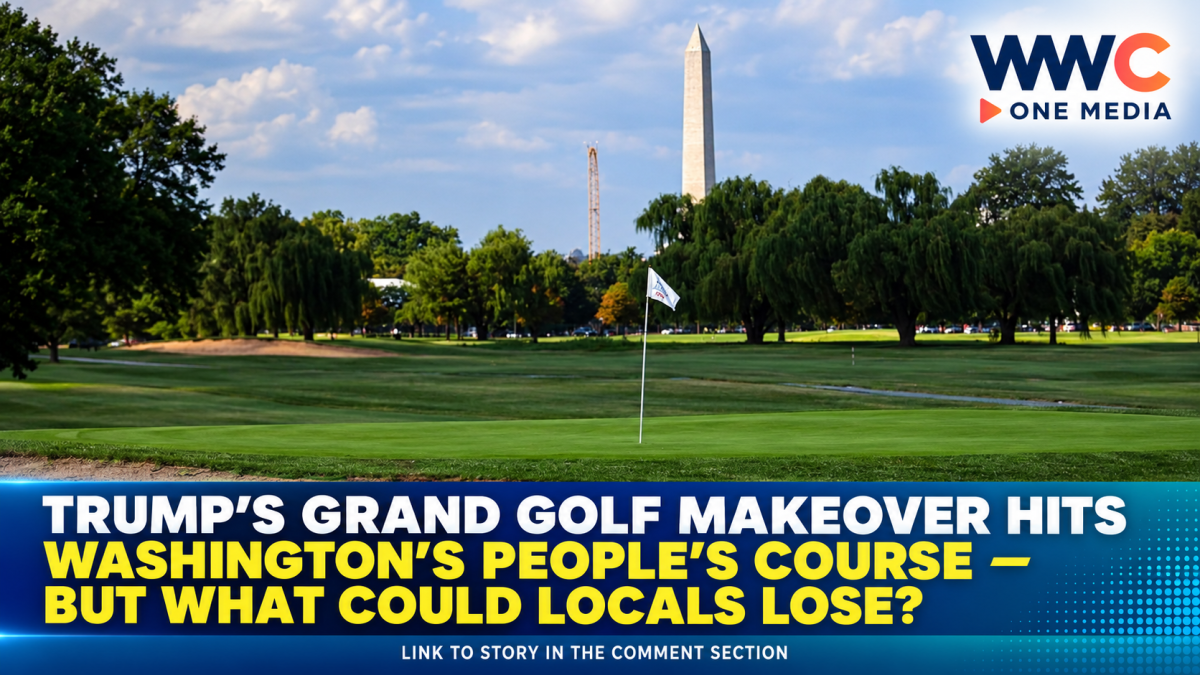
WASHINGTON, D.C. — For more than a century, East Potomac Park has been a place where Washington residents could play golf, cycle, walk and escape the capital’s busy streets without needing a private club membership.
Now, President Donald Trump wants to transform its historic public golf course into a world-class championship venue — a plan that promises major upgrades but has also triggered growing concerns over affordability, public access, tree removal and the future of one of Washington’s best-known recreational spaces.
East Potomac Park was created by Congress in 1897 for the “recreation and pleasure of the people,” while its golf course opened in 1919. Today, East Potomac Golf Links remains one of the most accessible places to play golf in the U.S. capital, attracting residents from different income levels and backgrounds.
But that character could soon change.
Trump has made the redevelopment of East Potomac Golf Links part of a broader effort to reshape Washington, D.C. He has said the renovated course could eventually host some of golf’s biggest events, including the U.S. Open, Ryder Cup, PGA Championship and other PGA Tour tournaments.
‘World-Class’ Golf — But at What Cost?
The Trump administration and Interior Secretary Doug Burgum have promoted the project as an opportunity to bring championship-quality golf to Washington while maintaining affordable access.
A design image unveiled earlier this year showed plans for an 18-hole championship-style course, with Burgum saying the redevelopment could provide high-level golf at “affordable” and discounted rates.
However, many longtime users of the park remain unconvinced.
Residents and golfers interviewed by the Associated Press said they fear an upscale transformation could eventually lead to higher fees, reduced access and changes to the park’s unique public character.
For decades, the area has served more than golfers. Cyclists regularly use its roads and paths, while workers, retirees and other residents visit the waterfront park for recreation.
That broad public use has become central to the growing debate.
One longtime cyclist told the AP that East Potomac offers one of the few places in central Washington where riders can travel away from regular city traffic. Others worry that changes designed around championship golf could affect amenities beyond the course itself.
Lawsuit Challenges Trump Administration’s Golf Course Plan
The redevelopment is also facing a legal challenge.
A lawsuit argues that the planned transformation could violate the congressional act that established East Potomac Park for public recreation and enjoyment. The Trump administration has challenged whether the plaintiffs have the legal standing to bring the case.
During a recent court hearing, U.S. District Judge Ana Reyes acknowledged concerns about major changes potentially occurring before proper approvals were secured, although she said she had not seen evidence at that stage proving such violations in the golf course case.
The legal battle could become crucial as opponents attempt to determine how much redevelopment can proceed — and when.
Tree Removal Adds to Growing Controversy
The controversy intensified after reports that dozens of trees had been removed from the East Potomac Golf Links area ahead of the broader renovation.
The administration has described the work as routine maintenance. However, reporting by The Washington Post indicated that tree removal was already taking place even though the larger redevelopment had not officially begun.
Other reports said preservation advocates were particularly concerned about the scale of the removals and whether they could affect the park’s historic landscape and public amenities.
The tree controversy has added another layer to the dispute over whether the golf course makeover is simply an upgrade — or the beginning of a much larger transformation of public land.
Toxic Debris Raises More Questions
East Potomac Park has also become the focus of environmental concerns following the dumping of debris from the demolished East Wing of the White House.
According to the AP report, debris was placed at East Potomac and formed a mound near one of the golf courses. The National Park Service said testing found lead, chromium and other toxic metals in the debris.
That issue has further heightened scrutiny of development activity in the area, especially among residents and preservation advocates already questioning how the Trump administration is handling changes to Washington’s public spaces.
Part of Trump’s Bigger Vision for Washington
The East Potomac golf course is not an isolated project.
Trump has been pursuing an ambitious physical transformation of the nation’s capital, including a major White House ballroom project and plans for a large triumphal arch near Arlington National Cemetery.
The proposed arch itself has faced legal and regulatory challenges. Reuters reported this week that a federal judge reinforced restrictions on activity at the proposed site and required advance notice before certain work could begin.
Those projects have fueled a wider national debate over presidential power, historic preservation and who gets to decide the future appearance of America’s capital.
At East Potomac, however, the debate remains deeply personal for the people who use the park every week.
‘Golf Should Be for Everyone’
Supporters of preserving the course’s current public character argue that Washington already has access to elite and championship-level golf courses.
What makes East Potomac different, they say, is that it offers something those exclusive venues cannot easily replace: accessibility.
Golfers can play near the Washington Monument without belonging to an expensive private club. Cyclists can ride through the park. Workers can spend a lunch break outdoors. Retirees can enjoy a round of golf at a relatively modest price.
Washington Mayor Muriel Bowser recently acknowledged that the city could benefit from attracting world-class golf, but also emphasized the importance of preserving public access.
That may ultimately become the central question surrounding Trump’s East Potomac vision.
Can Washington create a championship golf destination without destroying the affordability and accessibility that made the course valuable in the first place?
Or will a park created for the “recreation and pleasure of the people” become something fundamentally different?
For now, the fairways remain open, cyclists continue circling the park and legal questions remain unresolved.
But with tree removals, redevelopment plans and a high-profile presidential vision already reshaping the debate, East Potomac’s future may soon be decided.
And Washington residents are now asking one question: When the makeover is finally complete, will this still be a golf course for the people — or a course built for everyone else to admire from the outside?
WWC ONE MEDIA J.M.S




Leave a Reply