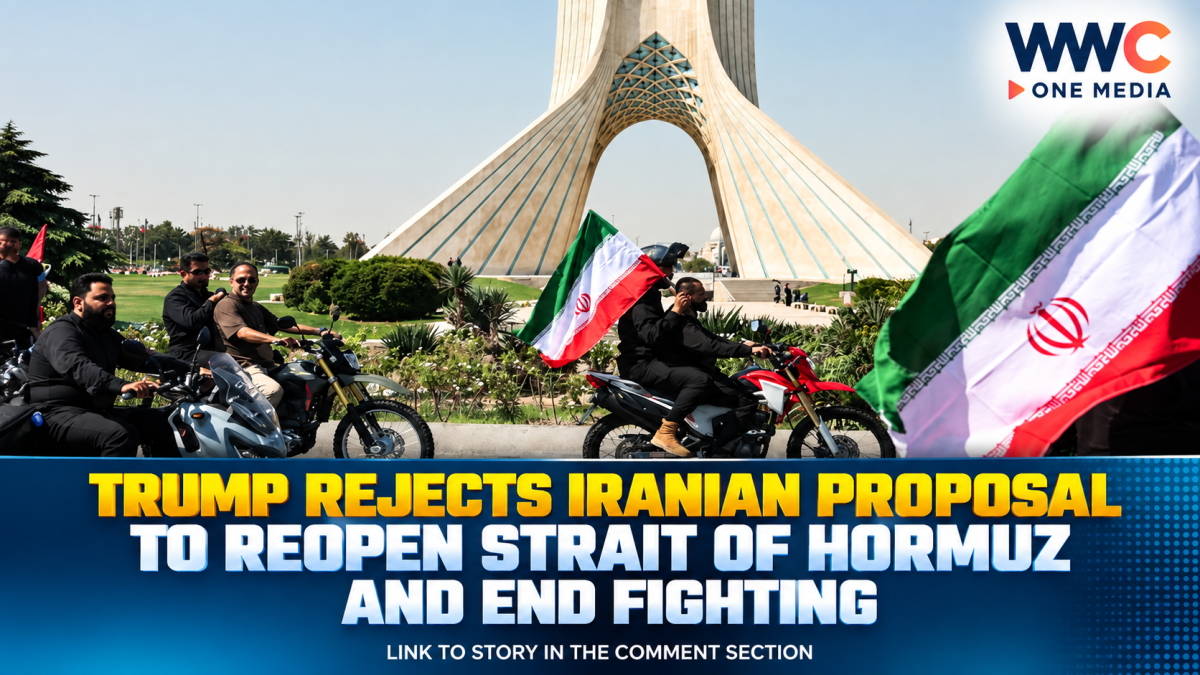
US President Donald Trump has rejected an Iranian proposal to reopen the Strait of Hormuz and halt fighting across the Middle East, dealing another setback to diplomatic efforts aimed at ending the conflict.
Iran presented the proposal during the United Nations General Assembly in New York and said it had been transmitted to US officials through Qatari mediators. Under Tehran’s plan, the Strait of Hormuz could be reopened within seven days if Washington agreed to a series of conditions.
Trump said on Sept. 26 that he had rejected the proposal, arguing that Iran was seeking to reopen the strategic waterway because the conflict had severely affected its ability to generate revenue. He said he remained open to negotiations but did not accept the terms offered by Tehran.
Iranian Foreign Minister Abbas Araqchi had said the proposal would establish a seven-day timetable for reopening the strait and ending hostilities. Tehran also indicated that broader negotiations could follow once the initial conditions were implemented.
Iran’s conditions included lifting the US blockade of Iranian ports, releasing frozen Iranian funds and waiving US oil sanctions. The proposed cessation of fighting would also extend beyond the immediate US-Iran confrontation to other fronts, including Lebanon.
The nuclear issue remains a major obstacle. A senior Iranian official said Tehran would not make concessions on its nuclear programme, including its stated right to enrich uranium or transfer highly enriched uranium out of the country, even if Washington accepted the proposal.
The proposal emerged after months of intermittent fighting and failed diplomatic efforts. The conflict began with US and Israeli attacks on Iran on Feb. 28 and has since expanded across the region, with Iran and allied groups carrying out retaliatory attacks against US partners and interests.
The Strait of Hormuz has become one of the central pressure points in the conflict. The waterway is a critical route for global energy shipments, and disruptions have reduced oil flows while contributing to wider economic uncertainty.
The diplomatic picture had appeared somewhat more open earlier in the week. US officials described indirect discussions with Iran through mediators as positive and constructive, while Chinese President Xi Jinping urged Washington and Tehran to return to an earlier framework and continue negotiations.
But Trump’s rejection leaves the two sides divided over the sequence and conditions for ending the conflict. Iran says reopening the waterway depends on its conditions being met, while Washington has rejected the proposal as presented.
The immediate focus now shifts to whether mediators can produce another framework for negotiations, particularly over the Strait of Hormuz, sanctions, Iran’s nuclear programme and the wider regional fighting.