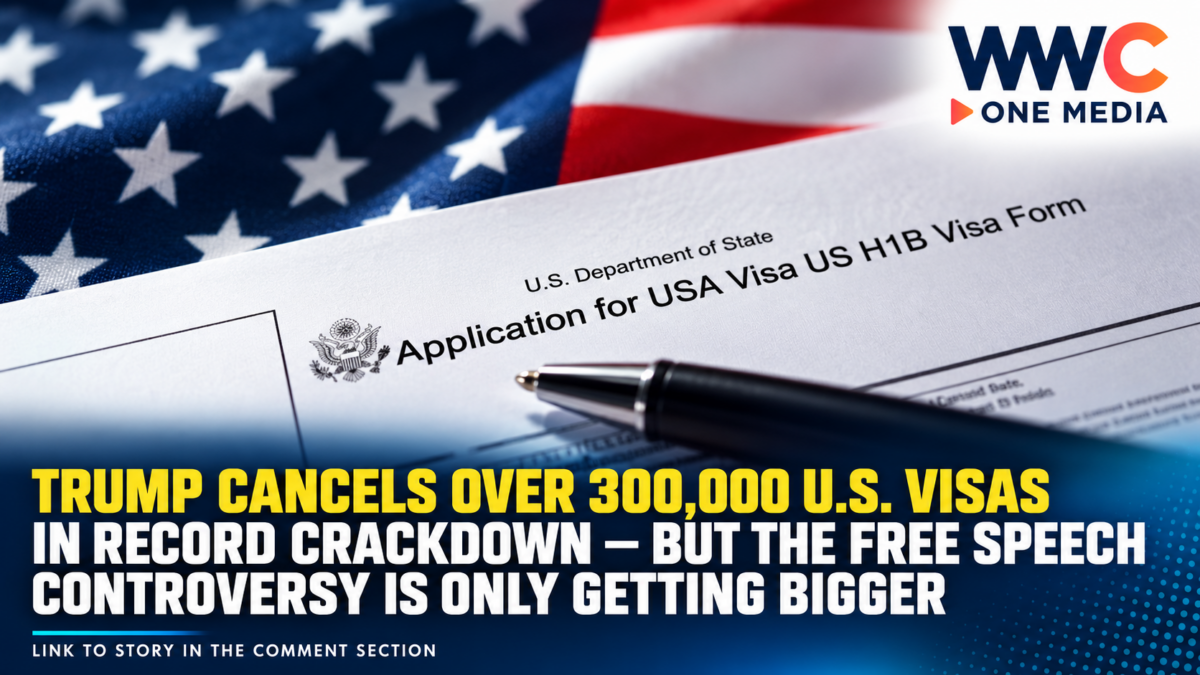
WASHINGTON, October 21, 2026 — More than 300,000 U.S. visas have been revoked since President Donald Trump returned to the White House in January 2025, marking a dramatic escalation in an immigration crackdown that is now raising serious questions about national security, individual rights and the future of legal immigration in America.
The staggering figure, disclosed by the U.S. State Department on Tuesday, October 20, highlights the administration’s increasingly aggressive approach to foreign nationals, including those who originally entered the country through legal immigration channels.
But behind the massive number lies an even bigger controversy: Is Washington simply tightening immigration enforcement, or is its crackdown expanding into political expression and free speech?
Visa Revocations Accelerate as Trump Intensifies Enforcement
According to the State Department, the Trump administration has revoked more than 300,000 visas since January 2025.
That represents a sharp increase from the more than 175,000 revocations reported on August 10, 2026.
The updated figures indicate that the administration’s visa enforcement campaign has continued to accelerate, although the State Department has not publicly provided a complete breakdown of the latest revocations by nationality or visa category.
State Department spokesman Tommy Pigott described the pace of cancellations as unprecedented, claiming that the current administration has revoked visas faster than any previous U.S. administration.
In a statement posted on social media platform X, Pigott emphasized the government’s zero-tolerance approach toward foreign nationals accused of violating American laws, committing fraud or threatening national security.
The administration maintains that its immigration policies are necessary to strengthen border security and protect Americans from potential threats.
Not Just Illegal Immigration: Legal Visa Holders Face Greater Scrutiny
While Trump built much of his political platform around restricting illegal immigration, his administration’s policies have increasingly affected legal immigration pathways as well.
Foreign nationals seeking to study, work or travel to the United States are encountering heightened scrutiny as Washington expands security screening and reviews visa eligibility.
The administration has tightened social media vetting of immigrants and visa applicants, raising concerns among civil liberties organizations about how online activity may influence immigration decisions.
Additional restrictions and increased costs for certain employment-based visas have added to the pressure on foreign workers and employers that depend on international talent.
The distinction is important: a visa is an authorization associated with seeking entry into the United States, but its cancellation does not automatically establish that its holder has committed a crime.
A revoked visa also does not necessarily mean the individual has already been deported. The immigration consequences depend on the person’s location, immigration status and individual circumstances.
Free Speech Controversy Deepens
One of the most contentious aspects of the crackdown involves foreign nationals whose political activities or online statements have attracted government attention.
Reuters reported that rights advocates have condemned actions involving foreign pro-Palestinian demonstrators who criticized Israel’s military operations in Gaza.
Other controversial cases involved foreign nationals whose social media comments about the assassination of conservative commentator Charlie Kirk drew government scrutiny.
Civil rights organizations argue that such enforcement measures risk discouraging legitimate political expression, particularly among international students and other noncitizens.
The controversy has intensified debate over the limits of government authority in determining whether a foreign national’s speech constitutes a genuine national security concern.
Supporters of the administration argue that the United States has broad authority to determine who may receive or retain visas, especially when security concerns arise.
Critics counter that immigration enforcement should not become a mechanism for targeting political viewpoints or penalizing individuals without adequate procedural protections.
Immigration Crackdown Raises Concerns Beyond America’s Borders
The administration’s tougher immigration measures could have significant implications for international students, skilled workers, businesses and families with ties to the United States.
Universities that recruit international students, technology companies employing foreign specialists and industries relying on overseas workers may face growing uncertainty as immigration requirements become stricter.
For Filipino travelers, professionals and students considering opportunities in the United States, the developments underscore the importance of maintaining accurate immigration records, complying with visa conditions and relying on official U.S. government guidance.
However, the State Department’s latest announcement does not establish that Filipinos are being singled out, nor does it mean that every existing U.S. visa is at risk of immediate cancellation.
The Bigger Question: How Far Will Washington Go?
The latest figures reinforce the Trump administration’s determination to make immigration enforcement a centerpiece of its domestic security agenda.
But the rapid expansion of visa revocations has created a broader debate about how the United States balances national security with fair procedures, freedom of expression and its longstanding reliance on international talent.
For the White House, the cancellations represent an aggressive enforcement strategy intended to deter immigration violations and protect national interests.
For critics, they raise concerns that legitimate visitors, students and workers could face increasingly unpredictable decisions affecting their lives and futures.
With more than 300,000 visas already revoked, the next question is no longer simply how many more cancellations Washington will announce — but how far its immigration crackdown will reach.