
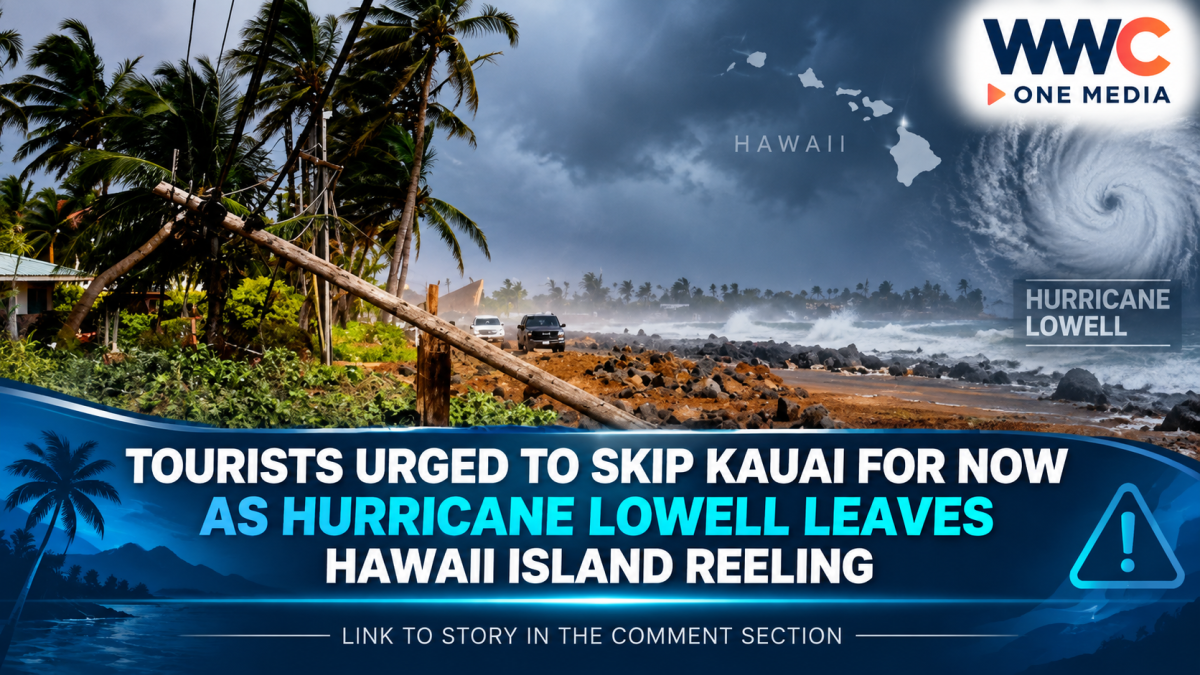
Tourists are being urged to postpone trips to Kauai as the Hawaiian island continues to recover from the destructive impact of Hurricane Lowell, with widespread power outages, damaged roads, flooded resorts and disrupted travel still affecting daily life.
The warning comes as residents and emergency crews focus on restoring essential services rather than returning the island to normal tourism operations. Officials are encouraging visitors to adjust their Hawaii itineraries instead of abandoning trips altogether, with other islands remaining more accessible.
Kauai took the brunt of Lowell’s impact as powerful winds, heavy rain and storm surge battered coastal areas earlier this week. Roads were washed out or blocked by debris, utility infrastructure was damaged and several oceanfront properties suffered flooding.
At one point, almost all of Kauai’s electricity customers lost power, leaving thousands of homes and businesses without electricity even after the storm moved away.
The disruption has also affected travelers trying to leave the island. Long lines formed at Kauai’s main airport as visitors attempted to depart, while damaged roads and continuing cleanup operations made movement around parts of the island difficult.
Some hotels have also been forced to suspend or limit operations while they assess damage.
One resort in Poipu said it expected to resume normal operations within roughly two weeks and offered refunds to guests whose stays were disrupted rather than requiring them to reschedule.
The problems extend beyond individual hotels.
Kauai’s roads, power network and coastal infrastructure all suffered damage, making the island’s recovery dependent on extensive repair and cleanup work. Some state parks and recreational areas have also remained closed because of post-storm hazards.
The situation has prompted tourism authorities to take an unusual approach: rather than encouraging visitors to arrive as planned, officials are asking travelers to postpone their Kauai trips while keeping their wider Hawaii vacations if possible.
That distinction is important for an island economy heavily dependent on tourism.
Tourism accounts for a significant share of employment on Kauai, meaning an extended shutdown would put additional pressure on local businesses already dealing with storm damage.
For that reason, officials have encouraged visitors to consider shifting their plans to Oahu, Maui or Hawaii Island, where conditions have been considerably less disruptive.
The advice is also intended to prevent tourists from placing additional pressure on Kauai’s limited resources while residents work to restore essential services.
Even after roads reopen and electricity is restored, visitors could encounter lingering hazards, including unstable infrastructure, debris, contaminated floodwater and dangerous coastal conditions.
Authorities are therefore asking travelers to follow local guidance rather than assuming that the end of the hurricane automatically means the island is ready for normal tourism.
Hurricane Lowell did not make a direct landfall on Kauai, but its powerful winds and storm surge were enough to cause substantial damage. The storm was blamed for two deaths in Hawaii and prompted Governor Josh Green to request a federal disaster declaration to accelerate recovery assistance.
The scale of the damage has drawn comparisons with some of Hawaii’s most serious recent weather disasters, although the impact has varied considerably from one community to another.
For residents, the immediate priority remains restoring power, clearing roads and repairing damaged infrastructure.
For travelers, the message is equally clear: Kauai’s famous beaches, waterfalls and dramatic landscapes are still there, but the island needs time to recover.
The temporary tourism slowdown could be painful for businesses, but officials say giving communities room to rebuild is the best way to ensure that visitors can return safely and enjoy the island once essential services have been restored.
For anyone with an upcoming Kauai holiday, postponing rather than cancelling may ultimately be the most helpful option — allowing the island’s tourism economy to recover while giving residents the time and resources needed to rebuild.


Leave a Reply