
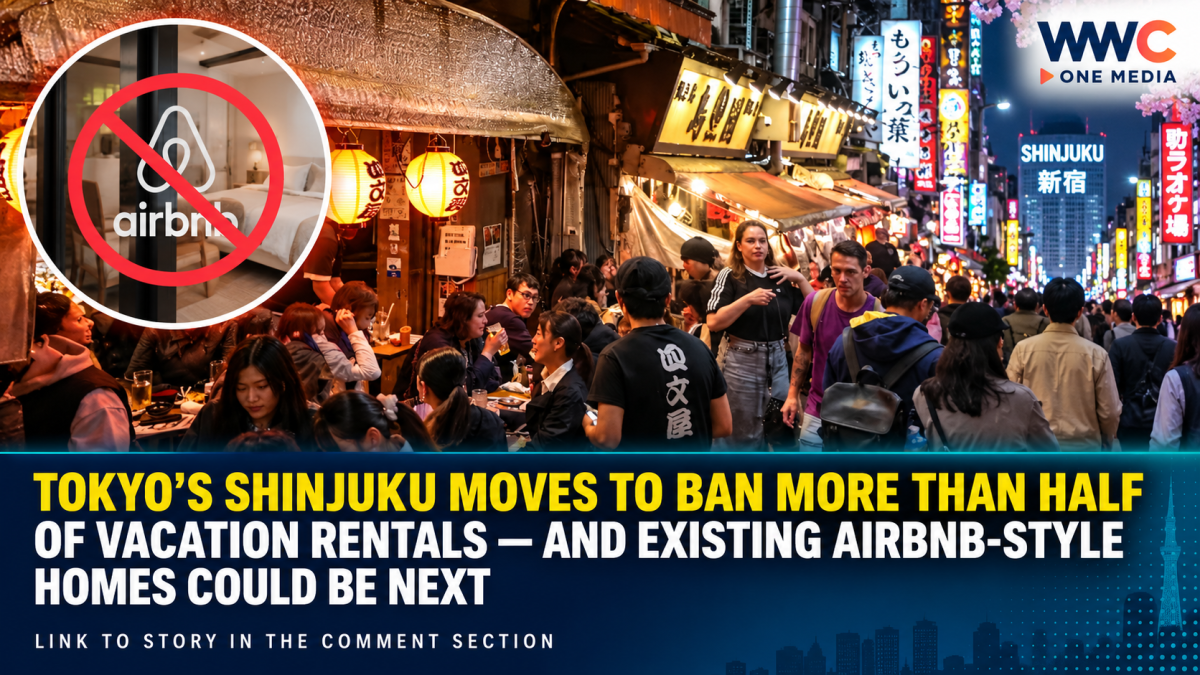
TOKYO, Japan — One of Tokyo’s most popular tourist districts is preparing for a major crackdown on vacation rentals, with more than half of Shinjuku’s short-term accommodations potentially facing closure under proposed new restrictions.
Shinjuku, home to the bustling Kabukicho entertainment district and one of the world’s busiest railway hubs, is planning to prohibit private lodging businesses, commonly known in Japan as minpaku, in residential neighborhoods and areas near schools.
The tougher rules could affect around 2,000 vacation rental properties, according to reports from Japanese media, marking one of the strongest local crackdowns yet on Airbnb-style accommodations in Japan.
Why Is Shinjuku Cracking Down on Vacation Rentals?
The proposed restrictions come after a sharp increase in complaints from residents about the behavior of some short-term rental guests.
Local authorities have cited problems involving:
- Improper garbage disposal
- Excessive noise
- Smoking in prohibited areas
- Trespassing and other neighborhood disturbances
According to reports, Shinjuku received 1,334 complaints related to vacation rentals and associated problems during the previous fiscal year, an increase of 542 complaints from the year before. The growing number of disputes has intensified pressure on local officials to protect residential communities.
A Shinjuku official told AFP that the increase in private lodging businesses had been accompanied by more complaints and trouble affecting the surrounding community.
Existing Vacation Rentals Could Also Be Affected
Perhaps the most significant part of the proposed policy is that the restrictions are not expected to apply only to new operators.
Reports indicate that existing vacation rental properties could also fall under the new rules, although Japanese media reports say a grace period may be provided for affected businesses.
That could mean a dramatic shift for Shinjuku, which has long been one of Japan’s biggest centers for private lodging. The district accounts for nearly 10 percent of Japan’s roughly 42,000 short-term rental properties, according to the report.
Earlier this year, Shinjuku officials said the ward had 3,620 registered private lodging properties as of Jan. 15, 2026, making it the largest concentration of such accommodations in Japan.
Commercial Areas May Face Tighter Limits Too
The proposed crackdown may not stop at residential neighborhoods.
Japanese broadcaster TV Asahi reported that Shinjuku is also considering reducing the maximum number of operating days for private lodgings in commercial areas from the current 180 days per year to 120 days.
Under Shinjuku’s existing rules, private lodging operations in designated residential areas are already restricted during much of the working week, while properties outside those zones can generally operate for up to 180 days annually under national regulations.
The proposed changes would represent a much tougher approach, particularly for operators located in residential zones and near schools.
When Could the New Rules Take Effect?
According to Japanese media reports, Shinjuku is aiming to submit an ordinance revision to the ward assembly around February 2027, with implementation targeted for around the summer of 2027.
The Shinjuku mayor was also expected to formally announce the policy details following the initial reports.
Because the proposal is still moving through the local legislative process, the final rules, exemptions and transition arrangements could still change.
Japan Gives Local Governments More Power Over Minpaku
Shinjuku’s move follows a broader shift in Japan’s approach to overtourism and short-term accommodations.
Japan’s national tourism authorities have moved to give municipalities greater flexibility to tighten restrictions on private lodging when local communities face threats to their residential environment, educational surroundings or long-term community stability. The national government is not imposing a blanket nationwide ban, but local governments are being given more room to introduce stricter ordinances.
The policy reflects growing concerns across Japan that the rapid expansion of tourism can create friction between visitors and residents.
Shinjuku officials have already been increasing enforcement against operators who violate existing regulations. The ward said earlier this year that authorities had issued business suspension orders covering 26 operators and 57 facilities, while four operators involving 11 facilities had received abolition orders.
Japan’s Overtourism Problem Is Getting Harder to Ignore
The Shinjuku proposal is part of a much larger debate over how Japan should manage its tourism boom.
Popular destinations such as Kyoto and areas surrounding Mount Fuji have faced complaints involving overcrowding, traffic congestion, improper tourist behavior and pressure on local communities.
Kyoto is also considering stronger restrictions on new private lodging operations in certain residential and industrial areas, while municipalities across Japan are increasingly looking for ways to balance tourism income with the quality of life of residents.
The issue is not unique to Japan. Cities including New York and Barcelona have also introduced or pursued tougher regulations on short-term rentals as governments respond to housing concerns, neighborhood complaints and overtourism.
What the Shinjuku Vacation Rental Ban Could Mean for Travelers
For tourists, the changes could eventually mean fewer Airbnb-style accommodation choices in one of Tokyo’s most popular districts.
For property owners and vacation rental operators, however, the impact could be far more serious. Thousands of existing and potential short-term rental businesses may need to adjust their operations, relocate or comply with significantly stricter local rules.
The proposed Shinjuku crackdown could also become a closely watched test case for other Japanese cities struggling with the consequences of overtourism.
The big question now is whether Shinjuku’s move will remain a local crackdown — or become the model for Japan’s next wave of restrictions on vacation rentals.
WWC ONE MEDIA J.M.S




Leave a Reply