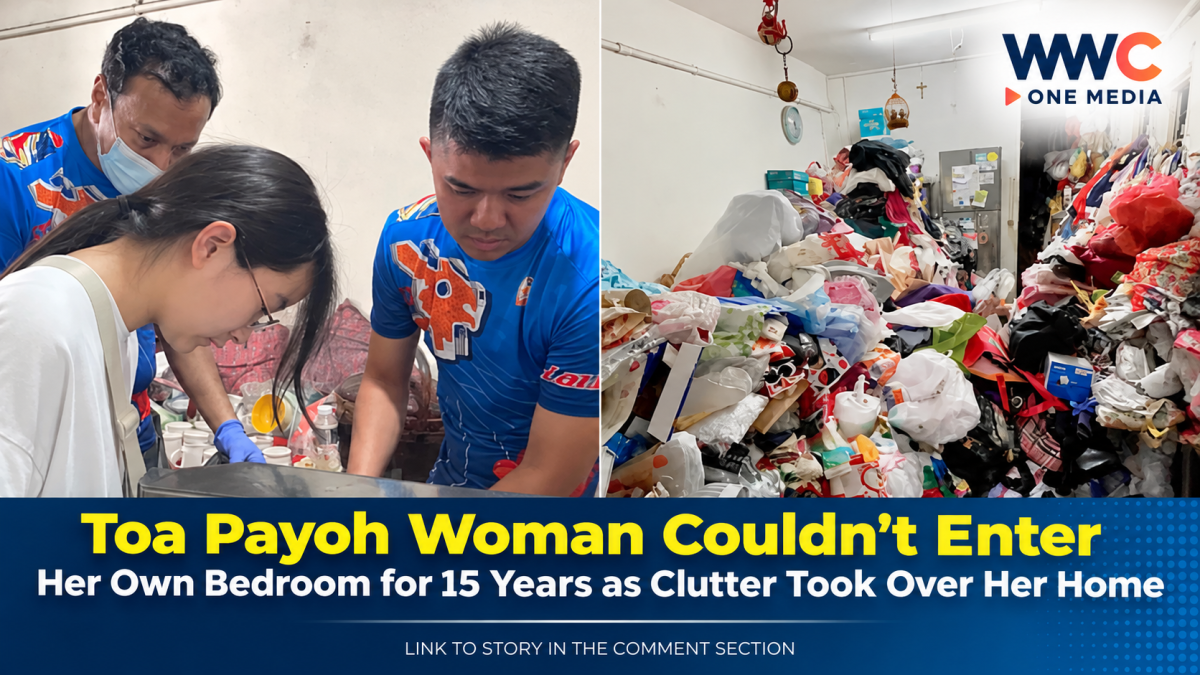
An elderly woman living alone in a Toa Payoh rental flat had been unable to enter her own bedroom for 15 years, with piles of clothes and belongings leaving only narrow paths through her home.
The woman, identified only as Madam J, told an outreach team that she had blocked her bedroom door with clothes after her mother died. Over the years, the clutter grew so extensive that she had to crawl over piles of belongings to reach the toilet, while her bedroom remained inaccessible.
When volunteers first visited the flat, there was reportedly enough clear space near the entrance for only about two people to stand. Inside were what volunteers described as “mountains” of belongings, with little room to move and no clear escape route in the event of an emergency.
Madam J initially resisted the offer of help. She said other organisations had previously visited but did not provide the long-term support she felt she needed.
The outreach team, led by Bishan-Toa Payoh GRC MP Cai Yinzhou and volunteers from the local community, spent time building trust with her before beginning the cleanup. Rather than simply removing everything, the team worked with her to decide what could be kept and what could be cleared.
Over several cleanup sessions, volunteers removed large amounts of clutter with support from town council conservancy workers and community agencies. The bedroom was eventually cleared, allowing Madam J to enter and use the space again.
The team also worked with agencies including the Housing & Development Board, Agency for Integrated Care and Silver Generation Office to help make the flat more liveable. Household essentials, including a bed, mattress, pillows, washing machine and dining table, were provided or sourced for her.
Madam J said she had often felt insecure at home and would leave the flat every day because she was uncomfortable staying there. After the cleanup, she was able to move around the home safely and described herself as feeling “really blessed” that the team had come to help.
Her case also reflects a wider challenge in Singapore. Data reported earlier this year showed that active hoarding cases being handled by Singapore’s New Environment Action Team and Hoarding Management Core Group had risen to 450 by June 2025, up from 253 in December 2021. Authorities and social service groups have stressed that severe hoarding cases often require repeated engagement, trust-building and long-term support rather than a single cleanup.
For Madam J, however, the immediate change was deeply personal: after 15 years behind a blocked bedroom door, she can finally walk into her own room again.
And the cleanup is only the beginning. The outreach team says it will continue checking on her and helping her maintain a safe and liveable home.