
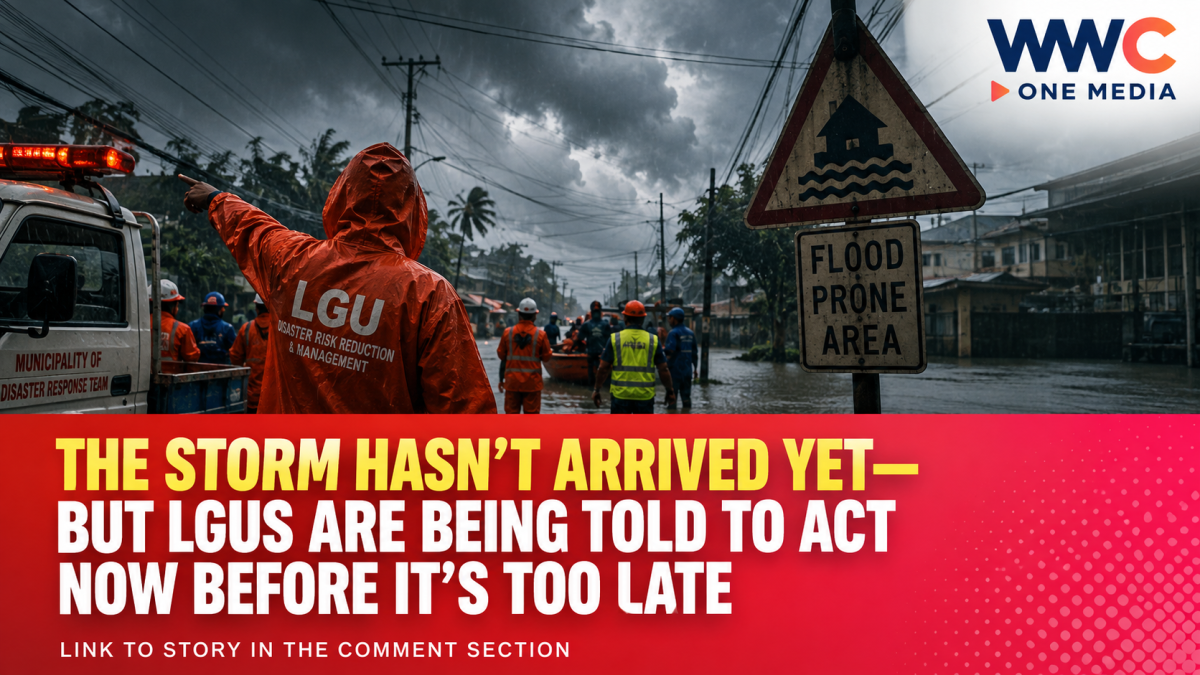
MANILA, Philippines — The most important decisions during a disaster may be the ones made before the first warning siren sounds.
As the Philippines continues to experience the effects of the southwest monsoon, or Habagat, and remains vulnerable to tropical cyclones, local government units (LGUs) are being urged to strengthen preparations before heavy rains, flooding, landslides, and powerful storms put communities in danger.
The message is increasingly clear: disaster response should not begin when homes are already underwater.
Recent government guidance has emphasized the need for LGUs to conduct pre-disaster risk assessments, identify vulnerable communities, prepare evacuation plans, and position personnel and equipment before hazardous weather conditions worsen.
The Department of the Interior and Local Government (DILG) recently called on LGUs to intensify preventive measures against flooding, flash floods, and rain-induced landslides. More than 17,000 barangays were identified by the Mines and Geosciences Bureau as having moderate to very high susceptibility to flooding and rain-induced landslides during a recent period of severe weather.
Act Before the Rain Turns Dangerous
Among the most critical steps for local governments is conducting a pre-disaster risk assessment—a process that helps officials determine which areas and residents could be hit hardest before a weather threat escalates.
Authorities have also stressed the importance of using hazard maps to identify flood- and landslide-prone communities, monitoring river systems, keeping evacuation routes accessible, and ensuring emergency personnel and equipment are ready for deployment.
For communities facing serious and immediate danger, preemptive evacuation can save lives.
The DILG has advised LGUs to consider or implement evacuations when conditions warrant, particularly in areas repeatedly affected by floods and landslides. Emergency facilities and evacuation centers must also be prepared, including reliable power supplies and backup generators.
Flood Prevention Starts Long Before a Typhoon
Preparedness is not limited to rescue operations and evacuation centers.
Recent flooding across parts of the country has also renewed calls for local governments to keep waterways clear and improve waste management. Malacañang has urged LGUs to take a stronger role in preventing garbage from clogging streets and waterways, warning that poor waste disposal can worsen flooding during prolonged rains.
The urgency is evident in the continuing weather situation. On August 29, heavy Habagat rains affected parts of Luzon, while authorities monitored flooding risks in vulnerable communities. In Quezon City, the La Mesa Dam reached its spilling level, prompting authorities to advise residents in low-lying areas along the Tullahan River to evacuate.
PAGASA has also said that the southwest monsoon, low-pressure areas, tropical cyclones, and localized thunderstorms are among the weather systems expected to affect the country, underscoring the need for communities to remain prepared.
Preparedness Is Everyone’s Responsibility
For disaster officials, the challenge goes beyond reacting quickly—it is about anticipating danger early enough to prevent a tragedy.
That means monitoring weather bulletins, communicating risks clearly to barangays, preparing rescue teams, securing evacuation centers, and making difficult decisions before conditions become life-threatening.
As recent monsoon rains continue to test communities across the Philippines, one lesson stands out: waiting for a disaster to strike is not a preparedness plan.
The next storm may still be days away. But for communities at risk, the work to protect lives must begin now.



Leave a Reply