
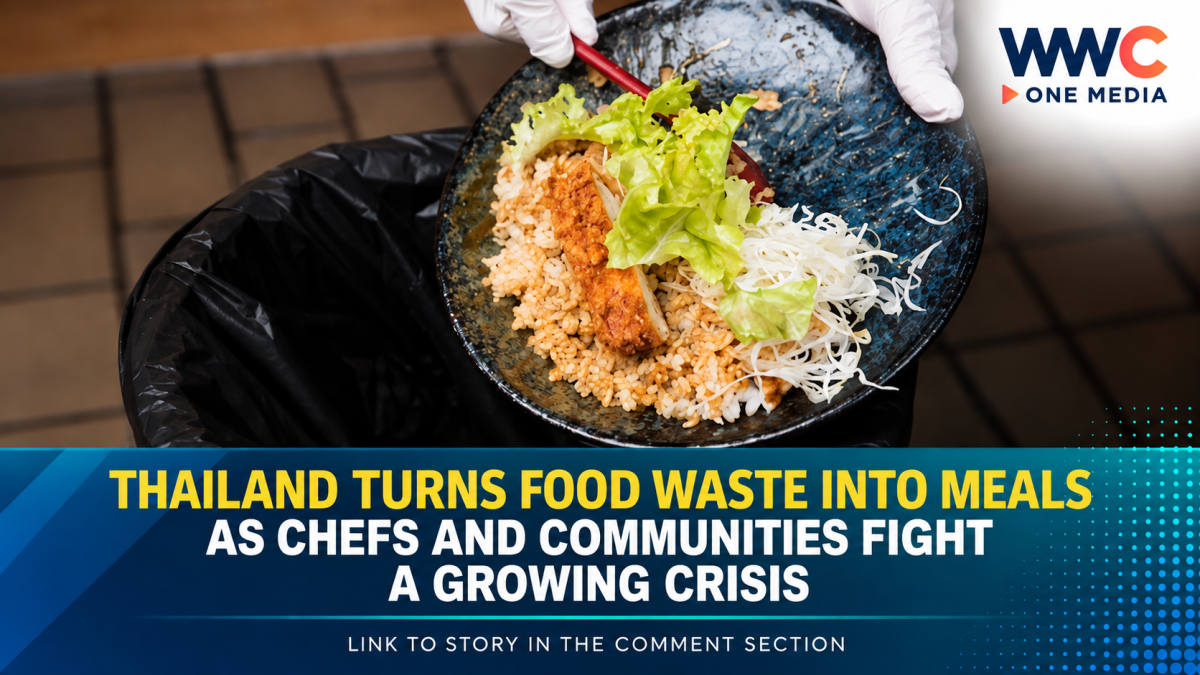
Thailand is stepping up efforts to turn food that would otherwise be thrown away into nutritious meals, as restaurants, community groups and national agencies look for ways to reduce waste while helping people facing food insecurity.
The movement reflects a growing realisation that food waste is not simply an environmental problem. It also represents wasted money, wasted resources and missed opportunities to feed vulnerable communities.
One example comes from the kitchen of Chef Toi, who orders around 70kg of salmon every week to maintain a reliable supply of ingredients.
But not every part of the fish makes it onto customers’ plates.
Salmon heads, for example, can be left unused despite containing meat and other edible portions. Rather than treating them as rubbish, chefs and food-rescue initiatives are finding ways to transform such ingredients into dishes that can be served to communities.
The approach is part of a broader effort to make Thailand’s food system more circular.
Instead of following a traditional model in which food is produced, sold and eventually discarded, food-rescue programmes seek to capture surplus ingredients before they become waste and redirect them to people who can use them.
A national initiative is helping turn safe surplus food into community meals for vulnerable people.
The concept is relatively simple: food that remains suitable for consumption is collected from businesses and other sources, processed safely and redistributed rather than sent to landfills.
This can include surplus ingredients, prepared food and edible parts of products that might otherwise be discarded.
The benefits extend beyond reducing the volume of rubbish.
Food production requires land, water, energy, labour and transportation. When food is thrown away, all of those resources are effectively wasted as well.
Reducing food waste can therefore lower the environmental footprint associated with producing and disposing of food.
It can also help restaurants and food businesses make better use of the ingredients they already purchase.
For chefs, this has encouraged a return to techniques that use more of an ingredient rather than focusing only on the most familiar cuts.
Fish heads, bones, vegetable stems, peels and other overlooked ingredients can be used for stocks, sauces, soups and other dishes when handled properly.
What was once regarded as kitchen waste can therefore become a valuable ingredient.
The idea is particularly relevant in Thailand, where food plays a central role in daily life and the hospitality industry produces enormous quantities of organic waste.
Restaurants, hotels, supermarkets and food manufacturers all generate surplus food, creating significant opportunities for recovery.
However, rescuing food also comes with challenges.
Food safety is critical because surplus products must be collected, stored and transported under appropriate conditions.
Food that is no longer safe to eat cannot simply be redistributed because doing so could create serious health risks.
That makes logistics and proper handling essential to successful food-rescue programmes.
Timing is another challenge.
Fresh food has a limited shelf life, meaning organisations need efficient systems to collect and distribute surplus products before they deteriorate.
This requires cooperation between restaurants, supermarkets, charities, volunteers, kitchens and local communities.
The model can also reduce pressure on waste-management systems.
Organic waste sent to landfill can generate methane as it decomposes, contributing to greenhouse-gas emissions. Keeping edible food in the human food chain for as long as possible can therefore provide environmental benefits while also supporting communities.
Thailand’s growing food-rescue movement is part of a wider global effort to rethink the relationship between food and waste.
Around the world, restaurants and chefs are increasingly embracing “nose-to-tail” and “root-to-stem” cooking, using more of animals and plants to reduce unnecessary disposal.
The trend is changing perceptions of what constitutes a valuable ingredient.
A salmon head that once ended up in a waste bin can become part of a nutritious meal. Vegetable trimmings can contribute to stocks or sauces. Surplus prepared food can feed people instead of becoming rubbish.
The approach also has an important social dimension.
Food rescue can connect businesses with communities that need additional support, creating a system in which surplus resources are redirected toward people facing financial hardship.
Rather than treating food waste and food insecurity as completely separate problems, the model addresses both at the same time.
For businesses, reducing waste can also become financially beneficial.
Better inventory management, more efficient portioning and greater use of ingredients can reduce disposal costs and improve the value obtained from purchased food.
Consumers can contribute as well by buying only what they need, storing food properly, using leftovers creatively and becoming more comfortable with ingredients that may not look perfect but remain safe to eat.
The ultimate goal is not simply to produce more meals from leftovers.
It is to change the way food is valued.
Thailand’s efforts show that reducing food waste can involve both sophisticated national programmes and simple changes in professional kitchens.
Every kilogram of food rescued represents resources that do not have to be wasted and another opportunity to put food on a plate instead of sending it to the rubbish bin.
As Thailand looks for ways to build a more sustainable and inclusive food system, the message from chefs and food-rescue organisations is increasingly clear: what looks like waste may still have considerable value — and with the right system, it can become a meal.



Leave a Reply