
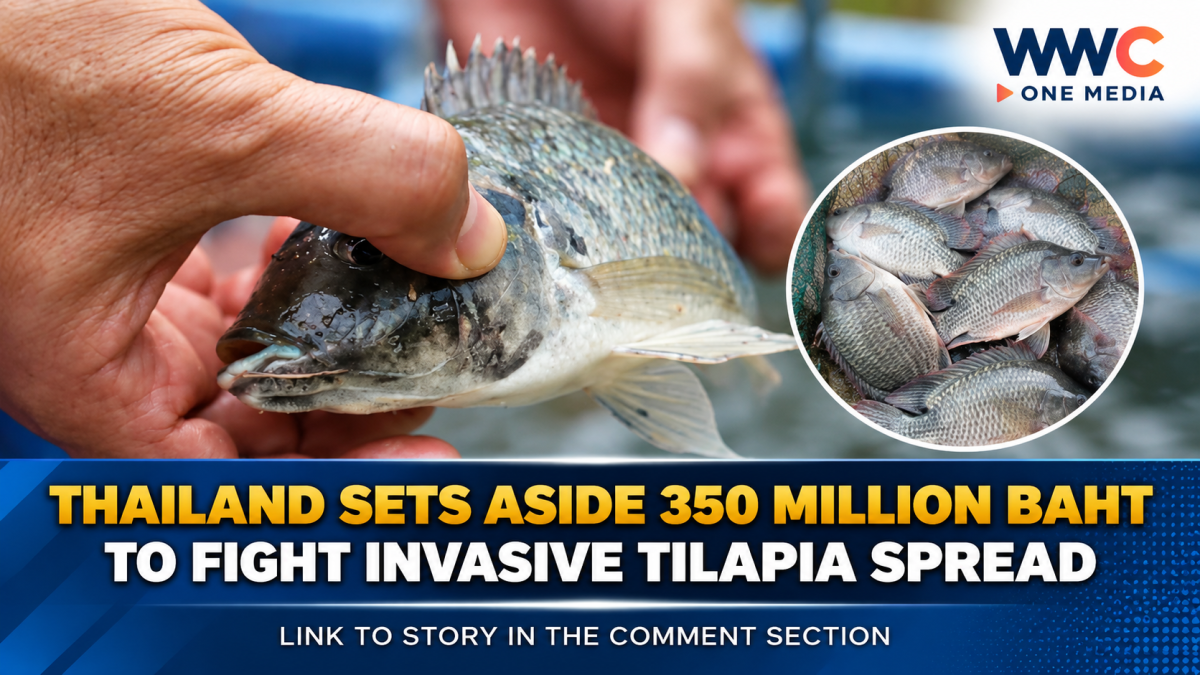
Thailand is preparing to allocate 350 million baht to tackle the spread of blackchin tilapia, an invasive fish species that has affected waterways and aquaculture areas in several parts of the country.
The funding is intended to support measures to control the fish population, reduce its impact on native aquatic species and help communities and farmers affected by the invasion.
Blackchin tilapia has become a major environmental concern in Thailand because of its ability to reproduce rapidly and compete with native fish for food and habitat.
Authorities have been carrying out efforts to remove the fish from affected waterways, while encouraging fishermen and local communities to catch and make use of the species.
The government has also been working with researchers and fisheries agencies to identify longer-term methods of controlling the invasive population and preventing it from spreading to new areas.
Part of the proposed funding will support surveillance and monitoring so officials can identify affected waterways and respond more quickly to new outbreaks.
Measures are also expected to include fish removal programmes and support for affected aquaculture operators. Authorities are assessing how the invasive species has affected local fish populations and fishing livelihoods.
The spread of blackchin tilapia has highlighted the difficulty of managing invasive species once they become established in natural waterways. Eradication can be particularly challenging because the fish can survive in different aquatic environments and reproduce quickly.
Thailand has previously introduced restrictions and other measures aimed at preventing further spread, including tighter controls on the movement and breeding of the species.
Officials are also looking at ways to turn the invasive fish into an economic resource. Catching the fish for consumption or processing could help reduce populations while providing additional income for communities.
Environmental authorities have stressed that controlling the species will require cooperation among government agencies, local administrations, fishermen, farmers and researchers.
The proposed 350-million-baht programme is expected to strengthen those efforts and provide resources for both immediate control measures and longer-term management.
As Thailand continues to deal with the spread of blackchin tilapia, authorities face the challenge of protecting native aquatic ecosystems while supporting communities whose livelihoods depend on the country’s waterways.




Leave a Reply