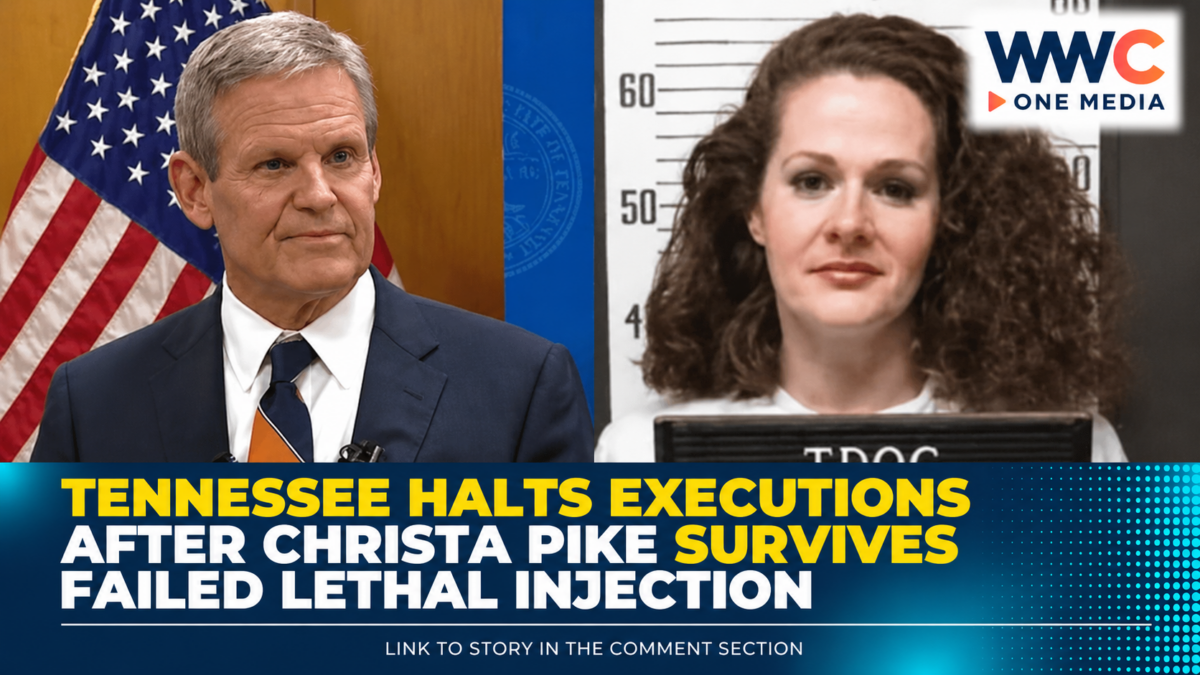
Tennessee Governor Bill Lee has suspended all executions scheduled for the remainder of 2026 after death row inmate Christa Gail Pike survived an attempt to execute her by lethal injection, prompting an independent investigation into what went wrong during the procedure.
Pike, 50, was scheduled to be executed on September 30 for the 1995 murder of 19-year-old Colleen Slemmer. She received two doses of pentobarbital during the execution attempt, but remained alive and was eventually taken to a medical facility for treatment. Her lawyers said she was still receiving medical care the following day.
The execution had already been delayed for several hours after a federal appeals court issued a last-minute stay. The US Supreme Court later allowed Tennessee to proceed, clearing the way for officials to resume the execution at Riverbend Maximum Security Institution in Nashville.
Media witnesses inside the prison reported that Pike remained conscious and continued breathing after the lethal injection drugs were administered. Witnesses described hearing snoring, loud exhalations and gasping, while Pike reportedly complained of discomfort in her arm. Officials eventually ended the procedure and arranged for her to receive medical treatment.
The Tennessee Department of Correction said it followed the state’s established execution protocol. The agency said the lethal-injection chemical used had consistently been effective and that Pike was transported to an off-site medical facility after the attempt was stopped.
Governor Lee subsequently ordered a comprehensive third-party review of the failed execution and suspended the state’s remaining scheduled execution for 2026. The decision means Tennessee will not carry out another execution while officials examine the circumstances surrounding Pike’s case.
Pike’s lawyers had previously raised concerns about the execution method and her medical history. Her legal team pointed to a lifelong blood disorder that they said could make it difficult to access her veins, and argued before the execution that complications could occur during lethal injection.
The failure also comes after Tennessee experienced another aborted execution earlier in 2026. In that case, prison officials were unable to establish a suitable vein for the lethal-injection procedure and called off the attempt.
Pike’s case has attracted additional attention because she was 18 when Slemmer was killed. Pike and her then-boyfriend, Tadaryl Shipp, were convicted in connection with the 1995 killing. Shipp received a life sentence, while Pike was sentenced to death.
Pike’s attorneys had also sought clemency, citing her history of childhood abuse and other circumstances they argued should be considered in determining her sentence. Governor Lee denied her clemency request before the scheduled execution. Tennessee’s Supreme Court had previously set September 30, 2026, as the execution date.
The failed procedure is now expected to become part of a broader examination of Tennessee’s execution protocols, including how lethal injections are administered and what contingency measures are available when a procedure does not proceed as planned.
Pike remains alive following the failed execution attempt, while the state’s review is expected to determine how the procedure failed and what steps, if any, should be taken before Tennessee considers resuming executions.